
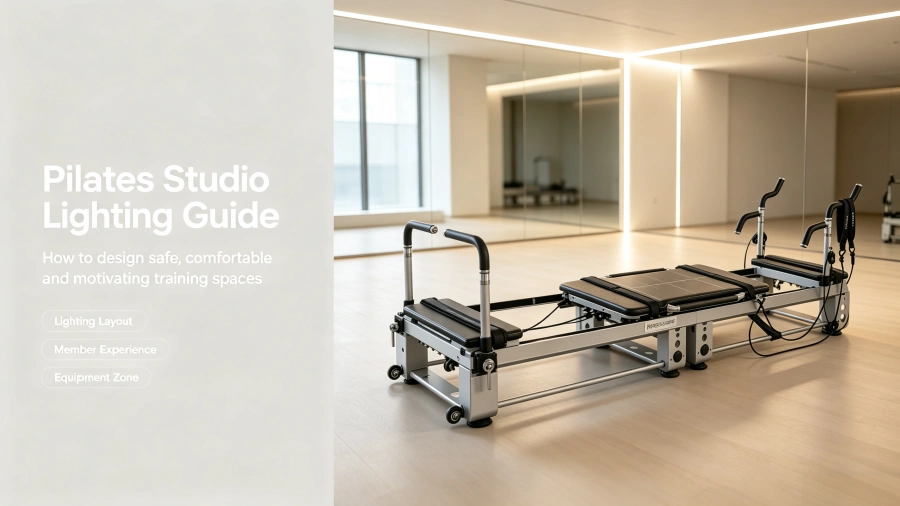
Die physische Umgebung eines Pilates-Studios beeinflusst direkt Kundenbindung, Kurspreise und Markenwahrnehmung. Ausrüstungsqualität und Trainer-Kompetenz bilden das Fundament, doch die Beleuchtung und Atmosphäre des Pilates-Studios schaffen den emotionalen Rahmen, in dem das Training stattfindet. Dieser Ratgeber führt durch Beleuchtungszonen, Farbtemperatur, Akustikbehandlung und die praktischen Entscheidungen, die aus einem funktionalen Raum einen Ort machen, an den Kunden zurückkehren möchten.
1. Warum die Studio-Beleuchtung das Kundenerlebnis prägt
Studien aus der Umweltpsychologie zeigen, dass die Beleuchtungsbedingungen im Pilates-Studio die Trainingsleistung, die empfundene Anstrengung und die Zufriedenheit nach dem Workout beeinflussen. Kunden, die in gut gestalteten Umgebungen mit passender Beleuchtung trainieren, geben um 20-30 % höhere Zufriedenheitswerte an als jene in schlecht oder grell beleuchteten Räumen. Beim Pilates, wo die Methode Körperbewusstsein und die Verbindung von Geist und Körper betont, wiegt die Beleuchtungsumgebung noch stärker.
Gute Pilates-Studio-Beleuchtung erfüllt zwei Aufgaben gleichzeitig, und Studios, die beide verstehen, holen das Meiste aus ihrem Ausstattungsbudget heraus. Sie gibt Kunden und Trainern die visuelle Klarheit, die sie für sichere, präzise Bewegungen brauchen, und sie legt den emotionalen Ton der Einheit fest. Ein gedimmter, warm beleuchteter Raum signalisiert Regeneration; ein heller, kühl beleuchteter Raum signalisiert Fokus und Energie. Die Studios, die das richtig hinbekommen, werden von Kunden als beruhigend, professionell und den Premiumpreis wert beschrieben.
| Kurstyp | Empfohlene Farbtemperatur | Beleuchtungsstimmung |
|---|---|---|
| Morgen-Reformer-Flow | 4000K – 4500K | Wach, energiegeladen |
| Gemischte Kurse zur Mittagszeit | 3500K – 4000K | Neutral, fokussiert |
| Abendliche Regeneration | 2700K – 3000K | Beruhigend, intim |
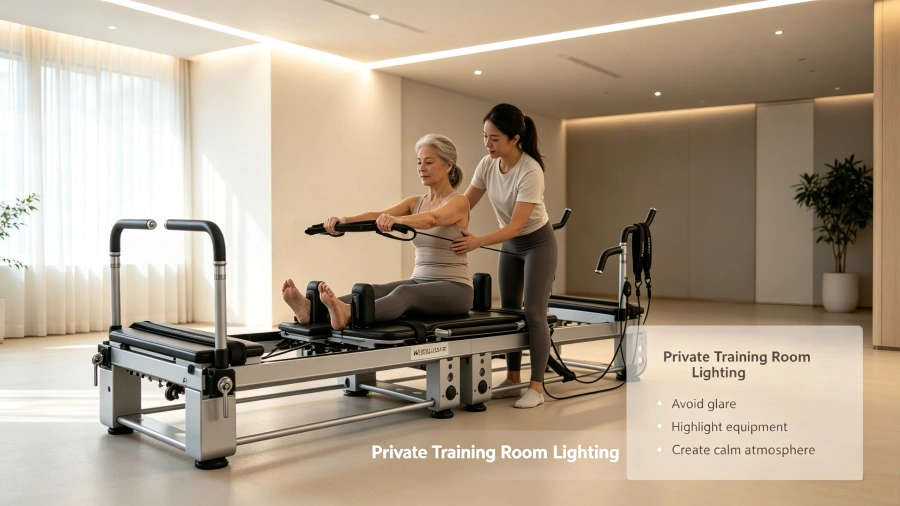
| Privateinheiten | 3000K – 3500K | Warm, persönlich |
Die obige Tabelle ist ein Ausgangspunkt, kein Regelwerk. Der richtige Ansatz für die meisten Studios ist ein steuerbares System, mit dem Trainer die Farbtemperatur zwischen den Kursen ändern können – worauf wir weiter unten ausführlich eingehen.
2. Beleuchtungszonen für ein Reformer-Studio
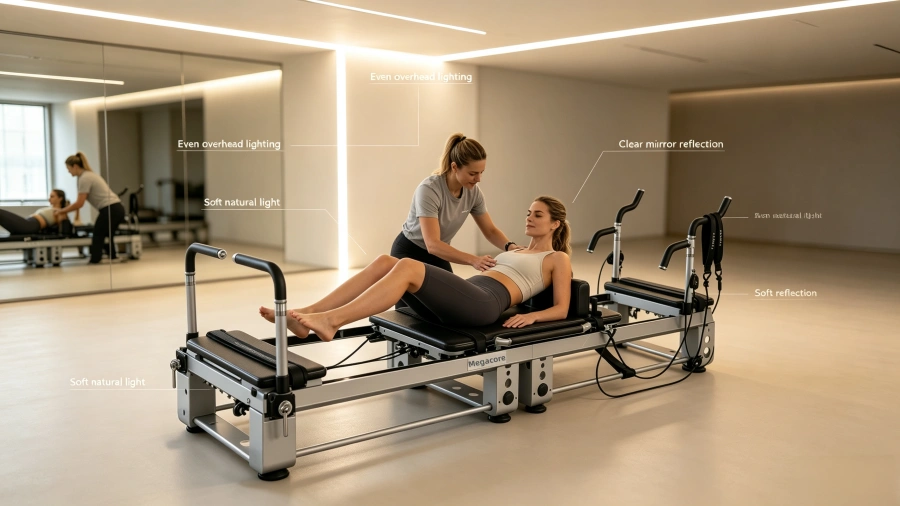
Effektive Pilates-Studio-Beleuchtung teilt den Raum in funktionale Zonen ein, und die richtige Zonierung ist wichtiger als die gewählten Leuchten – jede Zone hat ihren eigenen Beleuchtungsbedarf. Der Versuch, ein ganzes Studio mit einem einzigen Leuchtentyp auszuleuchten, erzeugt entweder dunkle Ecken oder ein flaches, krankenhausartiges Grelllicht – beides funktioniert beim Pilates nicht.
- Gerätezone: dort stehen die Reformer. Benötigt 300-500 Lux auf Bodenhöhe, damit Kunden und Trainer Verstellmechanismen, Seilbefestigungen und Federeinstellungen klar erkennen können. Deckenleuchten sind so zu positionieren, dass Schatten auf den Geräten minimiert werden.
- Bewegungszone: der Bereich um jeden Reformer für Übungen im Stand und Übergänge. Erfordert breiteres Umgebungslicht mit weniger Schatten; diffuse Deckenbeleuchtung mit einem CRI von 90+.
- Rand- und Übergangszonen: Türbereiche, Lager, Umkleidebereiche. Beleuchtung mit 100-200 Lux für sichere Orientierung, ohne mit den Hauptzonen zu konkurrieren.
Lineare LED-Leuchten, die parallel zu den Reformer-Schienen verlaufen, sorgen für gleichmäßige Ausleuchtung – deshalb bilden sie in den meisten Beleuchtungsplänen für Pilates-Studios das Fundament, ohne störende Blendung zu erzeugen. Dimmer oder zonenweise Steuerung lassen Trainer den Raum zwischen Kursformaten und Tageszeiten neu ausbalancieren.
3. Farbtemperatur und steuerbares Licht
Die in Kelvin gemessene Farbtemperatur ist die einzige Entscheidung mit der größten Wirkung in jedem Beleuchtungsprojekt für ein Pilates-Studio. Warmes Licht (2700-3000K) schafft eine entspannende, intime Atmosphäre, die die beruhigenden Aspekte der Praxis unterstützt. Kühles Licht (4000-5000K) fördert Wachheit und Fokus und eignet sich für intensivere Reformer-Kurse und Morgeneinheiten.
Ein steuerbares Weißlichtsystem ermöglicht Trainern, die Farbtemperatur nach Kurstyp anzupassen: 4000K für den morgendlichen Übergang ins Workout, 2700K für eine abendliche Regenerationseinheit. Steuerbare Systeme kosten üblicherweise 15-25 % mehr als Leuchten mit fester Farbtemperatur, bieten aber deutlich mehr Programmierflexibilität – und sie lassen einen Raum sowohl belebende als auch beruhigende Kursformate bedienen.
Tageslicht verdient einen bewussten Platz im Beleuchtungsplan eines Pilates-Studios. Verstellbare Jalousien oder Vorhänge lassen Trainer das Tageslicht über den Tag steuern, und nach Norden ausgerichtete Fenster liefern das gleichmäßigste Licht ohne die harte Richtwirkung von Ost- oder Westfassaden. Das Ziel ist, Tageslicht zu nutzen, wenn es hilft, und es abzuschirmen, wenn es Blendung auf dem Reformer-Wagen erzeugt.
4. Akustikdesign: Klang und Stille
Schallmanagement ist für eine effektive Studioumgebung genauso wichtig wie die Beleuchtung – deshalb behandelt dieser Ratgeber beides: Ein Raum mit hartem Echo untergräbt selbst die beste Beleuchtung im Pilates-Studio. Harte Oberflächen, wie sie in Fitnessräumen üblich sind – Betonböden, Glaswände, offene Decken –, erzeugen Nachhall, der mündliche Anweisungen schwer verständlich macht und Geräteklänge verstärkt. Die vollständige Analyse der Reformer-Akustik finden Sie in unserem speziellen Ratgeber zu Geräuschpegeln.
Die Akustikbehandlung sollte die Nachhallzeit auf 0,5-0,8 Sekunden senken – der optimale Bereich für Umgebungen mit Anleitung. Erreichen lässt sich das mit Akustik-Deckenplatten, wandmontierten schallabsorbierenden Paneelen und Teppich- oder Gummiböden, die Trittschall absorbieren. In Studios mit mehreren gleichzeitig laufenden Reformern verhindert akustische Zonierung, dass benachbarte Kurse sich gegenseitig stören.
Music systems should be zoned so different areas can run at different volumes, with speakers at ceiling height for even coverage. Music volume should never exceed the instructor’s speaking voice: clients need to hear both the instructions and the sound of their own movement on the reformer.
5. Ästhetik und Platzierung der Geräte
Die Reformer selbst sind Teil der Studioumgebung, und gute Beleuchtung im Pilates-Studio zeigt sie von ihrer besten Seite. Kommerzielle Reformer mit klaren Linien und gleichmäßigen Oberflächen verstärken die Qualitätsbotschaft eines Studios, und die Beleuchtung im Pilates-Studio lässt diese Oberflächen am besten wirken. Direkt ab Werk liefernde Hersteller bieten Oberflächenoptionen, die zum Designkonzept passen, sodass die Geräte als bewusstes Design statt als rein funktionale Hardware wirken.
Die Platzierung schafft visuelle Ordnung. In parallelen Reihen mit gleichmäßigen Abständen angeordnete Reformer vermitteln ein Gefühl professioneller Ruhe, und die Wagenpositionen sollten vom Trainerplatz aus sichtbar sein, damit ein Trainer den ganzen Raum überblicken kann. Zubehörlagerung gehört ins Design, nicht als nachträglicher Einfall – Unordnung zerstört die Atmosphäre, die Beleuchtung und Akustik so mühevoll aufbauen.
Jeder kommerzielle Reformer von Megacore wird mit einem Qualitätsprüfzertifikat und Prüfbericht geliefert – Referenz-Berichtsnummer GZHL2601000020601SP für die kommerzielle Serie –, sodass die ästhetische Qualität der Geräte durch dokumentierte Standards belegt ist und nicht nur durch das Aussehen.
6. Luftqualität und Temperatur
Luftqualität ist eine übersehene Komponente der Studio-Atmosphäre, die das Kundenerlebnis ebenso beeinflusst wie die Beleuchtung im Pilates-Studio selbst. Pilates-Studios brauchen eine stärkere Belüftung als typische Gewerbeflächen, weil Kunden während der Einheiten tief atmen. Die empfohlene Rate für Fitnessflächen liegt bei 15-20 Kubikfuß pro Minute und Person – etwa das Doppelte einer Standard-Büroumgebung.
| Faktor | Empfohlener Bereich | Warum es wichtig ist |
|---|---|---|
| Lüftungsrate | 15-20 CFM pro Person | Tiefes Atmen erfordert Frischluftaustausch |
| Raumtemperatur | 68-72°F | Komfort über alle Kursintensitäten |
| Luftfeuchtigkeit | 40-60% | Langlebigkeit und Komfort der Polsterung |
| Luftströmungsrichtung | Sanft, zugfrei | Vermeidet, dass Kunden mitten in der Einheit auskühlen |
Die Temperaturregelung sollte die Bandbreite der Aktivität über die Kurstypen berücksichtigen: Ein langsamer klassischer Kurs erzeugt weniger Körperwärme als ein hochintensiver Reformer-Flow. Zonenregelungen lassen verschiedene Bereiche des Studios mit unterschiedlichen Temperaturen laufen, und ein kleiner HLK-Puffer vor hochintensiven Einheiten hilft Kunden, sich bequem einzufinden.
7. Die Beleuchtungsinvestition budgetieren
Studioinhaber fragen oft, was Beleuchtung im Pilates-Studio tatsächlich kostet, und die Antwort prägt die meisten Renovierungsbudgets. Die ehrliche Antwort: Ein durchdachter Plan kostet weniger als ein planloser, weil das Nachrüsten von Leuchten und Dimmern nach der Eröffnung teuer ist. Budgetieren Sie das komplette System – Leuchten, Steuerung, Dimmer und professionelle Installation – und nicht nur die Leuchtenkosten allein.
| Systemtyp | Relative Kosten | Am besten für |
|---|---|---|
| Feste Leuchten + Dimmer | Grundausstattung | Studios mit einem Format, knappe Budgets |
| Zonengesteuerte LED | +15-25% | Zeitpläne mit mehreren Formaten |
| Vollständig steuerbares Weißlicht | +25-40% | Premium-Studios, Mix aus Regeneration und Intensität |
| Steuerbar + Szenen-Presets | Am höchsten | Markengeführte Studios, Spa-Positionierung |
Szenen-Presets sind das Upgrade, das sich bei der Beleuchtung im Pilates-Studio selbst bezahlt: Ein Knopfdruck schaltet den Raum vom Morgen-Flow auf abendliche Regeneration um, sodass Trainer das System tatsächlich nutzen, statt alles auf einer mittleren Einstellung zu belassen. Welche Stufe Sie auch wählen, installieren Sie überall Dimmer und halten Sie die Steuerung so einfach, dass jeder Trainer sie verwendet.
8. Ihre Studioumgebung einführen und verfeinern
Umgebungsdesign ist keine einmalige Entscheidung, und die Beleuchtung im Pilates-Studio ist der am leichtesten nach der Eröffnung zu verfeinernde Teil. Sammeln Sie nach der Eröffnung Feedback und beobachten Sie, wie jeder Raum genutzt wird, und verfeinern Sie dann in den ersten Monaten die Lichtszenen und die akustische Balance. Kleine Anpassungen – eine wärmere Abendszene, eine etwas hellere Bewegungszone – haben überproportionale Effekte darauf, wie Kunden das Studio beschreiben.
Start with the fundamentals: correct illumination levels in the equipment zone, dimmers everywhere, CRI 90+ fixtures, and acoustic treatment that brings reverberation into the instructional range. From there, layer in tunable color temperature and scene presets as the studio’s schedule and budget allow.
Häufig gestellte Fragen
F1: Welche Farbtemperatur ist für ein Pilates-Studio am besten?
Das hängt vom Kurs ab. 4000-4500K eignet sich für Morgen- und intensivere Einheiten; 2700-3000K eignet sich für Abend- und Regenerationskurse – deshalb dominieren steuerbare Systeme die Empfehlungen für Beleuchtung im Pilates-Studio. Ein steuerbares Weißlichtsystem lässt einen Raum beides leisten, weshalb es die häufigste Empfehlung für Beleuchtung im Pilates-Studio ist.
F2: Wie viele Lux braucht ein Reformer-Studio?
Die Gerätezone eines gut gestalteten Beleuchtungslayouts für ein Pilates-Studio benötigt 300-500 Lux auf Bodenhöhe für sicheres Einrichten und klare Sicht auf Federn und Seile. Bewegungszonen können mit diffusem Licht niedriger ausfallen, und Randzonen benötigen 100-200 Lux für sichere Orientierung.
F3: Brauche ich Dimmer in einem Pilates-Studio?
Ja. Dimmer sind die wertvollste Beleuchtungsinvestition in einem Studio, weil sie Trainer den Raum an Kurstyp und Tageszeit anpassen lassen. Ohne sie ist die Beleuchtung auf eine Stimmung festgelegt, und die Atmosphäre kann nicht flexibel reagieren.
F4: Wie reduziere ich das Echo in meinem Studio?
Streben Sie eine Nachhallzeit von 0,5-0,8 Sekunden an – mit Akustik-Deckenplatten, Wandabsorbern und Teppich- oder Gummiböden. Dieser Bereich hält mündliche Anweisungen klar, ohne den Raum tot wirken zu lassen.
F5: Ist Tageslicht gut für ein Reformer-Studio?
Ja, mit Kontrolle. Nach Norden ausgerichtete Fenster liefern gleichmäßiges, blendfreies Licht. Ost- oder Westfassaden brauchen verstellbare Jalousien, damit Trainer die Blendung auf dem Reformer-Wagen während Morgen- oder Nachmittagseinheiten steuern können.
F6: Was ist CRI und warum ist es wichtig?
CRI misst, wie naturgetreu ein Licht Farben wiedergibt. Ein CRI von 90+ lässt Kunden ihre Körperposition und die Geräte klar erkennen und lässt das Studio bestmöglich wirken. Leuchten mit niedrigerem CRI werfen ein flaches, unvorteilhaftes Licht, das der Atmosphäre entgegenwirkt, die Sie aufbauen.
Fazit
Beleuchtung und Atmosphäre im Pilates-Studio sind ebenso Geschäftswerkzeuge wie Designentscheidungen, und sie zahlen sich schnell aus. Sie prägen die Kundenzufriedenheit, rechtfertigen Premiumpreise und bauen die unverwechselbare Identität auf, die Kunden zurückkehren lässt. Die Grundlagen – korrekte Lux-Werte, Dimmer, Leuchten mit hohem CRI, Akustikbehandlung – sind bezahlbar und in jedem Raum umsetzbar.
Beginnen Sie mit den Beleuchtungszonen und der Farbtemperaturtabelle in diesem Ratgeber, budgetieren Sie das komplette System statt nur der Leuchten, und verfeinern Sie die Szenen nach der Eröffnung mit echtem Feedback. Das Ergebnis ist ein Studio, das sich vom Moment des Eintretens an durchdacht anfühlt.
Besprechen Sie Ihre Studio-Ausbauplanung mit Megacore
Weitere Ratgeber
- Ratgeber zu Geräuschpegeln bei Pilates-Reformern
- Wie man 2026 ein Pilates-Studio gründet
- Pilates-Reformer-Reinigungsleitfaden
- Leitfaden für Pilates-Studio-Bodenbeläge
Branchenreferenzen: Branchenstandards der Pilates Method Alliance, OSHA sanitation standardsund Umwelt-Infektionskontrolle der CDC.
Lighting is one line item in a fit-out; the studio equipment range covers the machines that eat the budget.