
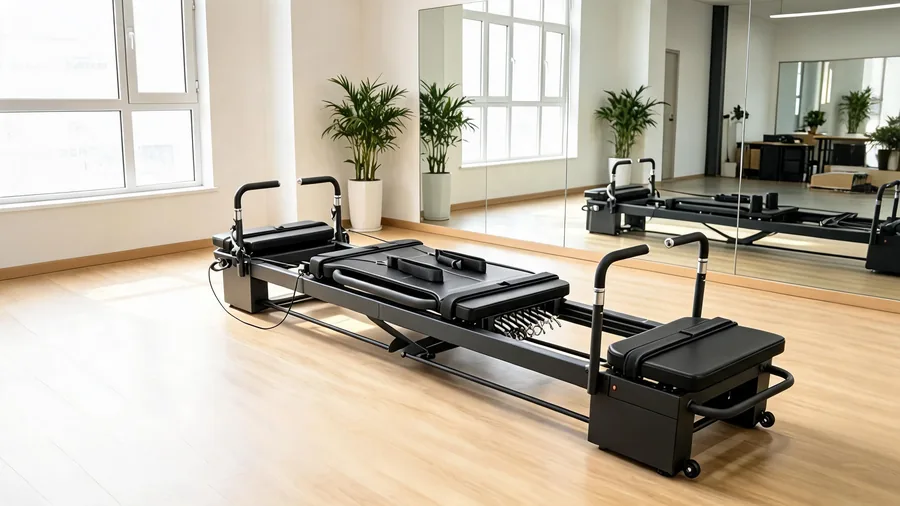
La science du reformeur Pilates pour la perte de poids
Reformer Pilates Le Pilates sur reformeur a gagné une place importante dans l’industrie du fitness pour son rôle sur la composition corporelle. Cette approche se distingue parce qu’elle développe la masse musculaire tout en brûlant des calories pendant la séance : l’entraînement en résistance sur reformeur crée une élévation métabolique durable, documentée dans des recherches publiées et qui se prolonge pendant des heures après le cours. Comprendre ce mécanisme aide les gérants de studio à positionner leurs cours de reformeur Pilates pour la perte de poids comme de vrais outils de gestion du poids. Cette approche fondée sur les preuves attire des clients qui veulent des résultats mesurables.
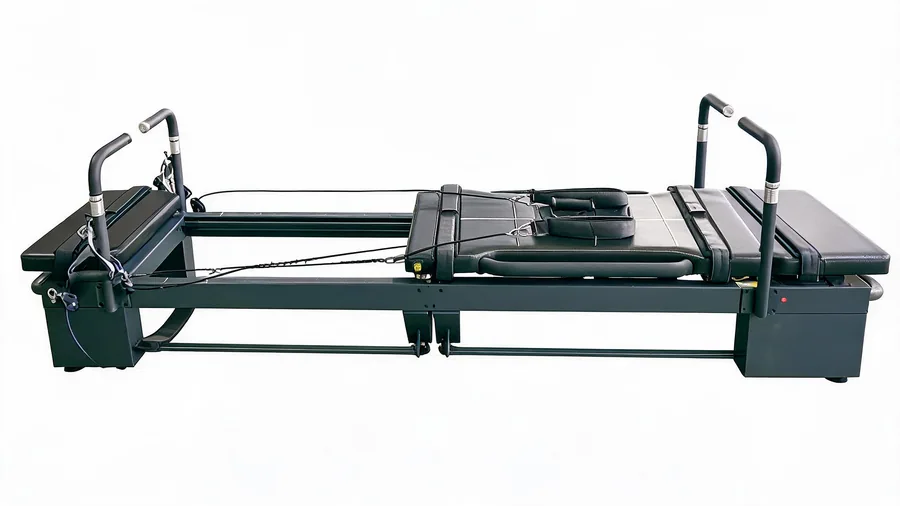
La dépense métabolique du reformeur Pilates pour la perte de poids
Une séance de 60 minutes sur reformeur à intensité modérée brûle généralement entre 250 et 400 calories pour une personne de 70 kg, selon le choix des exercices et la tension des ressorts. Mais le contributeur métabolique le plus important est l’effet afterburn — la consommation d’oxygène post-exercice (EPOC). Le travail en résistance sur reformeur augmente l’EPOC de 15 à 25 % au-dessus du niveau de repos pendant jusqu’à 16 heures après la séance : le corps continue de brûler des calories supplémentaires pendant que le client vaque à ses occupations.
Cet effet est amplifié lorsque la séance inclut du travail excentrique — l’allongement contrôlé des muscles sous tension. Les ressorts du reformeur favorisent naturellement le contrôle excentrique, car la phase de retour oblige le client à résister à la traction du ressort. Des recherches publiées dans le Journal of Strength and Conditioning Research indiquent que l’entraînement en résistance axé sur l’excentrique augmente l’EPOC d’environ 30 % par rapport aux protocoles uniquement concentriques à charge de travail équivalente.
Les schémas d’activation musculaire sur le reformeur
Les études d’électromyographie de surface (sEMG) sur corps entier portant sur les exercices au reformeur révèlent des schémas d’activation très différents du Pilates au sol ou des machines de salle de sport classiques. Le chariot instable monté sur ressorts oblige le corps à recruter la musculature stabilisatrice tout au long du mouvement. Des exercices comme le footwork activent le grand fessier à 65-80 % de la contraction maximale volontaire — comparable au hip thrust à la barre — tout en sollicitant simultanément le transverse et le plancher pelvien.
Ce recrutement multi-musculaire est ce qui rend le reformeur efficace pour la recomposition corporelle. Au lieu d’isoler un seul muscle, chaque exercice développe plusieurs groupes dans des schémas de mouvement coordonnés. Pour les clients dont l’objectif principal est la perte de poids, un programme alternant, dans la même séance, des exercices dominés par le bas du corps et par le haut du corps maximise le recrutement total des fibres musculaires, et donc la dépense énergétique totale.
Programmer des séances de reformeur Pilates pour la perte de poids
Tous les cours de reformeur ne produisent pas les mêmes résultats métaboliques. Un cours de flow doux, avec une tension de ressort légère et des transitions lentes, cible surtout la mobilité et le contrôle neuromusculaire ; sa dépense calorique reste modeste. Un cours de reformeur structuré pour faire évoluer la composition corporelle intègre des variables de programmation spécifiques :
La tension des ressorts doit être réglée pour que les 2 à 3 dernières répétitions de chaque série exigent un effort proche du maximum. Pour les exercices du bas du corps ciblant fessiers et quadriceps, cela signifie généralement des ressorts moyens à lourds. Pour le haut du corps, des ressorts légers à moyens avec un tempo lent et une amplitude complète augmentent le temps sous tension. L’ordre des exercices doit alterner les grands groupes musculaires — jambes puis bras — pour maintenir la fréquence cardiaque élevée pendant toute la séance.
Les protocoles par intervalles sont particulièrement efficaces. Structurer un cours en intervalles de 3 minutes à 80 % d’effort perçu, suivis de 60 secondes de récupération active (étirements doux sur le chariot), maintient la fréquence cardiaque dans la zone de conditionnement aérobie et anaérobie. Les studios qui proposent des programmes de reformeur orientés perte de poids intègrent généralement 8 à 12 semaines de surcharge progressive, en augmentant la tension des ressorts ou le volume de répétitions à mesure que le client s’adapte.
Intégrer le reformeur dans un programme de gestion du poids en studio
Les gérants visionnaires intègrent le Pilates sur reformeur comme un volet d’une offre complète de gestion du poids. Un planning hebdomadaire type combine trois séances de reformeur avec deux séances complémentaires : barre au sol, Pilates au sol ou intervalles cardio. Les clients qui suivent cette fréquence pendant 12 semaines constatent généralement une baisse de 3 à 6 % de masse grasse, avec des gains mesurables de masse maigre, selon les données de plusieurs exploitants multi-sites.
L’accompagnement nutritionnel amplifie les résultats. Les studios qui s’associent à des diététiciens diplômés ou à des coachs en nutrition certifiés et intègrent une éducation alimentaire de base dans leurs programmes de reformeur affichent une rétention client 40 % supérieure à 6 mois par rapport aux studios qui ne misent que sur le matériel. Même sans partenariat formel, donner aux adhérents des conseils fondés sur les preuves concernant l’apport en protéines et le timing des repas autour des séances apporte une réelle valeur ajoutée.
Le rôle de la résistance des ressorts dans le développement de la masse maigre
Le tissu musculaire maigre est métaboliquement actif : chaque kilo de muscle brûle environ 13 calories par jour au repos, contre 4,5 calories par kilo de graisse. Développer la masse maigre grâce à l’entraînement en résistance sur reformeur crée donc une augmentation durable du métabolisme de repos. C’est le mécanisme fondamental par lequel le Pilates sur reformeur soutient la gestion du poids à long terme, au-delà des calories brûlées pendant chaque séance.
La résistance par ressorts est particulièrement adaptée au développement de la masse maigre, car elle offre une résistance accommodante : la force du ressort augmente linéairement à mesure qu’il s’étire, ce qui oblige le muscle à travailler davantage en fin d’amplitude, là où l’avantage mécanique est le plus faible. Cela contraste avec les machines à charges guidées, où la résistance est constante sur toute l’amplitude. Cette nature accommodante impose une tension continue aux muscles sollicités, ce qui stimule une meilleure adaptation neuromusculaire.
Mesurer les progrès au-delà du poids sur la balance
Les gérants doivent sensibiliser leurs clients orientés perte de poids à des indicateurs plus pertinents que le seul poids corporel. Les mesures de circonférence — taille, hanches, cuisse, bras — relevées toutes les deux semaines fournissent des données objectives sur la perte de graisse même quand la balance ne bouge pas. Des photos de progression prises avec un éclairage et une tenue constants sont un autre outil de suivi fiable. Les balances à impédancemétrie mesurant le pourcentage de masse grasse valent l’investissement pour tout studio disposant d’un programme dédié à la perte de poids.
Les indicateurs de performance sont également corrélés à l’amélioration de la composition corporelle. À mesure que la masse maigre augmente, la capacité à réaliser plus de répétitions à tension donnée, ou à utiliser des ressorts plus lourds pour le même nombre de répétitions, progresse. Suivre ces gains objectifs motive les clients et démontre les progrès indépendamment des fluctuations du poids sur la balance.
Équipement pour le reformeur Pilates et la perte de poids : bien choisir son reformeur
Les reformeurs destinés à une programmation intense orientée perte de poids exigent une construction robuste. Les transitions répétées à forte tension et le rythme plus rapide des cours génèrent plus de contraintes mécaniques que le travail de flow traditionnel. La rigidité du châssis, la qualité des ressorts et la fluidité des roulements du chariot deviennent d’autant plus critiques que l’intensité augmente. Les reformeurs de qualité commerciale à châssis en acier soudé, roulements étanches et ressorts traités thermiquement constituent la référence pour cet usage.
La configuration du jeu de ressorts compte aussi. Les reformeurs avec code couleur individuel des ressorts (généralement des ressorts de 1,0, 1,5 et 2,0 kg dans des couleurs distinctes) permettent aux instructeurs d’annoncer des charges précises lors de transitions rapides. Cela réduit le temps de transition et maintient la fréquence cardiaque élevée pendant toute la séance. Les reformeurs Megacore Pilates sont livrés avec des systèmes de ressorts à code couleur et des châssis conçus pour supporter les volumes de charge d’une programmation commerciale intense.
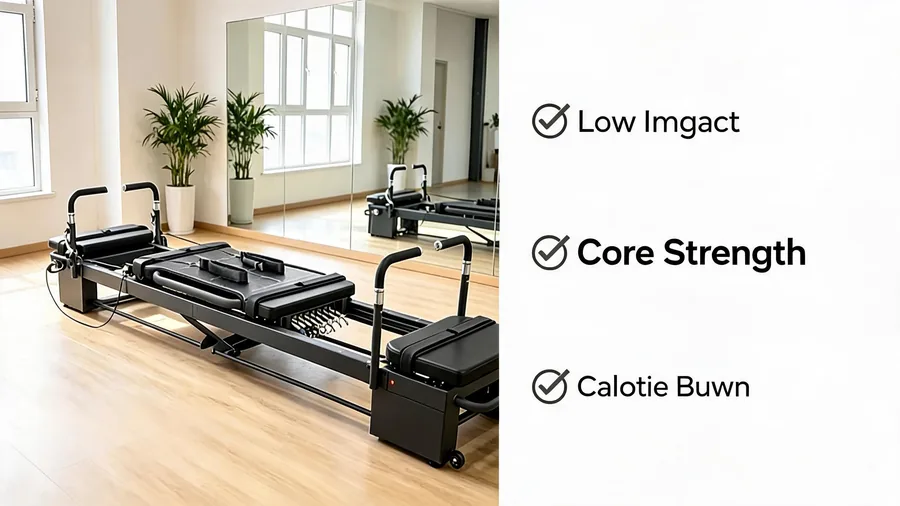
Construire un programme de reformeur Pilates pour la perte de poids qui fidélise les clients
Les studios qui réussissent avec des programmes de reformeur orientés perte de poids sont ceux qui associent une programmation efficace à des structures de suivi. Proposer un forfait d’évaluation initial comprenant un test de composition corporelle et un screening du mouvement établit une base de référence. Des réévaluations toutes les 4 semaines donnent aux clients des preuves tangibles de progrès. L’équipement est l’outil, mais la conception du programme et l’expérience client déterminent si les adhérents atteignent leurs objectifs et renouvellent leur abonnement. Comment modifier ou séquencer les exercices de reformeur Pilates ?
Pourquoi Megacore est le meilleur Reformer Pilates pour les studios
Comparer les Reformers Pilates extra-robustes : les critères à vérifier
Reformeur Pilates, Megaformer ou Cadillac : comparatif des équipements pour gérants de studio
Les ressources sectorielles suivantes apportent des recommandations de référence sur ce sujet :
- Recommandations d’activité physique du NIH
- International Association of Fitness
- Pilates Method Alliance
Les ressources sectorielles suivantes apportent des recommandations de référence sur ce sujet :
- Normes de sécurité OSHA
- Recommandations du CDC sur le contrôle des infections
Ressources sectorielles pour approfondir le sujet du reformeur Pilates et de la perte de poids :
- Normes de l’ACE Fitness
- Normes d’hygiène OSHA
- CDC – Maîtrise des infections liées à l'environnement
Pour la sécurité et les normes de qualité des équipements, consultez les lignes directrices de la Pilates Method Alliance. Les recommandations environnementales du CDC pour les salles de sport fournissent des normes complémentaires en matière d’hygiène et d’entretien des équipements commerciaux. Les normes d’hygiène OSHA s’appliquent également aux studios de fitness commerciaux utilisant du matériel partagé.
Questions fréquentes
Q1 : Peut-on vraiment perdre du poids avec des séances de reformeur Pilates ?
Oui, le Pilates sur reformeur brûle 200 à 400 calories par heure selon l’intensité, développe la masse musculaire maigre qui augmente le métabolisme de repos et crée une habitude d’exercice durable favorable à la gestion du poids à long terme.
Q2 : À quelle fréquence pratiquer le reformeur Pilates pour perdre du poids ?
Pour de meilleurs résultats, entraînez-vous 3 à 5 fois par semaine. Associez les séances de reformeur à 2 ou 3 séances de cardio par semaine et maintenez un plan nutritionnel adapté. Une pratique régulière donne de meilleurs résultats que des séances intenses occasionnelles. La pratique régulière du reformeur Pilates pour la perte de poids aide aussi à installer une routine favorable à des changements de mode de vie durables.
Quelle garantie et quel support attendre d’un fabricant sérieux ?
Un équipement commercial doit être couvert par au moins 2 ans de garantie structurelle et 1 an sur les composants. Les fabricants en direct usine comme Megacore offrent souvent une couverture étendue et un support technique direct. Demandez toujours la documentation de garantie par écrit avant l’achat.
Conclusion
Pour une perte de poids efficace avec le reformeur Pilates, la combinaison d’entraînement en résistance, de sollicitation musculaire et d’élévation métabolique fait du reformeur un outil polyvalent. Les gérants qui investissent dans des reformeurs de qualité commerciale et conçoivent des programmes ciblés aident leurs clients à obtenir des résultats durables tout en fidélisant leur base de clientèle.
Whether you are equipping a new studio or expanding an existing one, choosing the right equipment is essential for delivering effective Pilates reformer for weight loss results to your clients and members. Megacore’s commercial reformers are designed for high-volume studio use with durable construction and smooth resistance systems.
Guides associés
- Guide de tension des ressorts de reformeur Pilates
- Guide des tarifs d’un studio de reformeurs
- Guide des dimensions de reformer Pilates
- Guide de la capacité de charge des reformers
- Reformeur Pilates et perte de poids : guide des améliorations de confort
If this is for home use, the home reformer range lists the models built for it.