
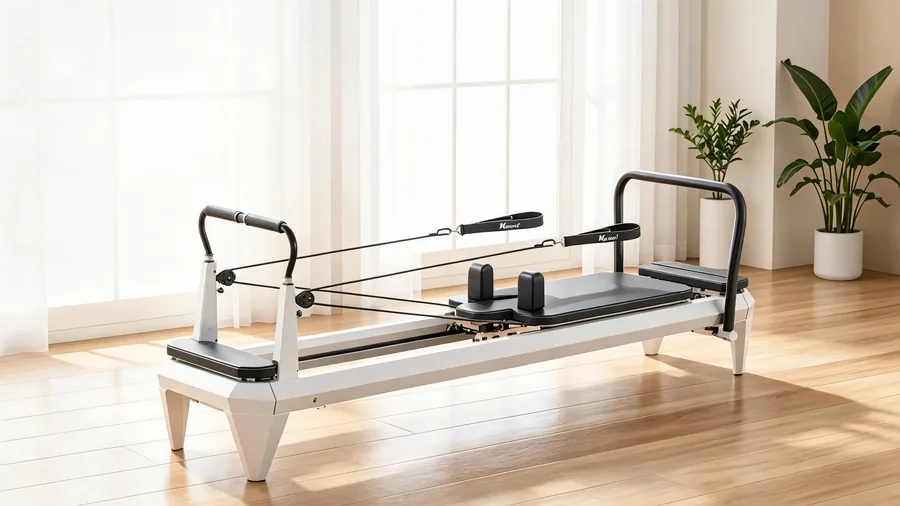
La plateforme d'un reformeur Pilates est la surface sur laquelle glisse le chariot et où les mains, les pieds ou le corps de l'utilisateur entrent en contact — et c'est l'un des composants les plus négligés lors du choix d'un équipement. Le matériau, la finition et la construction de la plateforme influent directement sur la performance des exercices, l'entretien du matériel et la durabilité à long terme.
Chaque matériau offre des avantages distincts en termes de frottement, de capacité de charge, d'exigences d'entretien et de coût. Le choix dépend de l'usage : un studio de Pilates classique préférera la sensation traditionnelle du bois, tandis qu'un studio de reformeur haute intensité privilégiera la durabilité de l'aluminium ou la glisse de l'acrylique.
1. Pourquoi la plateforme du reformeur Pilates compte
Every pilates reformer platform board choice starts with the same question: how will the surface be used? The platform board carries the carriage on one side and supports the user’s hands, feet, or body on the other. A pilates reformer platform board that performs well in a home studio can wear out quickly under eight to twelve commercial sessions a day, which is why material selection matters more for studios than for home buyers.
2. Plateformes en acrylique : glisse et modernité
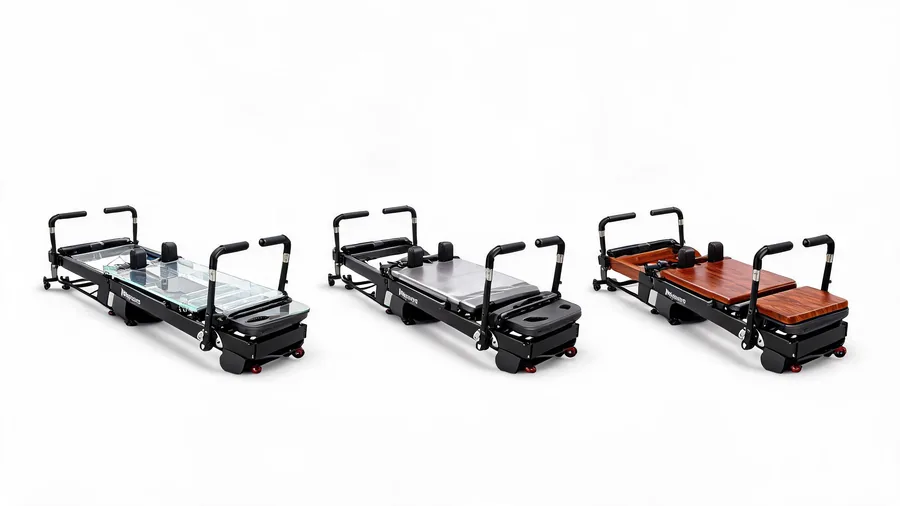
Les plateformes en acrylique se sont imposées sur les reformeurs commerciaux modernes pour leur glisse exceptionnelle et leur attrait visuel. Le matériau permet un coefficient de frottement très faible entre le chariot et les rails, d'où une glisse quasi silencieuse qui améliore l'expérience du client. Les plateformes acryliques font généralement 10 à 12 mm d'épaisseur et sont renforcées par des agents de réticulation pour éviter la fissuration sous charge.
L'un des principaux avantages de l'acrylique est sa performance constante sur toute la plage de températures et d'humidité. Contrairement au bois, qui se dilate et se contracte avec les variations environnementales, l'acrylique conserve sa stabilité dimensionnelle quelles que soient les conditions. Cette constance est particulièrement précieuse dans les studios situés sous des climats à fortes variations saisonnières d'humidité, où les plateformes en bois peuvent développer des points durs ou du grippage avec le temps.
Les plateformes acryliques offrent aussi une clarté optique supérieure, permettant aux fabricants de créer des plateformes transparentes ou translucides qui ajoutent de l'intérêt visuel au design du reformeur. Certains reformeurs commerciaux haut de gamme utilisent des plateformes acryliques rétroéclairées qui illuminent la zone du chariot, créant un effet visuel spectaculaire en studio. L'acrylique est toutefois plus sensible aux rayures que l'aluminium ou le bois, et un usage intensif avec des chaussures abrasives peut marquer la surface avec le temps.
L'acrylique est le meilleur choix pour une plateforme de reformeur Pilates lorsque la clarté optique et l'esthétique de studio moderne sont prioritaires. Il se nettoie aussi facilement à l'eau et au savon doux, ce qui garde la plateforme présentable entre les cours avec un minimum d'efforts.
3. Plateformes en aluminium : durabilité maximale
Les plateformes en aluminium représentent l'option la plus durable pour les reformeurs commerciaux, et pour une plateforme de reformeur Pilates soumise à huit cours par jour, c'est l'investissement le plus sûr à long terme. Fabriquées à partir de profilés extrudés, généralement en nuance 6061-T6, ces plateformes sont usinées à des tolérances précises et anodisées pour résister à la corrosion. Une plateforme en aluminium ne se voilera pas, ne se fissurera pas et ne se délaminera pas, même après des décennies d'usage commercial quotidien.
La capacité de charge des plateformes en aluminium est nettement supérieure à celle de l'acrylique ou du bois. Une plateforme standard en bois ou en acrylique supporte jusqu'à 350 lb en sécurité, alors qu'une plateforme aluminium de dimensions équivalentes peut supporter plus de 500 lb sans déflexion mesurable. Cette capacité supérieure est importante pour les studios accueillant des morphologies variées et pour les exercices impliquant plusieurs utilisateurs ou des charges additionnelles.
Les plateformes en aluminium dissipent aussi mieux la chaleur que l'acrylique ou le bois, un avantage dans les cours à haute intensité où le chariot génère de la chaleur de frottement lors des mouvements rapides. En revanche, elles sont plus lourdes, ajoutant 5 à 10 lb au poids total du reformeur, et transmettent davantage le son que l'acrylique ou le bois, ce qui peut rendre le fonctionnement plus bruyant dans les studios réverbérants.
La surface anodisée des plateformes en aluminium exige des protocoles de nettoyage spécifiques. Les nettoyants alcalins agressifs peuvent dégrader la couche anodisée et exposer l'aluminium à l'oxydation. Les studios équipés de plateformes aluminium doivent utiliser des solutions de nettoyage à pH neutre et éviter les éponges abrasives qui rayeraient la finition anodisée.
4. Plateformes en bois : la sensation traditionnelle
Les plateformes en bois restent le choix privilégié du Pilates classique, offrant à la plateforme une chaleur et une sensation traditionnelles que certains clients préfèrent — notamment les studios et praticiens attachés à l'esthétique classique. Les plateformes en bois de qualité sont généralement construites en contreplaqué de bouleau de la Baltique multiplis ou en contreplaqué de qualité marine, choisis pour leur stabilité dimensionnelle et leur résistance au délaminage. Le bois est scellé par plusieurs couches de polyuréthane ou de vernis marin pour le protéger de l'humidité et de l'usure.
Le grain naturel et l'aspect chaleureux du bois créent une atmosphère de studio accueillante que beaucoup de clients trouvent plus engageante que le métal industriel ou le plastique. Les plateformes en bois offrent aussi un retour acoustique légèrement différent : le son du chariot glissant sur le bois est plus chaud et moins mécanique que sur l'aluminium ou l'acrylique.
Cependant, les plateformes en bois demandent plus d'entretien que leurs équivalents synthétiques, et une plateforme de reformeur Pilates en bois a besoin d'une finition scellée pour résister au nettoyage quotidien. La finition protectrice finit par s'user aux points de fort contact, nécessitant ponçage et revernissage. L'humidité de la transpiration et des produits de nettoyage peut pénétrer les zones de finition usée, faisant gonfler le bois et créant des points de frottement sur les rails. Les studios qui utilisent des plateformes en bois doivent prévoir de les rénover ou de les remplacer tous les 2 à 3 ans en usage commercial.
5. Analyse comparative des performances
Lorsqu'on évalue les matériaux de plateforme, plusieurs indicateurs de performance entrent en jeu. Le coefficient de frottement influe directement sur la fluidité du mouvement du chariot et sur l'effort nécessaire pour l'amorcer. L'acrylique offre généralement le coefficient de frottement le plus faible (0,15-0,20), suivi de l'aluminium (0,20-0,30) puis du bois verni (0,25-0,35). Ces valeurs évoluent toutefois avec l'usure : le coefficient du bois augmente nettement à mesure que la finition s'use, tandis que l'acrylique et l'aluminium restent plus constants.
La résistance aux chocs décrit la capacité de la plateforme à supporter des charges soudaines, et c'est l'indicateur qui distingue une plateforme conçue pour les studios d'une plateforme pour usage domestique occasionnel. L'aluminium excelle dans ce domaine, avec une résistance aux chocs environ trois fois supérieure à celle de l'acrylique et 1,5 fois celle du bois haut de gamme. C'est pourquoi l'aluminium est privilégié par les studios qui proposent des cours de jump board, où le chariot revient contre la butée avec une force importante à chaque répétition.
La résistance chimique compte pour les studios qui utilisent des produits de nettoyage et de désinfection. L'acrylique peut être endommagé par les nettoyants alcoolisés, développant un faïençage (fines fissures de surface) en cas d'exposition répétée. La couche anodisée de l'aluminium offre une excellente résistance chimique, tandis que la finition du bois peut être dégradée par les désinfectants agressifs. Les studios doivent vérifier que le matériau choisi est compatible avec leurs protocoles de nettoyage.
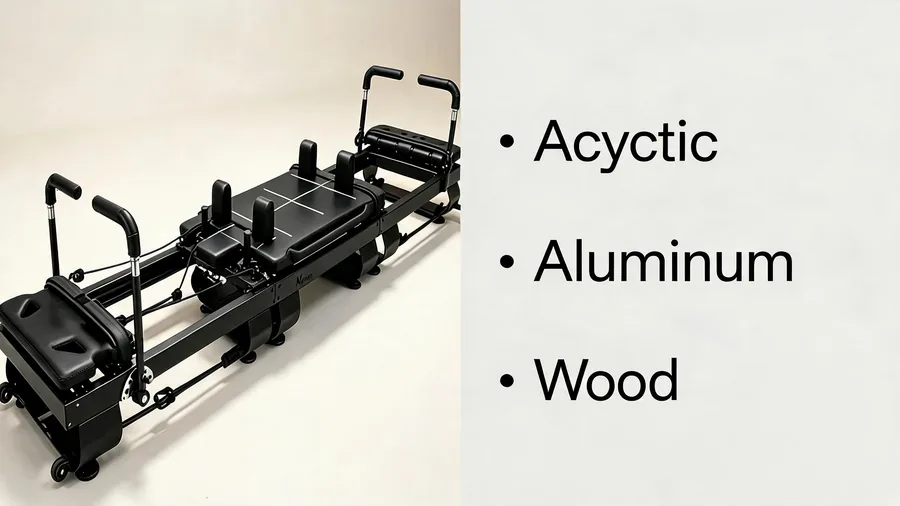
Le frottement est la variable cachée. Les plateformes acryliques offrent la résistance au glissement la plus faible, appréciée de certains instructeurs pour le footwork rapide ; l'aluminium se situe au milieu ; le bois verni offre le plus d'adhérence, adapté au travail classique plus lent. Tester la plateforme réelle avant l'achat — ou au moins demander un échantillon — élimine toute approximation pour accorder la plateforme à votre style de cours.
6. Assurance qualité en direct usine
Les fabricants en direct soumettent tous les matériaux de plateforme à des essais normalisés dans le cadre de leur programme d'assurance qualité, documentés dans le certificat GZHL2601000020601SP. Ces essais comprennent la vérification de la précision dimensionnelle, l'essai de déflexion sous charge, la mesure de la dureté de surface et la simulation d'usure accélérée. Les acheteurs commerciaux doivent demander la documentation d'essai du matériau choisi pour vérifier qu'il atteint les performances spécifiées.
La garantie de 3 ans des reformeurs commerciaux en direct usine couvre les défauts de fabrication de la plateforme, notamment le délaminage des plateformes en bois, le faïençage des plateformes acryliques et les défauts d'anodisation des plateformes aluminium. L'usure normale due à l'usage régulier est exclue, les studios doivent donc prévoir un remplacement à terme selon leur volume d'utilisation. Les plateformes de rechange des fabricants en direct coûtent généralement entre 100 et 300 $, selon le matériau et la taille.
Megacore teste chaque lot de matériau de plateforme pour l'état de surface, la constance dimensionnelle et le collage avant assemblage. Le protocole d'essai est documenté dans le certificat qualité GZHL2601000020601SP, offrant aux acheteurs une référence indépendante sur la qualité de plateforme qu'ils paient. Le certificat couvre la plateforme ainsi que tous les autres composants structurels.
7. Conclusion : accorder le matériau à l'usage
Il n'existe pas de meilleur matériau de plateforme unique — le choix optimal dépend des exigences spécifiques du studio.
Les plateformes acryliques conviennent aux studios qui privilégient un fonctionnement fluide et silencieux ainsi que l'esthétique, en particulier dans les environnements modernes ou haut de gamme. Les plateformes en aluminium sont le meilleur choix pour les studios à fort volume, les cours intensifs de jump board et les applications exigeant une durabilité maximale. Les plateformes en bois restent l'option préférée des studios de Pilates classique et des environnements où l'esthétique et la sensation traditionnelles sont primordiales. En comprenant les caractéristiques de performance de chaque matériau, les propriétaires de studios peuvent choisir la plateforme qui soutient le mieux leur programmation et leurs objectifs commerciaux. Les meilleurs reformeurs Pilates pour un usage commercial
Pour la plupart des studios commerciaux, l'aluminium offre le meilleur équilibre entre durabilité et faible entretien, tandis que l'acrylique convient aux espaces boutique qui privilégient l'esthétique. Le bois reste le choix des environnements d'entraînement classique.
Quel que soit le matériau retenu, demandez la fiche technique de la plateforme au fabricant et vérifiez sa couverture par la garantie avant de commander. Une plateforme adaptée à votre planning de cours et à votre routine de nettoyage sera plus performante qu'une plateforme plus chère qui ne l'est pas.
Questions fréquentes
Q : Quel matériau de plateforme dure le plus longtemps en studio commercial ?
R : Les plateformes en aluminium offrent la meilleure durabilité et la meilleure résistance aux chocs, c'est pourquoi elles équipent en standard les reformeurs commerciaux à fort volume. L'aluminium anodisé résiste aussi mieux aux produits de nettoyage que l'acrylique ou le bois non traité, ce qui compte car une plateforme de reformeur Pilates est essuyée après chaque séance en studio commercial. Dans les studios à forte fréquentation, c'est précisément ce nettoyage quotidien qui fait d'abord céder les plateformes les plus faibles.
Q : La plateforme peut-elle être remplacée sur un reformeur existant ?
R : Oui, sur la plupart des modèles commerciaux, la plateforme est une pièce remplaçable. Les studios doivent prévoir son remplacement à terme selon le volume d'utilisation ; l'usure normale est exclue de la plupart des garanties, intégrez donc ce coût à votre plan de maintenance dès le premier jour.
Q : Qu'est-ce qui distingue un reformeur commercial d'un reformeur domestique ?
R : Les reformeurs commerciaux utilisent des cadres plus lourds (acier plutôt qu'aluminium léger), des roulements étanches plutôt qu'ouverts, des ressorts plus robustes et des capacités de charge supérieures. Une unité commerciale dure 5 à 10 ans et plus en usage quotidien de studio. Une unité domestique dure 2 à 5 ans en usage domestique régulier.
Q : Faut-il acheter en direct usine ou via un distributeur ?
R : Les fabricants en direct comme Megacore offrent le meilleur rapport qualité-prix car vous éliminez la marge des intermédiaires. Comparez la construction du cadre, le type de roulements, la qualité des ressorts et les conditions de garantie plutôt que les seuls noms de marque.
Q : Que vérifier lorsqu'on compare des reformeurs ?
A: Look at: frame weight (heavier usually means sturdier), bearing type (sealed > open), spring gauge (thicker = more durable), carriage design, rope quality, and warranty length. Test carriage smoothness and listen for noise — smooth and quiet indicates quality.
Q : Comment évaluer le coût réel d'un reformeur ?
R : Un reformeur commercial à 3 000 $ qui dure 8 ans coûte 375 $/an. Un reformeur domestique basique à 1 200 $ qui dure 2 ans coûte 600 $/an. L'unité commerciale est en fait plus rentable par an. C'est pourquoi la valeur doit se calculer dans le temps, et pas seulement sur le prix d'achat.
Guides associés
- Matériaux de cadre des reformeurs Pilates : acier, aluminium ou bois
- Exercices de jump board sur reformeur Pilates
- Les meilleurs reformeurs Pilates pour usage commercial
- Guide de nettoyage du reformer Pilates
- Guide de garantie des équipements
Les normes du secteur en matière d'espacement des équipements et de sécurité en studio sont disponibles auprès de la Pilates Method Alliance. Pour les recommandations d'hygiène des installations, consultez CDC – Maîtrise des infections liées à l'environnement et les normes d'hygiène de l'OSHA.
Platform board material per model is listed on the reformer model pages.