
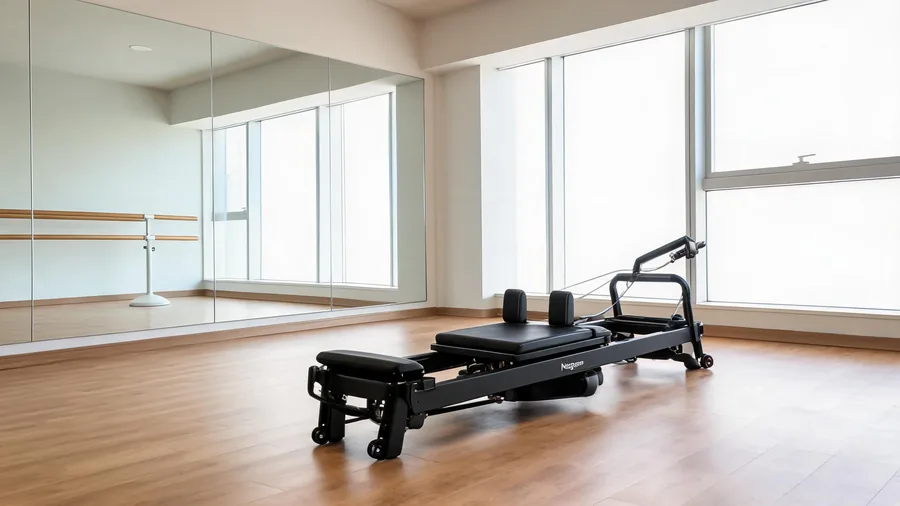
Dansers gebruiken Pilates cross-training al sinds het ontstaan van de methode — Joseph Pilates werkte zelf met dansers en ontwikkelde een groot deel van het reformer-repertoire met hun specifieke bewegingsbehoeften in gedachten. Tegenwoordig integreren professionele dansgezelschappen, dansopleidingen aan universiteiten en onafhankelijke dansstudio's de Pilates reformer voor dansers in hun cross-trainingprogramma's voor blessurepreventie, krachtopbouw en revalidatie.
Deze gids behandelt de specifieke reformer-oefeningen die dansers ten goede komen, de apparatuurkenmerken die belangrijk zijn voor dansstudio's, seizoensgebonden programmering voor dansgezelschappen en marketingstrategieën om de dansgemeenschap te bereiken. Voor studio-eigenaren vormt de dansersdoelgroep een klantenbestand dat het hele jaar door met hoge frequentie traint en sterke doorverwijsnetwerken heeft, wat zorgt voor constante omzet gedurende het hele jaar, ongeacht de uitvoeringsseizoenen.
1. Waarom Dansers een Pilates Reformer voor Dansers Cross-Training Nodig Hebben
Dans vereist extreme bewegingsuitslagen in combinatie met explosieve kracht en langdurig uithoudingsvermogen — een combinatie die unieke eisen aan het lichaam stelt. De Pilates reformer komt aan deze behoeften tegemoet met variabele veerweerstand die spieren over hun volledige bewegingsbereik versterkt, zonder de compressiebelasting van gewichten. Voor dansers die herstellen van een blessure maakt het gecontroleerde, glijdende rijgedeelte van de reformer progressieve belasting mogelijk die aansluit bij de genezingssnelheid van de weefsels.
Dansspecifieke voordelen van de Pilates reformer voor dansers zijn onder meer: verbeterde turn-outkracht via gerichte heupdraaioefeningen, grotere spronghoogte via gecontroleerd veerbelast voetwerk met de jump board-accessoire, minder blessurerisico door gebalanceerde spierontwikkeling die de bij dansers gebruikelijke overontwikkeling corrigeert, sneller herstel van veelvoorkomende dansblessures zoals enkelverstuikingen, hamstringverrekkingen en lage rugpijn, en betere port de bras-controle via armveerwerk dat de bovenrug en schouders versterkt.
2. Beste Reformer-Oefeningen voor Dansers
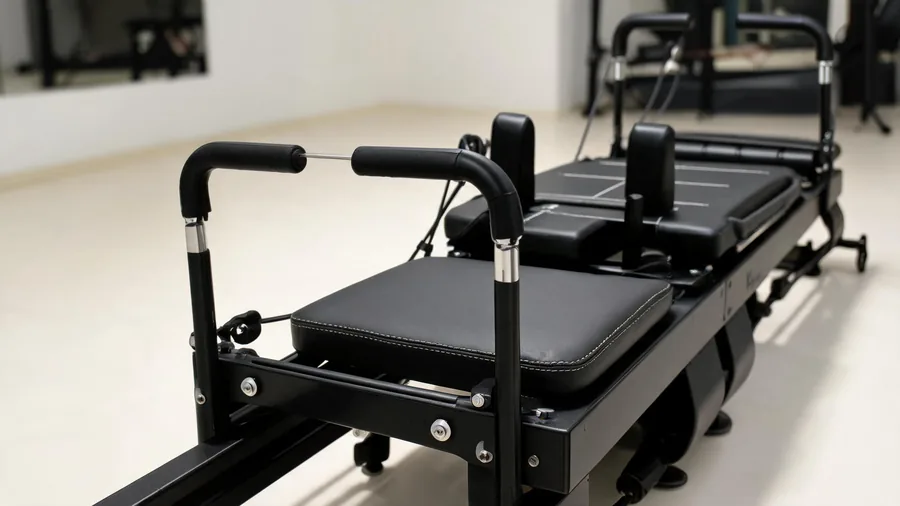
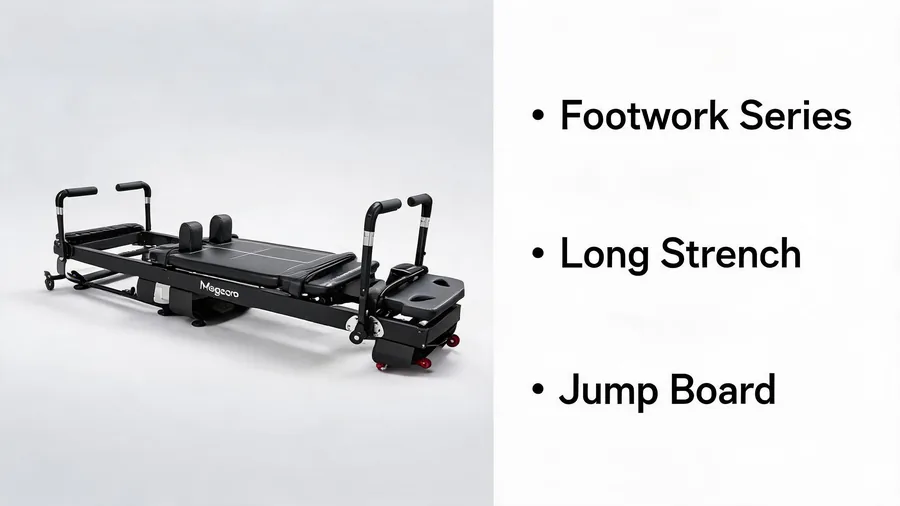
Overweeg voor dansgezelschappen die een reformer-studio inrichten reformers van commerciële kwaliteit met soepel glijdende rijgedeelten en constante veerspanning. De jump board-accessoire is bijzonder waardevol voor dansers — hij maakt explosieve sprongtraining mogelijk met variabele weerstand die kracht opbouwt zonder de impactbelasting van springen op een harde vloer. De Megacore C26-serie heeft precisielagers en zware veren die het intensieve gebruik aankunnen dat typerend is voor de trainingsschema's van professionele dansgezelschappen.
3. Apparatuurkenmerken voor Reformers in Dansstudio's
Dansstudio's hebben reformers nodig die aansluiten bij de specifieke fysieke eisen van dansers. Extra lange rijgedeelten (30+ inch) bieden plaats aan langere dansers met langere ledematen. Bredere platforms (16+ inch) ondersteunen dansers die in turn-outpositie werken. Zware veren met een classificatie van 40+ pond leveren voldoende weerstand voor sprongtraining op professioneel niveau.
De framhoogte moet aansluiten bij het comfort van de danser — standaardframes van 20 inch werken voor de meeste volwassen dansers, terwijl lagere frames (18 inch) de voorkeur kunnen krijgen bij petite dansers of dansers met kortere benen. Verstelbare schoudersteunen en hoofdsteunen zorgen voor een correcte uitlijning bij verschillende lichaamstypes in een dansgezelschap.
Branchebronnen over dansconditie zijn te vinden via de Pilates Method Alliance (PMA). Aanvullende richtlijnen over dansspecifieke trainingsprotocollen zijn beschikbaar via de International Association for Dance Medicine and Science (IADMS).
4. Programmering voor Dansgezelschappen
Structureer reformer-programma's rond de danskalender. Voorseizoen (4–6 weken voor het uitvoeringsseizoen): focus op conditie en blessurepreventie met matige veerbelasting. Uitvoeringsseizoen: onderhoudsprogramma's met minder volume en nadruk op herstel. Naseizoen: krachtopbouw met verhoogde weerstand en nieuwe oefenprogressies.
Typisch weekschema voor een reformer-programma van een dansgezelschap: maandag — kracht voor het onderlichaam en sprongconditie. Dinsdag — bovenlichaam en port de bras-werk. Woensdag — actief herstel met lichte stretching en myofasciale release. Donderdag — full-body conditie met uitvoeringsspecifieke oefeningen. Vrijdag — techniekherhaling en flexibiliteitsfocus met nadruk op turn-outcontrole en arabesquestabiliteit met behulp van de reformer. Weekend — rust of optionele individuele sessies voor dansers die aan specifieke uitvoeringsrollen werken of herstellen van lichte blessures.
5. Veelgestelde vragen
Is Pilates reformer-training goed voor dansers?
Ja. Pilates reformer-training versterkt de diepe stabiliserende spieren waarop dansers vertrouwen voor balans, turn-outcontrole en blessurepreventie. Veel professionele gezelschappen, waaronder het Royal Ballet en het American Ballet Theatre, nemen reformer-training op in hun cross-trainingprogramma's.
Welke reformer-oefeningen zijn het beste voor dansers?
De footwork-serie voor enkel- en sprongkracht, single leg stretches voor arabesquecontrole, back extensions voor cambré-rugflexibiliteit, leg springs voor développé-controle en de jump board voor allegro-kracht zijn allemaal zeer gunstig voor dansers.
Hoeveel reformers heeft een dansstudio nodig?
Een dansgezelschap heeft doorgaans 5–10 reformers nodig voor kleine groepslessen. Een studio die privésessies aanbiedt, kan beginnen met 2–3 reformers. Grotere gezelschappen met 20+ dansers hebben mogelijk 10–15 reformers nodig voor een efficiënte programma-uitvoering.
6. Gerelateerde gidsen
- Beste Pilates Reformer voor gebruik in de studio
- Pilates Reformer Koopgids 2026
- Pilates Reformer voor Atleten
Conclusie
De Pilates reformer voor dansers is een essentieel cross-trainingsinstrument dat de kloof overbrugt tussen danstechniek en fysieke conditie. Door de juiste apparatuur te kiezen, rond de danskalender te programmeren en te focussen op oefeningen die de dansprestatie direct ten goede komen, kunnen studio-eigenaren een bloeiend programma opzetten dat het hele jaar door dansers aantrekt. De sleutel is begrijpen hoe reformer-training danstechniek aanvult — kracht opbouwen zonder massa, flexibiliteit verbeteren met controle en herstel tussen uitvoeringen versnellen. Met de juiste apparatuur en programmering wordt de Pilates reformer voor dansers een onmisbaar onderdeel van elke professionele dansopleiding.
Studios running dance conditioning usually pick from the studio-grade reformers.