
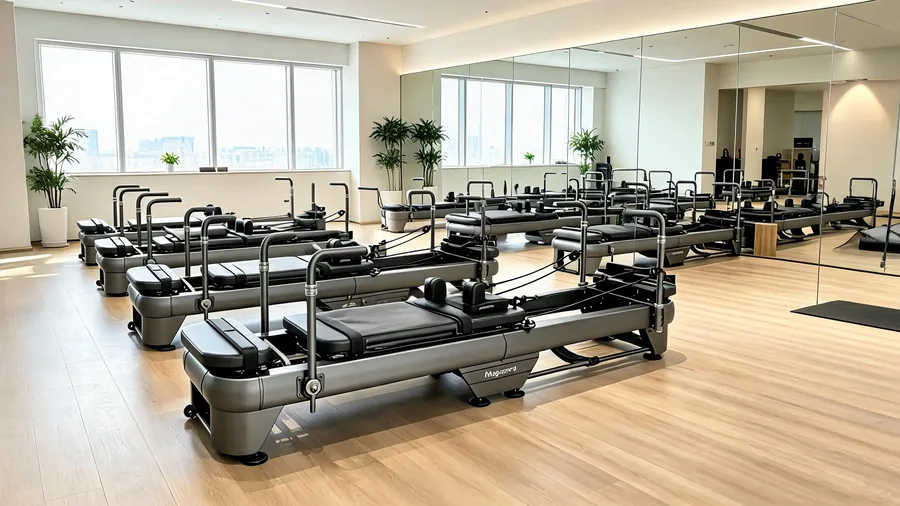
Planear aulas de reformer em grupo eficientes é um dos investimentos mais inteligentes que um estúdio de Pilates pode fazer. A programação em grupo enche mais reformers por hora do que as sessões privadas, aumenta a receita por bloco de horário e torna o trabalho no reformer acessível a membros que não podem pagar o preço de uma sessão individual. Este guia aborda as decisões de layout, equipamento e configuração que tornam as aulas de reformer em grupo rentáveis e sustentáveis.
1. Porque a programação em grupo é o motor de crescimento do estúdio
Group reformer classes change the studio’s economics. A private session uses one reformer and one instructor hour for one client; a group class uses the same resources for 4-10 clients. The revenue per instructor hour multiplies while equipment utilization rises, which is why successful studios build their schedule around group reformer classes rather than privates.
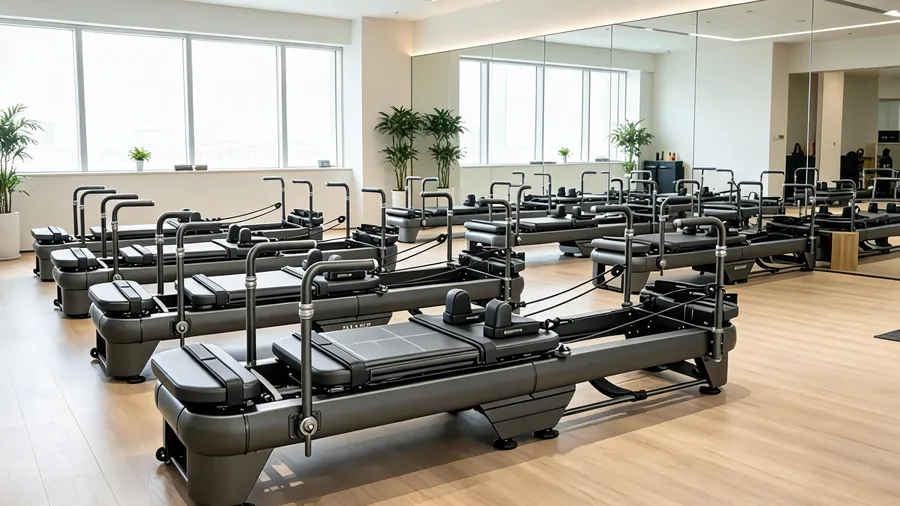
Os formatos em grupo também criam comunidade, o que impulsiona a retenção. Os clientes que treinam em grupo são mais assíduos e fazem mais recomendações. A combinação de maior receita por bloco de horário com retenção mais forte faz das aulas de reformer em grupo o formato de maior retorno no negócio do estúdio.
2. Layout do estúdio para aulas de reformer em grupo
O layout determina quantos reformers cabem e quão bem o instrutor consegue ver e alcançar cada cliente. A configuração padrão são filas de reformers virados para o instrutor, com a extremidade da barra de pés à frente. Reserve 2,4 x 0,9 m por máquina, mais um corredor de 0,9 a 1,2 m entre filas para o acesso do instrutor e a circulação dos clientes.
Mirror placement matters: one full wall of mirrors helps clients check alignment, but avoid mirrors on all walls, which can disorient in crowded rooms. Keep the instructor’s line of sight clear by arranging reformers in even rows with consistent spacing.
3. Quantidades de equipamento e rácios
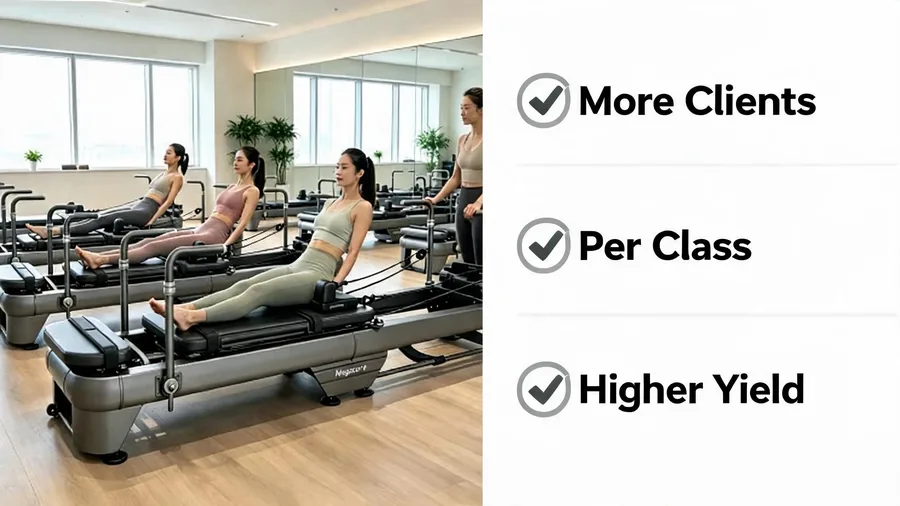
O planeamento de equipamento para aulas de reformer em grupo segue rácios simples. A norma do setor é um reformer por cliente na aula. Com 6 reformers, limita as aulas a 6 clientes; com 10 reformers, a 10 clientes. Alguns estúdios acrescentam lista de espera e sobrelotam em uma vaga para compensar faltas, mas a capacidade de equipamento é o limite rígido.
Instructor ratio guidance from the Pilates Method Alliance recommends smaller groups for new clients and mixed levels. A ratio of 1:6 works for experienced groups; 1:4 is safer for beginners or when the class mixes levels. Plan your schedule around the ratio that matches your clients’ experience.
4. Formatos de aula que enchem os reformers
Diferentes formatos servem objetivos diferentes, e os melhores horários combinam-nos:
- Grupo de bases: introdução mais lenta para novos clientes, com rácios mais pequenos.
- Aula de corpo inteiro de assinatura: o formato principal, ritmo moderado, exercícios variados.
- Sessões expresso: formatos de 30 minutos à hora de almoço que preenchem horários de menor procura.
- Aulas por nível: grupos de principiantes, intermédios e avançados ajustados à capacidade.
- Aulas temáticas: foco no core, nos glúteos ou na mobilidade, para variar.
Os estúdios com aulas de reformer em grupo bem-sucedidas colocam normalmente a aula de assinatura nos horários de pico e usam os formatos expresso e temáticos para preencher o resto do dia. A combinação de formatos deve basear-se nos dados de procura dos membros, não em suposições.
5. Preparação do equipamento entre aulas de reformer em grupo
As aulas em grupo sucedem-se, por isso a eficiência da preparação é importante. Uniformize a configuração: a mesma disposição de molas para a aula de assinatura, a mesma colocação de acessórios, a mesma rotina de limpeza. Uma janela de 10 minutos entre aulas mantém o horário a horas e o estúdio profissional.
A limpeza entre aulas de reformer em grupo não é negociável. Limpe os tapetes do carro, os apoios de ombros e as barras de pés após cada sessão com produtos adequados ao equipamento. Inclua uma limpeza profunda semanal no plano de manutenção e inspecione molas e cordas mensalmente.
6. Coordenação de instrutores nas aulas em grupo
Ensinar aulas de reformer em grupo exige competências diferentes das da instrução privada. Os instrutores têm de dar indicações claras para vários clientes, mover-se com eficiência entre os reformers e detetar problemas de segurança em toda a sala. Formar instrutores especificamente para formatos em grupo melhora a experiência do cliente e a segurança da aula.
Para aulas com mais de 8 clientes, considere um segundo instrutor ou assistente. O assistente trata da preparação, dos ajustes e das correções individuais enquanto o instrutor principal conduz a aula. Este modelo mantém a qualidade elevada e reduz o risco de indicações de segurança falhadas em grupos maiores.
7. Preços e receita por aula
Group pricing sits between private sessions and mat classes. The revenue math is straightforward: a 6-client group class at group pricing generates multiples of a private session’s revenue from the same instructor hour and equipment footprint. Premium group formats, such as small-group semi-private sessions, command higher pricing with the same ratios.
O preço deve refletir o rácio de instrutores e o tamanho da turma. Grupos maiores com preço mais baixo por cliente continuam a gerar a maior receita total, mas acompanhe a satisfação: aulas sobrelotadas degradam a experiência que sustenta a retenção.
8. Construir o horário de aulas de reformer em grupo
Comece pelos formatos e horários a que os seus membros atuais vão aderir, e depois cresça. Um lançamento típico: abrir as aulas de bases e uma aula de assinatura por semana, medir a assiduidade e depois expandir as aulas de assinatura nos horários de pico e acrescentar sessões expresso para a procura fora de horas. Use os dados de marcações para ajustar a combinação mensalmente.
Ao expandir o equipamento para aulas de reformer em grupo, adquira reformers de grau comercial com desempenho idêntico em toda a frota — a consistência da sensação é importante quando os clientes trocam de máquina. Os reformers Megacore utilizam estruturas em aço Q235, molas em aço de alto carbono com 50 000 ciclos e carros com rolamentos, com 3 anos de garantia na estrutura e na máquina e certificado de inspeção de qualidade e relatório de ensaio por unidade (relatório n.º GZHL2601000020601SP).
Perguntas frequentes
P1: De quantos reformers preciso para aulas em grupo?
Um reformer por cliente na aula. Seis reformers permitem aulas de 6; dez permitem aulas de 10. A capacidade de equipamento é o limite rígido do tamanho da turma.
P2: Qual é o rácio ideal entre instrutor e clientes?
1:6 funciona para grupos experientes; 1:4 é mais seguro para principiantes e níveis mistos. As aulas com mais de 8 clientes beneficiam de um instrutor assistente.
P3: Quanto espaço precisa um estúdio de reformer em grupo?
Reserve 2,4 x 0,9 m por máquina, mais corredores de 0,9 a 1,2 m. Seis reformers cabem em cerca de 37 a 56 m²; dez em 74 a 93 m².
P4: Quanto tempo devem durar as aulas em grupo?
As aulas padrão duram 45 a 55 minutos. Os formatos expresso de 30 minutos preenchem horários de menor procura e atraem clientes à hora de almoço.
P5: Os principiantes podem entrar em aulas de reformer em grupo?
Sim, através de aulas de bases com rácios mais pequenos. Os grupos de níveis mistos exigem instrutores formados para propor adaptações a diferentes níveis.
P6: Que reformers devo comprar para a programação em grupo?
Commercial-grade reformers with consistent performance across the fleet. Megacore’s range is built for daily group use with a 3-year warranty on frame and machine.
Conclusão
As aulas de reformer em grupo são o motor dos estúdios de Pilates rentáveis: mais receita por hora de instrutor, maior utilização do equipamento e retenção mais forte dos clientes. O formato recompensa o planeamento — layout, rácios de equipamento, formação de instrutores e conceção do horário contribuem todos para o sucesso.
Comece com um formato sustentável, uniformize a preparação do equipamento e expanda à medida que os dados de assiduidade o orientarem. Equipamento comercial consistente em toda a frota faz com que todas as aulas em grupo sejam iguais — e essa consistência constrói a reputação que enche as aulas.
Peça preços de frota de reformers em grupo à Megacore
Guias relacionados
- Guia do treino de boxe no reformer de Pilates
- Reformer de Pilates para ginásios de CrossFit
- Reformers de Pilates dobráveis vs. fixos
- Guia de limpeza do reformer de Pilates
Referências do setor: Normas do setor da Pilates Method Alliance, Diretrizes de segurança no trabalho da OSHA, e Controlo de infeções ambientais dos CDC.
Class throughput depends on machine spec, listed on the studio reformer range.