
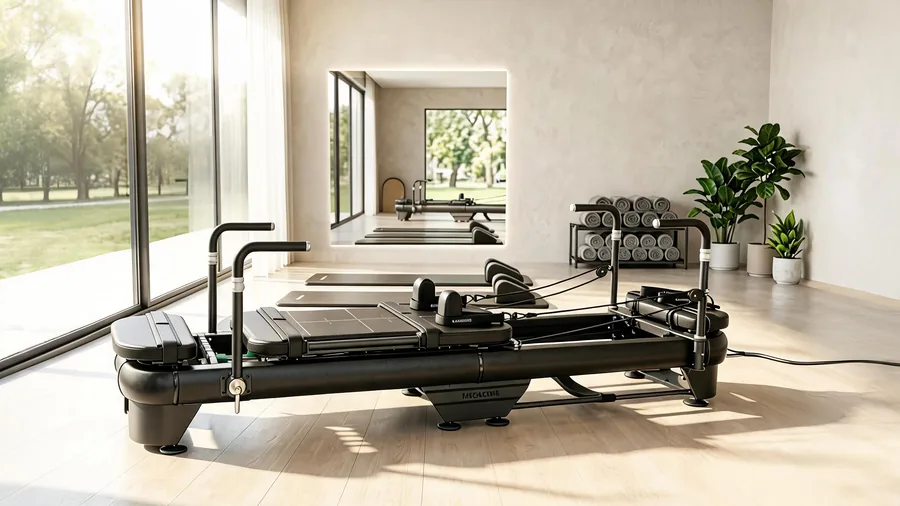
Ao comprar reformers de Pilates para o seu estúdio, a segurança deve ser a primeira consideração — não uma reflexão tardia. Os reformers comerciais funcionam em condições exigentes: centenas de aulas por ano, clientes com níveis de experiência variados e uso diário que sobrecarrega cada componente. Conhecer as principais normas de segurança de reformers de Pilates ajuda-o a avaliar o equipamento antes da compra e garante que o seu estúdio oferece um ambiente seguro a cada cliente.
Este guia aborda as normas de segurança essenciais para equipamento de Pilates comercial, desde a integridade do quadro e a segurança das molas até aos batentes do carro, ao encaixe da barra de pés e às certificações de segurança dos materiais.
1. Normas de Segurança de Reformers de Pilates: Integridade Estrutural e Resistência do Quadro
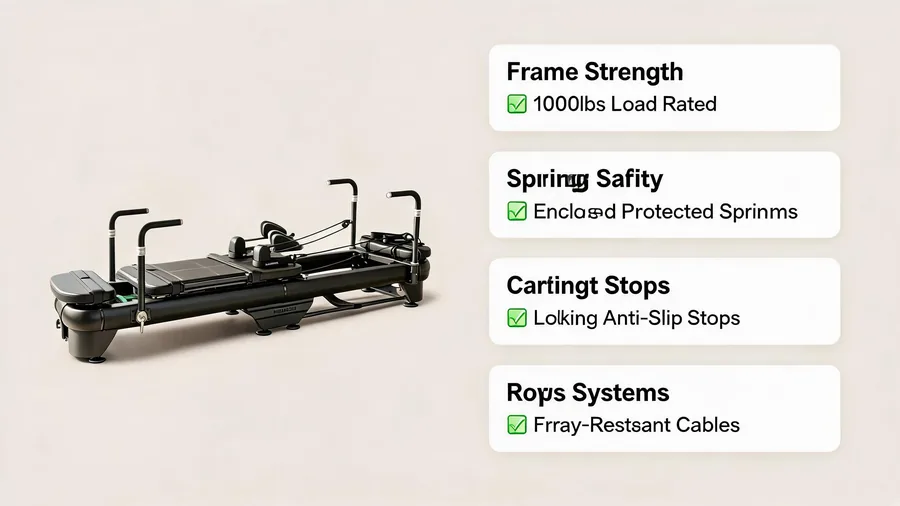
A base de todas as normas de segurança de reformers de Pilates é o quadro. Um reformer comercial tem de suportar utilizadores até à sua capacidade de peso nominal sem flexão, deformação ou fissuras de fadiga ao longo do tempo. Os reformers de qualidade usam quadros de aço soldado com tubos de calibre mínimo 14. O quadro deve ser suficientemente rígido para que não se detete qualquer movimento ao empurrar lateralmente contra o carro ou a barra de pés durante o uso.
Megacore reformers are built with Q235 commercial-grade steel in a welded frame construction. The frame design is load-tested to 200 kg dynamic load — well above the typical user weight range. Frame load testing is documented in quality inspection certification GZHL2601000020601SP, which provides independent verification of the frame’s structural capacity. Any commercial reformer should be accompanied by similar load-test documentation from the manufacturer.
2. Normas de Segurança de Reformers de Pilates: Fixação e Segurança das Molas
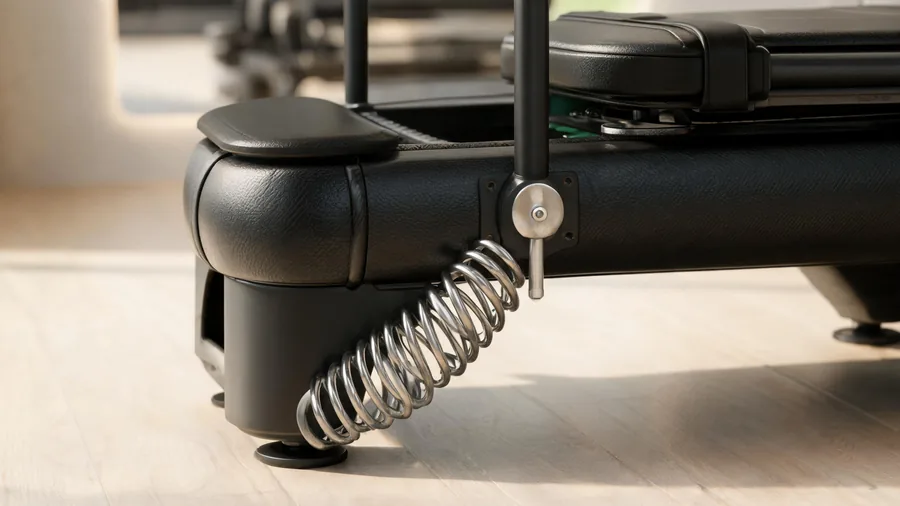
A segurança das molas é um aspeto crítico mas muitas vezes negligenciado das normas de segurança de reformers de Pilates. As molas estão sob tensão constante e têm de estar bem fixadas nas duas extremidades. Os pontos de fixação — ganchos, argolas e suportes de montagem — devem ser fabricados em aço temperado que resista à deformação ao longo de milhares de ciclos de engate.
As caraterísticas de segurança a procurar incluem: ganchos de mola que envolvam totalmente a barra de fixação, para que as molas não possam soltar-se durante o uso; tensão das molas calibrada e consistente em todas as molas do conjunto; e molas classificadas para pelo menos 500.000 ciclos antes de perderem tensão. As molas de grau comercial devem também ter uma margem de segurança — a mola não deve atingir o seu limite elástico mesmo em extensão máxima sob carga máxima. Substitua as molas ao primeiro sinal de alongamento ou deformação, tipicamente a cada 2–3 anos em uso comercial.
3. Normas de Segurança de Reformers de Pilates: Mecanismos de Batente do Carro
Todos os reformers comerciais devem ter batentes de carro fiáveis que impeçam o carro de sair das calhas. normas de segurança de reformers de Pilates As normas de segurança exigem batentes nas duas extremidades do sistema de calhas, que engatem de forma positiva e não possam ser deslocados durante o uso. Os batentes devem ser suficientemente grandes para engatar independentemente da forma como o carro se aproxima — enviesado ou em linha reta.
Alguns reformers de baixo custo usam pequenos batentes de borracha. Estes podem comprimir-se, rachar ou soltar-se com o tempo. Os reformers de grau comercial usam batentes mecânicos — blocos ou pinos metálicos que impedem fisicamente que o carro passe de um determinado ponto. Os reformers Megacore usam batentes metálicos reforçados, aparafusados ao quadro, com inserções de borracha que absorvem o impacto sem depender da borracha para a retenção principal.
4. Normas de Segurança de Reformers de Pilates: Encaixe e Ajuste da Barra de Pés
A barra de pés é um dos componentes mais utilizados de qualquer reformer, e o seu mecanismo de encaixe é uma preocupação de segurança fundamental. normas de segurança de reformers de Pilates As normas de segurança exigem barras de pés que bloqueiem com firmeza em cada posição de ajuste e não se soltem acidentalmente durante o uso. O mecanismo de encaixe deve dar feedback sonoro e tátil para que o instrutor e o cliente possam confirmar que está engatado.
As barras de pés de grau comercial usam pinos de encaixe com mola que entram em ranhuras maquinadas nos suportes da barra de pés. O mecanismo deve ser acessível e fácil de operar, sem exigir força excessiva. Teste a barra de pés empurrando com firmeza em várias direções — não deve deslocar-se nem soltar-se em nenhuma condição normal de uso. Para mais informação sobre como a qualidade de construção afeta a segurança, o guia sobre capacidade de peso do reformer explica como as classificações do quadro e dos componentes se relacionam com a operação segura.
5. Normas de Segurança de Reformers de Pilates: Sistemas de Cordas e Polias
O sistema de cordas e polias suporta toda a carga de trabalho do reformer — cada exercício de puxar, empurrar e alongar transfere força através destes componentes. normas de segurança de reformers de Pilates As normas de segurança exigem cordas classificadas para pelo menos 5 vezes a carga de trabalho máxima esperada. Os reformers comerciais usam corda trançada de grau marítimo ou correias de nylon reforçado com classificação de 300 kg ou mais.
As roldanas devem rodar suavemente sobre rolamentos vedados e ter golas profundas que mantenham a corda alinhada. Os pontos de fixação da corda, tanto no carro como nas pegas, devem ser reforçados com costura ou prensagem que não se solte. Inspecione as cordas regularmente para detetar desfiação e substitua-as ao primeiro sinal de desgaste — a rutura de uma corda durante um exercício pode causar perda súbita de resistência e potencial lesão.
6. Normas de Segurança de Reformers de Pilates: Estofamento e Segurança dos Materiais
A segurança vai além dos componentes mecânicos e abrange os materiais usados no estofamento e no enchimento. Os normas de segurança de reformers de Pilates reformers comerciais exigem materiais de estofamento ignífugos, antimicrobianos e resistentes a limpezas frequentes. O vinil de grau marítimo é o padrão para reformers comerciais porque resiste à humidade, limpa-se facilmente e mantém o aspeto em uso diário.
A espuma de enchimento deve cumprir normas de segurança contra incêndio (CAL 117 ou equivalente) e ter densidade suficiente — mínimo 35 kg/m³ — para não ceder quando um cliente se senta ou se deita no carro. A Megacore usa espuma de alta densidade e vinil de grau marítimo que cumprem estes requisitos de segurança comercial. A Pilates Method Alliance define orientações adicionais para a segurança do equipamento em ambientes profissionais de Pilates.
7. Normas de Segurança de Reformers de Pilates: Verificação e Documentação
Como verificar se um fabricante cumpre as normas de segurança de reformers de Pilates normas de segurança antes de comprar? Peça documentação que cubra cada aspeto de segurança abordado neste guia:
- Certificado de ensaio de carga do quadro com a classificação de carga dinâmica máxima
- Documentação de calibração das molas que mostre valores de resistência consistentes
- Certificações de segurança dos materiais para o estofamento e a espuma
- Relatórios de inspeção de qualidade que cubram a qualidade das soldaduras e os controlos de montagem
- Condições de garantia que cubram os componentes críticos de segurança
- Contactos de referência de outros clientes com estúdios comerciais
A manufacturer that cannot provide this documentation likely does not have the quality control systems to produce consistently safe equipment. Megacore’s quality inspection certification GZHL2601000020601SP documents these safety standards and the testing procedures that verify them. Every Megacore reformer also ships with a 3-year warranty covering both frame and entire machine, providing ongoing assurance of component reliability.
8. Normas de Segurança de Reformers de Pilates: Perguntas Frequentes
Qual é a caraterística de segurança mais importante num reformer de Pilates?
O mecanismo de batente do carro é provavelmente o componente de segurança mais crítico. Impede que o carro saia das calhas, o que poderia causar perda súbita de apoio para o cliente. Os batentes metálicos mecânicos são mais seguros do que os simples batentes de borracha.
Com que frequência devem ser substituídas as molas?
Em uso comercial (8–12 aulas por dia), as molas devem ser substituídas a cada 2–3 anos. Substitua imediatamente se notar alongamento, deformação ou tensão inconsistente.
Todos os reformers de Pilates são seguros para utilizadores pesados?
Não. Cada reformer tem uma capacidade de peso nominal. Os reformers comerciais suportam tipicamente 150–200 kg. Verifique sempre se a classificação de peso corresponde à população de clientes. Consulte o guia de capacidade de peso para mais detalhes.
Que materiais são mais seguros para o estofamento do reformer?
O vinil de grau marítimo com propriedades ignífugas e tratamento antimicrobiano é o padrão do setor para equipamento comercial.
How can I verify a manufacturer’s safety claims?
Peça relatórios de inspeção de qualidade documentados, certificados de ensaio de carga e certificações de materiais. Visite a fábrica se possível ou agende uma visita por vídeo para ver os processos de produção e ensaio em primeira mão.
9. Normas de Segurança de Reformers de Pilates: Invista em Equipamento Que Protege os Seus Clientes
Cumprir as normas de segurança de reformers de Pilates normas de segurança não é opcional para estúdios comerciais — é uma responsabilidade fundamental. Cada componente, do quadro às molas e ao estofamento, contribui para o funcionamento seguro do equipamento em que os seus clientes confiam em cada aula. Escolher um fabricante que documenta e verifica estas normas dá-lhe confiança de que o seu equipamento funcionará em segurança dia após dia.
Megacore Pilates builds every reformer to documented safety standards verified by certification GZHL2601000020601SP. From welded steel frames with 200 kg load ratings to sealed cartridge bearings, calibrated springs, and reinforced carriage stops, every safety feature is designed for commercial use and backed by a 3-year warranty. Factory-direct pricing ensures you get this level of safety without paying distributor markups. Contact Megacore to discuss your studio’s equipment safety requirements.
Mais recursos: Guia de Capacidade de Peso | Guia de Compra 2026 | Guia de Materiais do Quadro | Guia para Abrir um Estúdio
Safety claims are only worth what the inspection behind them is; ours is documented on the quality control process .