
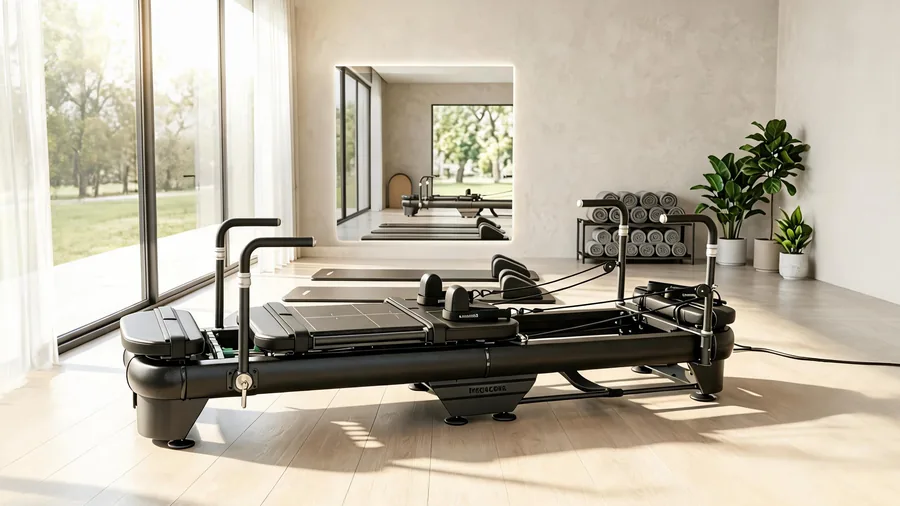
Um guia completo da tensão das molas do reformer de pilates é uma referência essencial para qualquer proprietário de estúdio e instrutor de Pilates. A tensão das molas determina a resistência que os clientes sentem em cada movimento, afetando diretamente a eficácia do treino, a segurança e o progresso. Escolher a resistência errada pode comprometer a postura, reduzir a qualidade do treino e aumentar o risco de lesão. Este guia da tensão das molas do reformer de pilates aborda os valores de peso das molas, os sistemas de código de cores, tabelas de tensão, planos de manutenção e indicadores de substituição, para o ajudar a manter o equipamento do seu estúdio no melhor desempenho.
Como o guia da tensão das molas do reformer de pilates define a resistência
A tensão das molas num reformer de pilates determina a resistência que os clientes sentem em cada exercício. As molas ligam o carrinho à estrutura, criando uma resistência variável que aumenta à medida que o carrinho se afasta da barra de pés. Ao contrário das pilhas de pesos, que oferecem resistência constante, as molas proporcionam resistência progressiva, o que torna o reformer pilates especialmente eficaz para movimentos excêntricos e concêntricos controlados. Compreender esta variação é a base de um guia eficaz da tensão das molas do reformer de pilates.
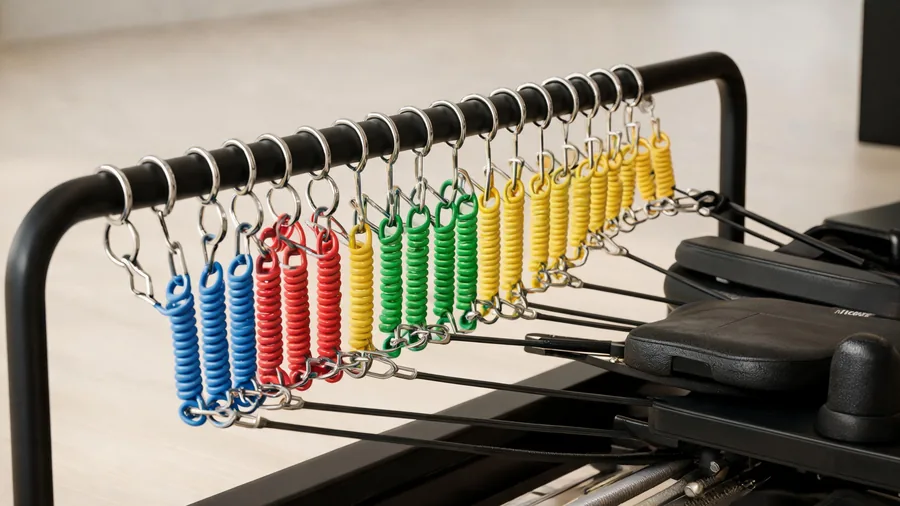
Reformers comerciais como o Megacore C26 e o T59 vêm com 4 a 5 molas de níveis de resistência variados. Esta secção do guia da tensão das molas do reformer de pilates explica cada nível de resistência em detalhe. Um conjunto comercial típico inclui uma mola pesada (vermelha, ~15-20 lb), duas molas médias (azul, ~10-12 lb cada) e duas molas leves (amarela, ~5-7 lb cada). Em conjunto, proporcionam uma resistência total que vai das 5 lb para movimentos de aquecimento até mais de 60 lb para trabalho avançado de pernas e core.
Tabela de tensão das molas: uma peça essencial do seu guia da tensão das molas do reformer de pilates
Um guia da tensão das molas do reformer de pilates é mais útil quando associa as cores das molas a exercícios específicos e a objetivos de movimento. Segue-se o guia padrão de correspondência entre molas e exercícios usado por estúdios profissionais em todo o mundo:
A normalização dos códigos de cores na indústria do Pilates tornou a escolha das molas muito mais fácil nos últimos anos. A maioria dos fabricantes de reformers comerciais segue hoje uma convenção semelhante: amarelo para leve, azul para média e vermelho para pesada. No entanto, o valor real de tensão de cada cor pode variar 10 a 20% entre marcas, por isso verifique sempre o valor exato em libras com o seu fabricante. Nos reformers Megacore, cada mola é testada individualmente e identificada com o seu valor exato de tensão, garantindo uma resistência consistente em toda a frota do seu estúdio.
Mola Leve (Amarela, 5-7 lb): Ideal para footwork, trabalho de braços e sequências de alongamento. Use em exercícios de aquecimento, sessões de reabilitação e clientes iniciantes a construir força de base. As molas leves permitem amplitude total de movimento com resistência mínima.
Os estúdios comerciais costumam ter vários reformers com configurações de molas diferentes para responder a diferentes tipos de aula. Um guia adequado da tensão das molas do reformer de pilates ajuda os gestores de estúdio a decidir quantas molas leves, médias e pesadas encomendar para a sua frota de equipamento.
Mola Média (Azul, 10-12 lb): Ideal para o Hundred, roll-ups e círculos de pernas básicos. As molas médias são as mais versáteis e devem ser o ponto de partida por defeito para a maioria dos exercícios. Proporcionam resistência suficiente para um trabalho muscular eficaz sem sobrecarregar os iniciantes.
Além da classificação padrão amarelo, azul e vermelho, alguns reformers comerciais incluem molas extra-pesadas (prateadas, 20-25 lb) para treino atlético avançado e aplicações de reabilitação. Incluir estas especificações no seu guia da tensão das molas do reformer de pilates garante que os instrutores têm informação completa.
Mola Pesada (Vermelha, 15-20 lb): Usada para running, jumping e trabalho avançado de pernas. As molas pesadas são essenciais para sessões de condicionamento atlético e clientes que precisam de maior resistência para ganhar músculo. Também proporcionam estabilidade a clientes com maior corpulência que precisam de mais apoio.
Tipos de sistemas de molas: o que o seu guia da tensão das molas do reformer de pilates deve abranger
Embora as molas helicoidais metálicas sejam a forma mais comum, um guia adequado da tensão das molas do reformer de pilates abrange todas as opções. As molas helicoidais, usadas em 95% dos reformers comerciais, proporcionam uma resistência progressiva fiável, são fáceis de substituir individualmente e têm valores de tensão bem estabelecidos. Os sistemas de corda elástica presentes em alguns reformers portáteis oferecem uma resistência mais leve e são mais silenciosos, mas desgastam-se mais depressa. Os sistemas de amortecedor a gás usados em máquinas comerciais de topo oferecem uma resistência suave e consistente, mas são mais caros de substituir. Para a maioria dos estúdios comerciais, os sistemas tradicionais de molas helicoidais são a principal recomendação de qualquer guia da tensão das molas do reformer de pilates.
Qualidade das molas: o que o seu guia da tensão das molas do reformer de pilates deve inspecionar
Ao avaliar a qualidade das molas para o seu guia da tensão das molas do reformer de pilates, considere estes fatores críticos. Qualidade do aço: as molas em aço de alto carbono mantêm uma tensão consistente durante mais tempo do que o aço comum. Terminais: os terminais reforçados evitam que a mola se solte durante o uso de alta intensidade. Revestimento: as molas pintadas a pó ou galvanizadas resistem melhor à ferrugem e à corrosão do que as molas em aço nu. Ciclos: as molas de nível comercial devem estar classificadas para mais de 200.000 ciclos, enquanto as molas de consumo típicas ficam nos 50.000-100.000 ciclos. Consistência: as molas do mesmo lote devem sentir-se idênticas; uma diferença indica controlo de qualidade deficiente.
Sinais de que as suas molas precisam de substituição: um guia da tensão das molas do reformer de pilates
Esteja atento a estes sinais de alerta no seu guia da tensão das molas do reformer de pilates: ferrugem ou corrosão visível nas espirais das molas, molas esticadas ou alongadas que já não voltam ao comprimento original, resistência inconsistente face a molas idênticas noutros reformers, ruídos invulgares de chiado ou raspagem durante o uso, e folgas visíveis entre as espirais quando o carrinho está em repouso. Qualquer destes sinais significa que a mola deve ser substituída de imediato para manter a qualidade constante das aulas e a segurança dos clientes. A maioria dos estúdios comerciais programa a substituição das molas a cada 2-3 anos, dependendo da frequência das aulas.
Boas práticas de manutenção das molas: um guia da tensão das molas do reformer de pilates
A manutenção adequada prolonga significativamente a vida do sistema descrito no seu guia da tensão das molas do reformer de pilates. Diariamente: limpe as molas com um pano seco após cada sessão, para remover suor e humidade. Semanalmente: inspecione todas as molas quanto a desgaste visível e verifique se os terminais estão soltos. Mensalmente: aplique lubrificante à base de silicone nos pontos de fixação das molas. Trimestralmente: teste cada mola contra molas novas para verificar a consistência da tensão. Anualmente: substitua todas as molas de um estúdio comercial, independentemente do estado visível.
Padrões de Qualidade das Molas Megacore
Todos os reformers Megacore incluem molas em aço de alto carbono classificadas para mais de 200.000 ciclos, com calibração de tensão consistente em cada mola e em cada lote. O sistema descrito no nosso guia da tensão das molas do reformer de pilates usa molas com código de cores para identificação visual rápida, terminais reforçados com clipes de segurança e acabamento pintado a pó para resistência à corrosão. Cada reformer Megacore tem garantia de 3 anos que cobre molas e estruturas, e há molas de substituição disponíveis para todos os modelos. Esta garantia é suportada por relatórios de inspeção de qualidade (relatório GZHL2601000020601SP) que cobrem testes de tensão das molas e integridade da estrutura.
Tensão das molas nos exercícios de Pilates mais comuns
Compreender como diferentes exercícios usam a tensão das molas ajuda os instrutores a tomar melhores decisões de equipamento. O footwork no reformer usa normalmente 2-3 molas (leves a médias) para proporcionar uma resistência suave, segundo o guia da tensão das molas do reformer de pilates. Os círculos e as puxadas de pernas usam 1-2 molas (leves) para permitir amplitude total de movimento. Os exercícios de running e jumping usam 3-5 molas (médias a pesadas) para absorver o impacto. Os exercícios de força usam 2-3 molas de acordo com o guia da tensão das molas do reformer de pilates. Cada exercício tem uma configuração ideal de tensão das molas, e dominar estas combinações é a marca de um instrutor de Pilates experiente.
Tensão das molas por nível de cliente
Diferentes níveis de cliente exigem configurações de molas diferentes. Os iniciantes devem começar com molas leves a médias para desenvolver a postura correta. Os clientes intermédios podem usar molas médias na maioria dos exercícios. Os clientes avançados usam toda a gama, segundo o guia da tensão das molas do reformer de pilates, combinando frequentemente molas leves e pesadas em exercícios complexos. Os instrutores que dominam o guia da tensão das molas do reformer de pilates conseguem ajustar rapidamente as cargas entre clientes sem quebrar o ritmo da aula.
Configurações de molas personalizadas para cadeias de estúdios
As cadeias de estúdios maiores beneficiam frequentemente de especificações de molas personalizadas quando encomendam sistemas de molas em volume. Os fabricantes diretos podem calibrar as molas segundo as suas preferências exatas de tensão e aplicar códigos de cores personalizados. A consistência entre todas as localizações garante que os clientes têm a mesma experiência. As quantidades mínimas de encomenda para configurações de molas personalizadas começam tipicamente nos 10 reformers.
Perguntas frequentes
P: Com que frequência devem as molas ser substituídas segundo o guia da tensão das molas do reformer de pilates?
R: Em estúdios comerciais com 10 a 15 aulas por dia, substitua todas as molas a cada 2-3 anos, independentemente do estado visível.
P: Posso misturar molas de fabricantes diferentes?
R: Não é recomendado. Fabricantes diferentes usam valores de tensão e tamanhos de terminais diferentes. Use sempre molas do mesmo fabricante para uma resistência consistente.
P: Qual é o valor de peso das molas padrão de um reformer de pilates?
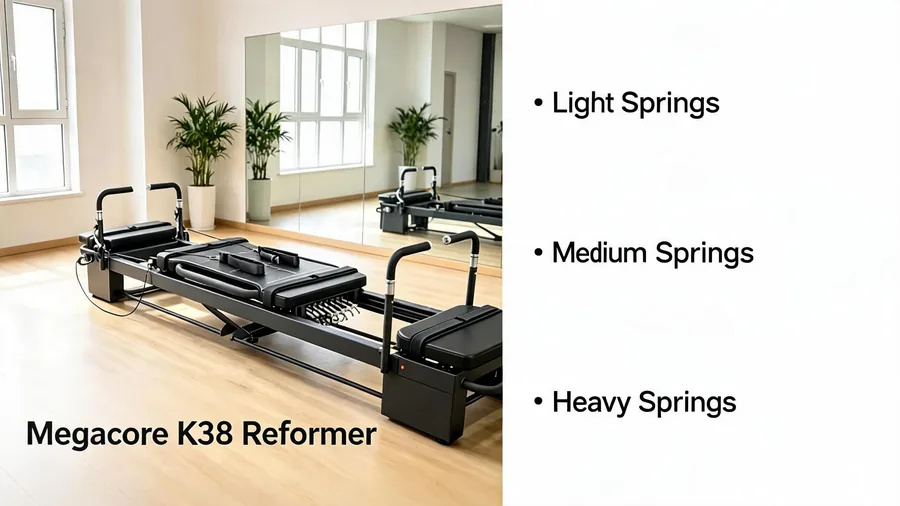
R: Leve (amarela): 5-7 lb. Média (azul): 10-12 lb. Pesada (vermelha): 15-20 lb. Resistência total de 5 a mais de 60 lb.
P: Posso usar molas de reformer doméstico numa estrutura comercial?
R: Não. As molas domésticas têm terminais diferentes, classificações de ciclos mais curtas e aço de qualidade inferior. Usar molas domésticas numa estrutura comercial cria resistência inconsistente e riscos de segurança.
P: Qual é a diferença entre molas de reformer comerciais e domésticas?
R: As molas comerciais usam aço de grau superior, tolerâncias mais apertadas e estão classificadas para mais de 200.000 ciclos. As molas domésticas ficam nos 50.000-100.000 ciclos.
P: A tensão das molas afeta os resultados do treino?
R: Significativamente. A correspondência correta descrita no guia da tensão das molas do reformer de pilates tem impacto direto na ativação muscular, na amplitude de movimento e na segurança do exercício. A tensão incorreta das molas é a causa mais comum de má postura e de menor eficácia do treino.
Pronto para Encontrar o Sistema de Molas Perfeito para o Seu Estúdio?
Escolher o sistema correto descrito no guia da tensão das molas do reformer de pilates é essencial para o sucesso do seu estúdio. A Megacore Pilates oferece reformers de nível comercial com sistemas de molas calibrados com precisão, classificação de mais de 200.000 ciclos, identificação por código de cores e garantias completas de 3 anos. O preço direto de fábrica poupa aos estúdios 30 a 50% face às marcas de retalho, mantendo padrões de qualidade rigorosos com relatórios de teste documentados.
Conclusão
Dominar o guia da tensão das molas do reformer de pilates é essencial para os proprietários de estúdios que querem proporcionar sessões de Pilates consistentes e de alta qualidade. Desde a compreensão dos códigos de cores e das tabelas de tensão até à implementação de planos de manutenção adequados, cada aspeto da gestão das molas contribui para a segurança dos clientes e a eficácia do treino. As molas de nível comercial de fabricantes de confiança oferecem a consistência e a durabilidade que os estúdios profissionais exigem. Ao investir em sistemas de molas de qualidade e ao formar a sua equipa para usar eficazmente o guia da tensão das molas do reformer de pilates, garante que cada cliente tem a melhor experiência de treino possível no seu estúdio.
Guias relacionados
Guia de substituição das molas do reformer de Pilates
Guia de dimensionamento do reformer de Pilates
Guia de Capacidade de Peso do Pilates Reformer
Guia de Cordas e Correias do Pilates Reformer
Referência do setor · Referência do setor ·
Spring colour and rating per model are listed on the reformer model pages.