
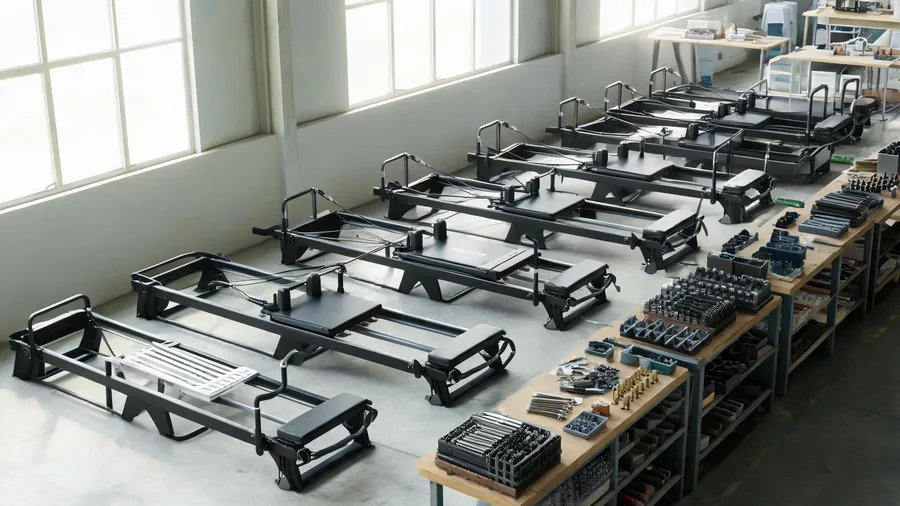
Minimum sipariş miktarı — MOQ — bir fabrikanın özel bir üretim partisi için gerektirdiği birim sayısıdır. Pilates reformer'ları için Pilates reformer MOQ özel marka düşünen girişimcilerin karşılaştığı ilk engeldir. Guangzhou'daki üreticilerin standart MOQ değerleri, gereken özelleştirme düzeyine bağlı olarak 10 ile 50 reformer arasında değişir. MOQ'nun nasıl müzakere edileceğini, ne zaman daha yüksek bir MOQ'nun kabul edileceğini ve siparişinizi kısıtlamaları en aza indirecek şekilde nasıl yapılandıracağınızı anlamak, her marka kurucusu için temel bilgidir.
Bu rehber, fabrikaların neden Pilates reformer MOQ gereksinimleri belirlediğini, müzakere edebileceğiniz MOQ değişkenlerini, ilk sipariş miktarınızı düşürme stratejilerini ve MOQ ile birim fiyat arasındaki ilişkiyi açıklar.
1. Fabrikalar Neden Pilates Reformer MOQ Gereksinimleri Belirler
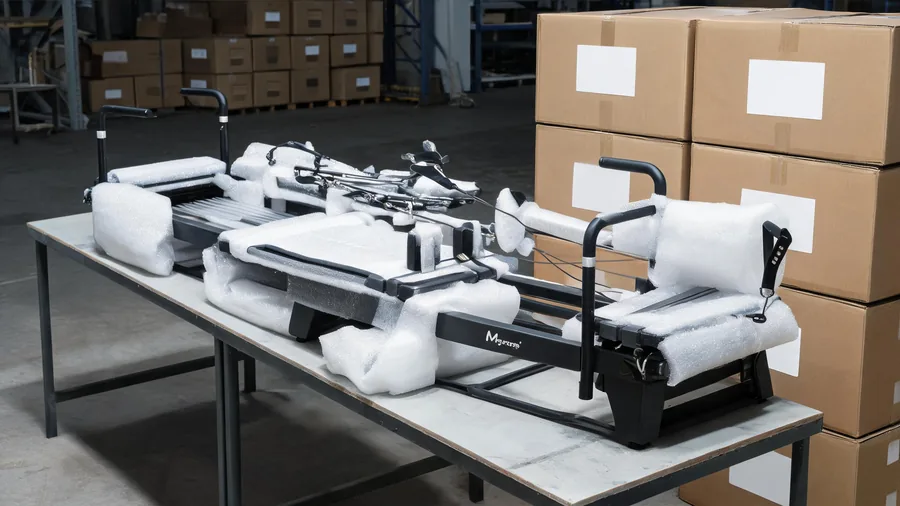
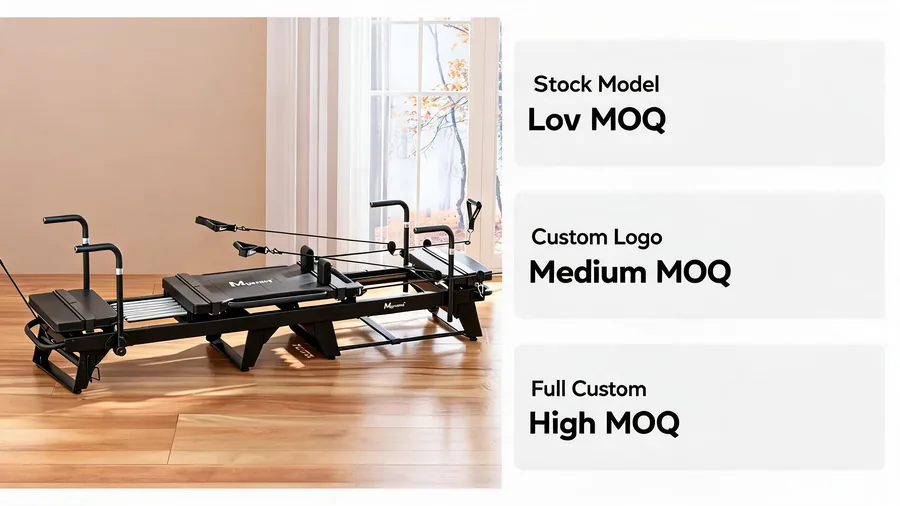
Fabrikalar, malzeme tedarik maliyetlerini, üretim hattı kurulumunu ve kalite kontrol genel giderlerini karşılamak için minimum sipariş miktarları belirler. Standart bir OEM reformer için birim başına malzeme maliyeti, sipariş hacmi arttıkça belirgin şekilde düşer; fabrikaların daha büyük siparişleri tercih etmesinin nedeni budur. MOQ, özel çerçeve renkleri, markalı döşeme ve özel ambalaj dahil tam özelleştirilmiş siparişler için, yalnızca logo uygulanan mevcut çerçeve tasarımlarını kullanan yarı özelleştirilmiş siparişlere göre genellikle daha yüksektir.
Tipik Pilates reformer MOQ aralıkları: Standart OEM (yalnızca logo): 10–20 adet. Yarı özel (renk + logo): 20–30 adet. Tam özel (çerçeve tasarımı + renk + logo + ambalaj): 30–50 adet. Premium ticari sınıf: 10–15 adet (bunlar standartlaştırılmış üst düzey bileşenler kullandığı için).
2. Özelleştirme Düzeyine Göre MOQ
Bir fabrikanın belirttiği Pilates reformer MOQ değeri bütçenizin izin verdiğinden yüksekse, tek bir sipariş verip birimleri iki ya da üç partide teslim aldığınız bölünmüş sevkiyat seçeneğini sorun. Birçok üretici bu düzenlemeyi kabul eder; çünkü böylece tüm sipariş garanti altına alınır ve siz ikinci partiyi ödemeden önce ilk partiden gelir elde etmeye zaman bulursunuz. Bu aşamalı ödeme yaklaşımı, ilk ekipman alımını dış yatırım yerine işletme sermayesinden finanse eden stüdyo sahipleri için özellikle faydalıdır.
3. Müzakere Stratejileri ve MOQ'nuzu Düşürme
Çoğu fabrika MOQ değeri müzakere edilebilir. Daha düşük bir MOQ karşılığında birim başına daha yüksek fiyat ödemeyi teklif edin. Fabrikalar, marjlarını korurken malzeme tedarik risklerini azalttığı için bu dengeyi sık sık kabul eder. –15'lik bir fiyat primi, MOQ'yu çoğu zaman düşürebilir.
Önce bir numune siparişi isteyin. Tek bir numune birim için tam perakende fiyatı ödemek, ciddi niyetinizi gösterir ve fabrikanın üretim hattını kurmasına olanak tanır. Numune onayının ardından, kurulum işi zaten yapıldığı için fabrika daha düşük bir MOQ kabul edebilir. Stok ürünlerini sorun — bazı fabrikalar, hemen logonuzla markalanabilen ve hiç MOQ gerektirmeyen standart reformer stokları tutar. Bu, yeni markalar için pazara en hızlı giriş yoludur; ancak özelleştirme seçenekleri fabrikanın mevcut renk ve konfigürasyon seçenekleriyle sınırlıdır.
Kesin hacimler belirtmeden uzun vadeli bir sipariş taahhüdü verin. Fabrikalar süregelen ilişkilere değer verir. Kesin sipariş miktarlarını belirtmeseniz bile asgari bir yıllık hacim satın almayı taahhüt ederseniz, çoğu ilk MOQ'nuzu düşürür. Muayene sertifikası GZHL2601000020601SP gibi kalite standartlarına ilişkin belgeler, kaliteye olan bağlılığınızı göstererek MOQ müzakerelerinde güven oluşturmaya yardımcı olabilir.
4. Numune Siparişleri ve Aşamalı Yaklaşım
Yeni markalar için en yaygın yol aşamalı bir yaklaşımdır: Adım 1 — Kaliteyi değerlendirmek için bir numune birim sipariş edin. Çoğu fabrika, ilk üretim siparişinizde iade edilebilen $200–$500 numune ücreti alır. Adım 2 — Standart OEM düzeyinde (yalnızca logo) 5–10 birimlik küçük bir pilot sipariş verin. Adım 3 — Bu birimlerle ürün-pazar uyumunuzu doğrulayın. Müşterilerinizden konfor, dayanıklılık ve estetik konusunda geri bildirim toplayın. Bu geri bildirimi, daha büyük bir sipariş vermeden önce özelliklerinizi iyileştirmek için kullanın. Adım 4 — Marka yerleştikten sonra tam özelleştirmeyle daha büyük bir siparişe geçin.
Sektör standartları, Pilates Method Alliance (PMA)'nın büyük siparişler vermeden önce ekipman kalitesini doğrulamanızı önerir. Fabrika değerlendirmesiyle ilgili ek rehberliğe Alibaba ticaret güvencesi programları aracılığıyla ulaşılabilir.
5. Sıkça Sorulan Sorular
Çin'deki fabrikalardan Pilates reformer için tipik MOQ nedir?
Özelleştirme düzeyine bağlı olarak standart MOQ 10–50 birim arasında değişir. Yalnızca logo siparişleri genellikle 10–20 birim gerektirir. Özel çerçeve tasarımlı tam özelleştirilmiş siparişler 30–50 birim gerektirebilir.
MOQ taahhüdünde bulunmadan önce tek bir Pilates reformer numunesi sipariş edebilir miyim?
Evet. Çoğu fabrika, standart fiyattan 1–2 birimlik numune siparişlerini kabul eder. Numune ücretleri genellikle ilk üretim siparişinizde iade edilir. Toptan sipariş vermeden önce her zaman bir numune isteyin.
MOQ gereksinimini nasıl düşürebilirim?
Birim başına daha yüksek fiyat ödemeyi teklif edin, standart bir OEM siparişiyle (yalnızca logo) başlayın, gelecekteki hacme taahhüt verin veya hemen markalanabilecek stok ürünlerini sorun. Tek bir siparişi birden fazla sevkiyata bölmek de nakit akışını yönetmeye yardımcı olabilir.
6. İlgili Rehberler
- Pilates Reformer Satın Alma Rehberi 2026
- Çin Pilates Reformer Üreticisi Rehberi
- Pilates Reformer Toptan Fiyatlandırma
Sonuç
MOQ ortamını anlamak Pilates reformer MOQ yeni markaların pazara güvenle girmesine yardımcı olur. Hangi MOQ kaldıraçlarının müzakere edileceğini, numunelerin ne zaman isteneceğini ve aşamalı bir sipariş yaklaşımının nasıl yapılandırılacağını bilerek, girişimciler ilk yatırımlarını aşırı zorlamadan özel markalı bir işletme başlatabilir. Bir numune siparişiyle başlayın, kaliteyi müşterilerinizle doğrulayın ve kademeli olarak büyüyün. Esnek MOQ koşulları ve şeffaf fiyatlandırma sunan üreticiler, uzun vadeli marka büyümesi için en iyi ortaklardır.
Volume tiers and MOQ by model sit on the wholesale terms sayfasında.