
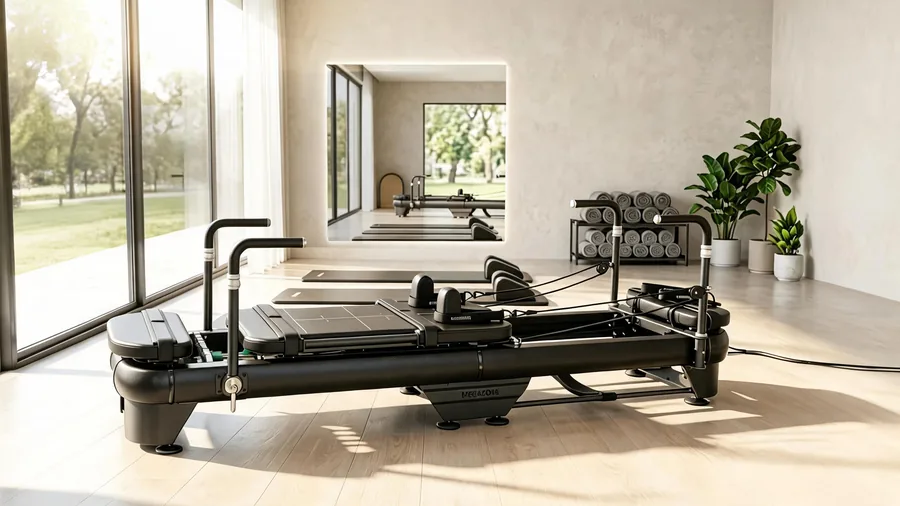
Напрежението на пружините на Pilates реформер е в основата на всяко упражнение. За разлика от машините с тежести, при които съпротивлението се измерва в лири или килограми, пружините на реформера осигуряват променливо съпротивление, което расте с разтягането им. Една таблица за напрежението на пружините на Pilates реформер помага на инструкторите и собствениците на студиа да предписват точни нива на съпротивление за всяко упражнение, така че клиентите да работят с подходяща интензивност, без да жертват техниката.
Това ръководство обхваща системите за означаване на пружините, подробна таблица на напрежението за стандартни комерсиални реформери и препоръчителни комбинации от пружини за различни упражнения и нива на подготовка. За собствениците на студиа разбирането на напрежението на пружините пряко влияе върху дълговечността на оборудването, програмирането на класовете и цялостното преживяване на клиента.
1. Таблица за напрежението на пружините на Pilates реформер: как се означават пружините
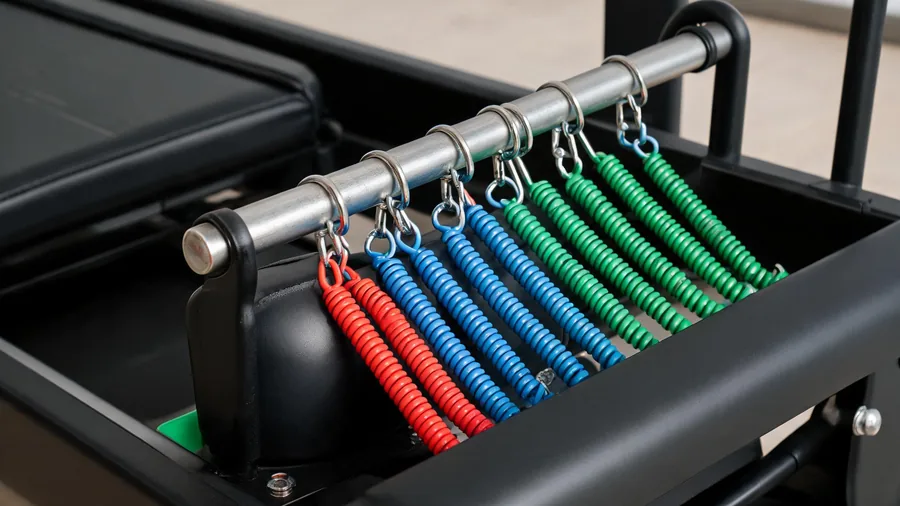
Пружините на реформера се означават по тяхната коравина, обикновено изразена в лири на инч на свиване. Стандартният комерсиален реформер идва с пет пружини: две леки (10–15 lbs всяка), две средни (20–25 lbs всяка) и една тежка (30–40 lbs). Тези стойности обаче варират при различните производители. Ключовата спецификация е коравината при пълно разтягане — измерена, когато каретата е в позицията на ограничителя.
Висококачествените комерсиални реформери използват усилени пружини от високоякостна стомана с еднаква коравина при всички бройки. Тази еднаквост е решаваща за студиа, които работят с няколко реформера в един и същ клас. Производителите, които продават директно от фабриката, обикновено предлагат резервни пружини, които отговарят точно на оригиналното напрежение, което не винаги е така при доставчици на пружини от трети страни. Сертификатът за контрол на качеството GZHL2601000020601SP документира еднаквостта на напрежението на пружините между производствените партиди и потвърждава, че всяка пружина отговаря на зададената спецификация с толеранс от 3%.
2. Стандартна таблица на напрежението за комерсиални реформери
По-долу е примерна таблица за напрежението на пружините на Pilates реформер за стандартни комерсиални реформери с пет пружини:
Когато създавате своята таблица на напрежението, включете цвета на пружината, стойността на напрежението в лири, препоръчаните упражнения за всяка настройка и бележки за нивото на клиента. Поставете таблицата до всяка позиция с реформер или отпечатайте ламинирани карти, които се закрепват за рамката. Така новите инструктори лесно научават вашата пружинна система и се гарантира еднакъв избор на напрежение във всички класове.
Използвайки тази таблица за напрежението на пружините на Pilates реформер като ориентир, инструкторите бързо определят правилната комбинация от пружини за всяко упражнение. За начинаещи използвайте само леки пружини (1–2). За средно напреднали клиенти използвайте средни пружини с една лека. За напреднали — тежки пружини или комбинация от средни и тежки за максимално съпротивление.
3. Напрежение на пружините при различните упражнения на реформер
Footwork обикновено използва 1–2 леки пружини. Упражненията за корем и Hundred използват 2 средни пружини. Пружините за крака и изнасянията напред изискват 1 средна плюс 1 лека. Разтяганията назад използват 1–2 средни пружини в зависимост от силата на клиента. Упражненията за ръце и с jump board използват най-тежките настройки (1 тежка или тежка плюс средна). Таблицата трябва да отчита и телесното тегло — по-тежките клиенти може да се нуждаят от една допълнителна лека пружина при footwork и упражненията за центъра, за да постигнат същото относително съпротивление като по-леките клиенти. Работата в изправено положение върху платформата обикновено използва 1 тежка пружина за стабилност.
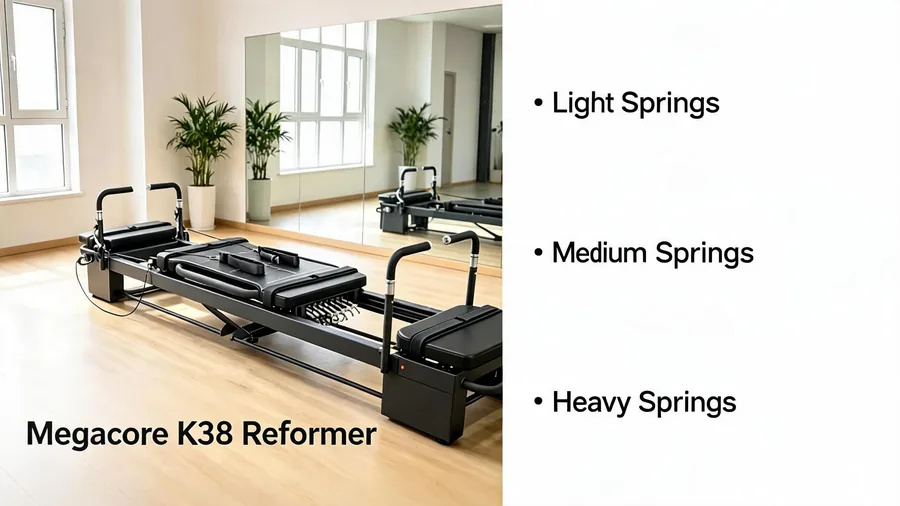
Собствениците на студиа трябва да изготвят ламинирана референтна карта по тази таблица и да я закрепят за всеки реформер. Така инструкторите бързо проверяват избора си на пружини при подготовката на класа и се намалява рискът от грешни настройки, които компрометират безопасността или ефективността на упражненията.
4. Персонализиране на напрежението на пружините според програмата на студиото
Различните формати на класове изискват различен подход към напрежението на пружините. Класическият Pilates използва стандартизирани комбинации от пружини, които остават непроменени от десетилетия. Съвременните класове по reformer flow често използват по-тежко натоварване с пружини за по-голяма силова тренировка. Рехабилитационните класове използват по-леки пружини с контролирано темпо на движение.
Добре документирана таблица за напрежението на пружините на Pilates реформер таблица, съобразена с форматите на вашите класове, спестява време на инструкторите и осигурява еднаквост във всички класове. Включете настройките на пружините по категория упражнения, ниво на клиента и тип клас. Актуализирайте таблицата, когато добавяте нови упражнения или формати. Дигитална версия, съхранена на таблета или телефона на студиото, се актуализира и споделя лесно с всички инструктори. Преглеждайте настройките на пружините на всяко тримесечие, за да сте сигурни, че отговарят на текущите ви класове и клиентски профил.
За инструктори, които търсят справочни материали за програмиране на напрежението на пружините, Pilates Method Alliance (PMA) предлага ресурси за програмиране на упражнения. Допълнителни насоки за настройка на оборудването можете да намерите в ACE Fitness ръководствата за дизайн на програми.
5. Често задавани въпроси
Какво означават различните цветове на пружините при Pilates реформер?
Цветовете на пружините обикновено показват нивата на напрежение: лека (червена, 10–15 lbs), средна (синя, 20–25 lbs), тежка (зелена, 30–40 lbs) и екстра тежка (жълта, 40–50 lbs). Винаги проверявайте при производителя, тъй като цветовото кодиране се различава между марките.
Колко пружини да използвам за footwork?
Начинаещите трябва да използват 1–2 леки пружини за footwork. Средно напредналите клиенти могат да използват 1 средна пружина. Напредналите могат да използват 2 средни пружини или 1 средна плюс 1 лека за по-голямо съпротивление.
Колко често трябва да сменям пружините на реформера?
Комерсиалните пружини трябва да се сменят на всеки 12–18 месеца при ежедневна употреба. Признаци на износване са видимо разтягане, непоследователно съпротивление, щракащи звуци по време на употреба или намалено напрежение в сравнение с нова пружина.
6. Свързани ръководства
- Ръководство за покупка на Pilates реформер 2026
- Най-добрият реформер Pilates за студио
- Ръководство за триенето на каретата на Pilates реформер
Заключение
Добре изготвена таблица за напрежението на пружините на Pilates реформер таблица е основен инструмент за всяко студио. Тя осигурява еднаквост в работата на различните инструктори, помага на клиентите да разберат интензивността на тренировката си и удължава живота на пружините, като предотвратява неправилни комбинации. Използвайте таблицата от това ръководство като отправна точка и я адаптирайте към конкретното оборудване и формати на класове във вашето студио.
Spring ratings per model are listed on the reformer model pages.