
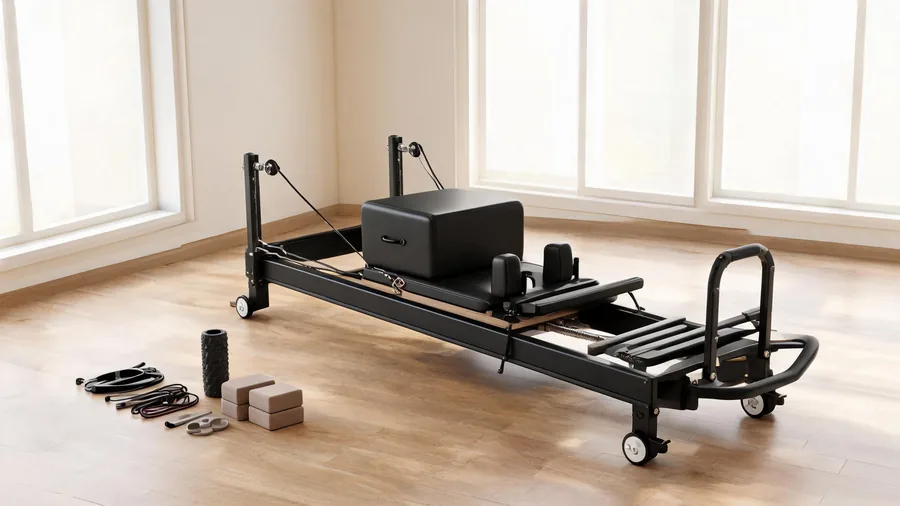
Über den Reformer selbst hinaus bestimmt das richtige Pilates Reformer-Zubehör , wie viele Übungen Ihr Studio anbieten kann, wie viele Körpertypen Sie bedienen können und wie viel Vielfalt Sie verkaufen können. Für kommerzielle Studiobesitzer verschwendet das Führen der falschen Zubehörteile – oder der falschen Spezifikationen – Budget und schränkt die Kursplanung ein.
Dieser Pilates Reformer-Zubehörkatalog behandelt die vier Kern-Zubehörgruppen: Reformer-Boxen, Jump Boards, Plattformverlängerungen sowie Schaumstoffrollen-Bezüge mit umweltfreundlichen Matten. Für jede erhalten Sie die kommerziellen Spezifikationen, auf die es wirklich ankommt, Kompatibilitätsprüfungen und realistische Budgetempfehlungen.
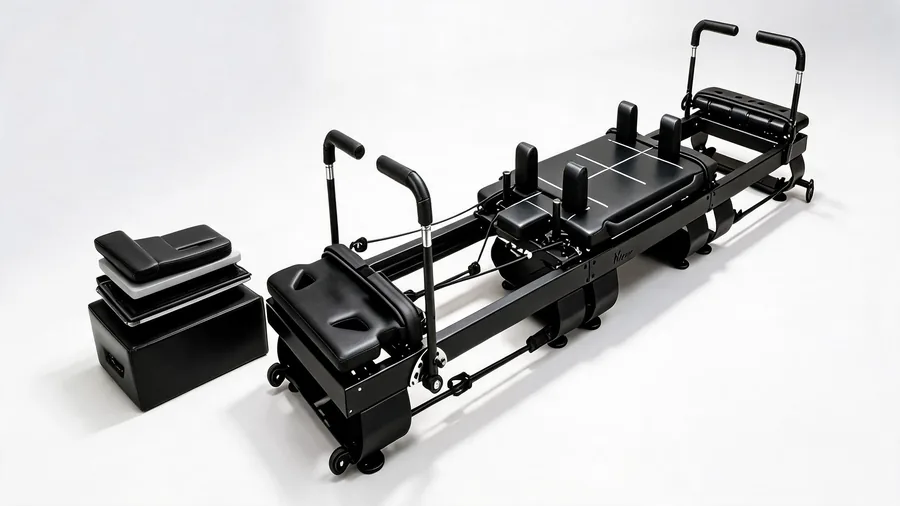
Wir haben diesen Leitfaden aus der Fabrikperspektive erstellt, wo Megacore kommerzielle Reformer und deren Zubehör für Studios weltweit fertigt. Das bedeutet, die folgenden Spezifikationen sind diejenigen, die wir täglich testen – keine Marketingzahlen. Beginnen wir mit dem, was jedes Studio wirklich braucht.
Pilates Reformer-Zubehör für kommerzielle Studios – Boxen, Jump Boards und Plattformverlängerungen, gefertigt nach demselben Standard wie der Reformer selbst.
1. Pilates Reformer-Zubehör: Was in jedem Studio vorhanden sein sollte
Ein komplettes Pilates Reformer-Zubehör-Setup ist kleiner, als die meisten Besitzer erwarten. Vier Zubehörgruppen decken etwa 95 % des Bedarfs kommerzieller Kurse ab. Alles andere – geteilte Pedale, Tower-Aufsätze, Fußschlaufen – ist ein netter Zusatz, sobald das Kern-Set vorhanden ist.
Boxen und Jump Boards sind für ein kommerzielles Reformer-Studio nicht optional – sie sind Teil des Standard-Kursformats, das Kunden erwarten. Plattformverlängerungen und Matten skalieren mit Ihrer Kundenzusammensetzung und Ihren Kurstypen.
2. Reformer-Box: Größen, Spezifikationen und worauf zu achten ist
Von allen Pilates Reformer-Zubehörteilen in Ihrem Studio wird die Box täglich am meisten genutzt. Die Reformer-Box – auch Short Box oder Pilates-Box genannt – ist eine gepolsterte Plattform, die für sitzende und liegende Übungen auf dem Wagen steht. Sie ist das mit Abstand am häufigsten genutzte Zubehör in einem kommerziellen Studio, daher ist die Spezifikationslatte hoch.
Standard-Boxabmessungen
Schaumstoffdichte und Bezugsmaterialien
Hochdichter Schaumstoff (50-60 kg/m³) ist die Grenze zwischen einer Box, die fünf Jahre hält, und einer, die in sechs Monaten durchhängt. Eine durchhängende Box verändert die Übungswinkel und sorgt für ein uneinheitliches Erlebnis über Ihren gesamten Reformer-Park. Marine-Vinyl mit antimikrobieller Behandlung sollte zu Ihrer Reformer-Polsterung passen, damit das Studio einheitlich wirkt.
So prüfen Sie die Boxqualität vor dem Kauf
- Prüfen Sie die Unterseite auf rutschfeste Gummigriffe, die mit Ihrem Wagenmaterial kompatibel sind
- Bestätigen Sie, dass die Tragegriffe verstärkt sind – sie sollten mindestens 50 kg Zug ohne Einreißen aushalten
- Drücken Sie den Schaumstoff: Er sollte vollständig zurückfedern, ohne sichtbare Delle
- Verlangen Sie die Schaumstoffdichte-Spezifikation schriftlich – wenn der Lieferant sie nicht angibt, ist das ein Warnsignal
3. Jump Board: Cardio-Spezifikationen und Kompatibilität
Unter den kommerziellen Pilates Reformer-Zubehörteilen ist das Jump Board der Kauf mit der größten Wirkung, um Kursformate zu erweitern. Ein Jump Board verwandelt den Reformer in eine gelenkschonende Cardio-Plattform und ist der schnellste Weg, ein neues umsatzbringendes Kursformat hinzuzufügen. Der Spezifikationsfokus bei kommerziellen Jump Boards liegt auf Stoßdämpfung und sicherer Befestigung – dieses Zubehör nimmt echte Kräfte auf, Kurs für Kurs.
Abmessungen und Schaumstoffspezifikationen
Sicherheitsanforderungen für Jump-Board-Kurse
Die Arbeit mit dem Jump Board erfordert einen Reformer mit einer Rahmenbelastbarkeit von mindestens 250 kg, um wiederkehrende dynamische Lasten zu bewältigen, sowie ausreichend Deckenfreiheit – mindestens 30 cm über der maximalen Sprunghöhe des Kunden. Der Jump-Board-Schaumstoff komprimiert sich bei normaler Nutzung um 10-15 % und sollte in einem vielbeschäftigten Studio alle 2-3 Jahre ersetzt werden.
Für Kursplanung, Federauswahl und Übungsprogressionen lesen Sie unseren speziellen Leitfaden für Jump-Board-Übungen – dieser Katalog konzentriert sich auf das Gerät selbst.
4. Plattformverlängerung: Den Wagen für größere Kunden verlängern
Für Studios mit einem großen Anteil großer Kunden ist dies die Kategorie des Pilates Reformer-Zubehörs, die die meisten Beschwerden verhindert. Eine Plattformverlängerung verlängert die Wagenoberfläche um 15-30 cm, was wichtiger ist, als die meisten Besitzer erwarten. Standardwagen sind 95-105 cm lang – zu kurz für komfortable Bauch- und Rückenlage bei Kunden über 185 cm. Studios mit einem bedeutenden männlichen Kundenanteil sollten Verlängerungen bei mindestens der Hälfte der Reformer als Standardausstattung betrachten.
Kompatibilität und Installation
- Befestigung: Verriegelungshalterungen oder gurtgesicherte Verbindungen am Kopfende des Wagens
- Die Installation sollte werkzeuglos erfolgen – keine Schrauben oder Schraubenschlüssel zwischen den Kursen
- Die Polsterung muss in Dicke (3-5 cm) und Festigkeit (ILD 30-40) zum Wagenpolster passen
- Eine Bewegung von auch nur 1 cm während einer Übung ist ein Sicherheitsproblem – testen Sie die Verriegelung vor dem Kurs
Eine Verlängerung der Oberfläche auf 120-130 cm bietet komfortabel Platz für Kunden bis 200 cm. Für die Übungsanwendungen lesen Sie unseren Leitfaden zur Plattformverlängerung der Cadillac-ähnliche Arbeit am Reformer behandelt.
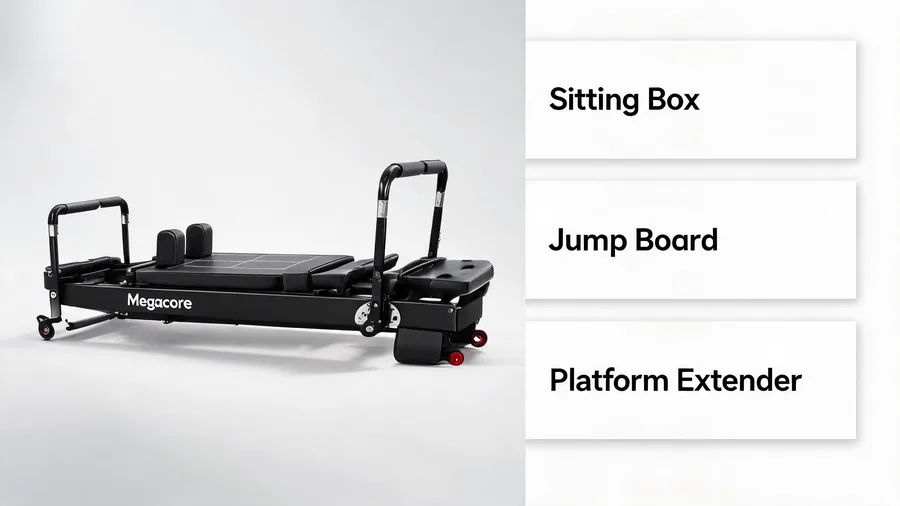
Pilates Reformer Zubehörkatalog: Boxen, Jump Boards und Plattformverlängerungen – Studio-Ausstattung, konfiguriert mit dem Zubehör, das Kunden von einem kommerziellen Kurs erwarten.
5. Schaumstoffrollen-Bezüge und umweltfreundliche Matten
Schaumstoffrollen-Bezüge und umweltfreundliche Matten sind die Pilates Reformer-Zubehörteile, die Hygiene und die Aufwärmphasen unterstützen. Sie vervollständigen das Zubehör-Set – sie schützen die Geräte, bieten eine Hygieneschicht und unterstützen die Aufwärm- und Abklingphasen von Reformer-Kursen.
Spezifikationen für Schaumstoffrollen-Bezüge
Kommerzielle Bezüge passen auf Rollen mit 90 cm und 60 cm Länge und 13-15 cm Durchmesser. Achten Sie auf 4-Wege-Stretch-Polyester oder Nylon-Spandex-Mischungen mit antimikrobieller Ausrüstung – Schweißaufnahme ist die Hauptursache für Ausfälle. Bezüge sollten maschinenwaschbar sein und je nach Kursvolumen alle 6-12 Monate ersetzt werden.
Vergleich nachhaltiger Mattenoptionen
Für die vollständige Nachhaltigkeitsanalyse und Beschaffungsdetails lesen Sie unseren Leitfaden zu Schaumstoffrollen-Bezügen und umweltfreundlichen Matten.
6. Kompatibilität: Warum markenpassendes Zubehör gewinnt
Kompatibilität ist der am wenigsten sichtbare, aber wichtigste Faktor bei Pilates Reformer-Zubehör. Reformer-Abmessungen, Schienenbreiten und Befestigungspunkte unterscheiden sich zwischen Herstellern. Der größte Zubehörfehler, den wir sehen, ist das Mischen von Marken – eine Box, die nicht bündig sitzt, oder ein Jump Board, das sich während des Kurses verschiebt, ist eine Gefahrenquelle, keine Kosteneinsparung.
Wenn Sie Zubehör vom selben Hersteller wie Ihre Reformer kaufen, ist die Kompatibilität garantiert und der Garantieanspruch bleibt erhalten. Megacore liefert Boxen, Jump Boards und Plattformverlängerungen, die auf jedes Reformer-Modell in unserer kommerziellen Serie abgestimmt sind.
7. Checkliste für Pilates Reformer-Zubehör: Was Sie mit Ihrer ersten Flotte bestellen sollten
Wenn Sie Reformer für ein neues Studio bestellen, wird die Zubehörliste im selben Auftrag entschieden – eine spätere Nachrüstung kostet mehr und verzögert Ihre Eröffnung. Nutzen Sie diese Checkliste als Ihre Bestellliste für ein Studio mit 10 Reformern:
Das Bestellen Ihres Pilates Reformer-Zubehörs zusammen mit den Reformern hat zwei Vorteile: Die Kompatibilität ist garantiert, weil alles im Werk abgestimmt wird, und Sie sparen Frachtkosten, indem Sie einen einzigen Container nutzen. Die meisten Hersteller in Guangzhou, einschließlich Megacore, können Zubehör zu Direktab-Werk-Preisen in die Reformer-Sendung integrieren.
Ein häufiger Fehler ist, zu wenige Ersatzteile zu bestellen. Ein Studio mit 15+ Kursen pro Tag verschleißt Gurte alle 6-12 Monate und Jump-Board-Schaumstoff alle 2-3 Jahre. Bestellen Sie Ersatzteile mit der Erstsendung, damit Ersatzteile im Regal liegen, bevor der erste Ausfall eintritt – nicht sechs Wochen danach.
8. Häufige Fehler bei Pilates Reformer-Zubehör und wie man sie vermeidet
Die meisten Probleme mit Pilates Reformer-Zubehör in kommerziellen Studios lassen sich auf eine Handvoll wiederkehrender Fehler zurückführen. Hier ist, was wir am häufigsten sehen, und die Lösung für jeden.
Zubehör in Heimqualität für den kommerziellen Einsatz kaufen
Boxen und Jump Boards in Heimqualität verwenden Schaumstoff mit geringerer Dichte (30-40 kg/m³) und dünneres Vinyl. Im kommerziellen Einsatz komprimieren sie innerhalb von Monaten, verändern die Übungswinkel und wirken neben den Reformern abgenutzt. Legen Sie stets die kommerzielle Schaumstoffdichte fest (50-60 kg/m³ für Boxen, 40-50 kg/m³ für Jump Boards), auch wenn die Anschaffungskosten höher sind.
Zubehörmarken mischen
Reformer-Schienenbreiten, Wagengrößen und Fußstangenbreiten unterscheiden sich zwischen Herstellern. Ein Jump Board, das zu einer Marke passt, kann auf einer anderen locker sitzen – und ein lockeres Jump Board unter einem springenden Kunden ist eine echte Gefahrenquelle. Bestellen Sie im Zweifel Pilates Reformer-Zubehör bei derselben Fabrik, die Ihre Reformer gebaut hat.
Ersatzpläne ignorieren
Der Jump-Board-Schaumstoff komprimiert sich bei normaler Nutzung um 10-15 % und sollte alle 2-3 Jahre ersetzt werden. Gurte müssen ersetzt werden, wenn Ausfransungen auftreten – in einem vielbeschäftigten Studio typischerweise nach 6-12 Monaten. Rollenbezüge halten 6-12 Monate. Tragen Sie diese Termine in einen Wartungskalender ein; Zubehör sind Verbrauchsmaterialien, keine lebenslange Ausstattung.
Die Rutschfestigkeitsprüfung überspringen
Die Unterseite der Box muss rutschfeste Gummigriffe aufweisen, die mit Ihrer Wagenoberfläche kompatibel sind. Eine Box, die bei sitzenden Übungen verrutscht, ist eines der am meisten unterschätzten Sicherheitsprobleme in Studios. Testen Sie jede Box auf dem tatsächlichen Wagen, bevor sie in Betrieb genommen wird.
9. Zubehör-Aufbewahrung und -Organisation
Das Zubehörmanagement ist ein übersehener Teil der Planung von Pilates Reformer-Zubehör. Ohne organisierte Aufbewahrung werden Boxen fallengelassen, Jump Boards verlegt und Kurswechsel dehnen sich von 90 Sekunden auf fünf Minuten aus. Planen Sie ¥3.000-6.000 für die Aufbewahrung in einem Studio mit 10 Reformern ein – es zahlt sich in Gerätelebensdauer und Wechselgeschwindigkeit aus.
- Wandmontierte Regale in der Nähe des Reformer-Bereichs – nicht in einem Hinterzimmer
- Farbcodierte Systeme: eine Farbe pro Reformer-Station, passendes Zubehör
- Körbe pro Reformer für kleines Zubehör (Gurte, Ringe, Bänder)
Für detaillierte Regal-, Wagen- und Layout-Optionen lesen Sie unseren Leitfaden für Reformer-Aufbewahrungslösungen.
10. Budgetierung für Pilates Reformer-Zubehör
Hier erfahren Sie, was kommerzielles Pilates Reformer-Zubehör tatsächlich kostet, basierend auf Direktab-Werk-Preisen:
Mindestbestellmengen für kundenspezifisches Zubehör (Logo, Markenfarben) beginnen beim Direktbezug von Herstellern in Guangzhou typischerweise bei 100-200 Stück. Für einen Standard-Studioaufbau ist die Bestellung von Zubehör zusammen mit Ihren Reformern in einer Sendung der kosteneffizienteste Weg – er garantiert zudem die Kompatibilität.
Häufig gestellte Fragen
F1: Welches Pilates Reformer-Zubehör brauche ich wirklich?
Beginnen Sie pro Reformer mit einer Box und einem Jump Board – sie sind der Kern kommerzieller Kursformate. Fügen Sie Plattformverlängerungen für einen hohen Anteil großer Kunden hinzu sowie Schaumstoffrollen-Bezüge mit umweltfreundlichen Matten für Aufwärmphasen und Hygiene. Alles andere kann warten, bis diese vorhanden sind.
F2: Kann ich Zubehör von verschiedenen Marken verwenden?
Nicht immer. Schienenbreiten, Wagengrößen und Befestigungspunkte unterscheiden sich zwischen Herstellern. Das Aufzwingen inkompatiblen Zubehörs kann Geräte beschädigen und Gefahrenquellen schaffen. Kaufen Sie bei Ihrem Reformer-Hersteller oder verwenden Sie geprüfte Universaladapter.
F3: Wie viel kostet Pilates Reformer-Zubehör?
Jump Boards kosten im Einzelhandel 100-300 $, Boxen 200-500 $, Plattformverlängerungen 150-400 $ und Schaumstoffpolster-Sets 50-150 $. Direktab-Werk-Preise sparen typischerweise 30-40 %, und die Bündelung mit Ihrer Reformer-Bestellung bietet den besten Gegenwert.
F4: Wie lange halten kommerzielle Zubehörteile?
Mit kommerziellem Schaumstoff und Marine-Vinyl halten Boxen 5+ Jahre, Jump-Board-Schaumstoff sollte alle 2-3 Jahre und Rollenbezüge alle 6-12 Monate ersetzt werden. Befolgen Sie den Ersatzplan – abgenutzter Schaumstoff verändert die Übungsqualität und kann zu einem Sicherheitsproblem werden.
F5: Passt Zubehör auf alle Reformer-Modelle?
Nein. Boxen müssen zur Wagenbreite passen, Jump-Board-Halterungen zur Fußstangenbreite, und Plattformverlängerungen sind in der Regel modellspezifisch. Prüfen Sie die Kompatibilität stets beim Hersteller, bevor Sie bestellen – eine Abweichung von 1 cm genügt, um ein Zubehörteil unsicher zu machen.
F6: Sollte ich Zubehör mit meinen Reformern oder später kaufen?
Kaufen Sie sie mit den Reformern. Die Kompatibilität ist garantiert, die Frachtkosten werden geteilt und Direktab-Werk-Preise gelten für die gesamte Bestellung. Eine spätere Nachrüstung bedeutet separate Versandkosten und das Risiko, dass sich die Zubehörspezifikation zwischen den Bestellungen geändert hat.
F7: Wie reinige ich Pilates Reformer-Zubehör?
Wischen Sie Vinylboxen und Jump Boards zwischen den Einheiten mit Quats-Tüchern (quaternäre Ammoniumverbindungen) ab, passend zu Ihrem Reformer-Reinigungsprotokoll. Waschen Sie Rollenbezüge im Schonwaschgang und lassen Sie sie an der Luft trocknen. Weichen Sie den Schaumstoff niemals ein und sprühen Sie Reiniger niemals direkt darauf – Flüssigkeit dringt in die Polsterung ein und beschleunigt den Verfall.
Fazit
Das richtige Pilates Reformer-Zubehör erweitert Ihr Kursangebot, bedient mehr Körpertypen und schützt Ihre Reformer-Investition. Kaufen Sie kommerzielle Qualität – richtige Schaumstoffdichte, Marine-Vinyl, sichere Befestigungsmechanismen – und passen Sie jedes Zubehörteil an Ihr Reformer-Modell an. Organisieren Sie sie mit einem farbcodierten Aufbewahrungssystem und ersetzen Sie Verschleißteile planmäßig.
Bei Megacore wird jedes Zubehörteil nach derselben Spezifikation wie unsere kommerziellen Reformer gefertigt und für den täglichen Mehrfachnutzerbetrieb getestet. Direktab-Werk-Preise bedeuten, dass Studios kommerzielles Zubehör ohne den Einzelhandelsaufschlag erhalten.
Weitere Ratgeber
- Pilates-Reformer-Jumpboard-Übungen: Cardio in Ihr Reformer-Training integrieren
- Pilates Reformer Plattformverlängerung: Cadillac-ähnliche Übungen in Ihren Reformer integrieren
- Pilates Reformer Schaumstoffrollen-Bezüge und umweltfreundliche Matten: Nachhaltige Studio-Lösungen
- Pilates Reformer Aufbewahrungslösungen: Kompletter Leitfaden zur Organisation von Federn, Gurten
- Pilates Reformer Reinigungsleitfaden: Best Practices für Studio-Hygiene und Desinfektion
- Die besten Pilates Reformer für den kommerziellen Einsatz: Stahl, Federn und Haltbarkeit
Externe Quellen
Branchenreferenzen für Pilates Reformer-Zubehör und Ausstattungsstandards für Studios:
- Pilates Method Alliance – Branchenstandards für Ausstattung
- CDC Environmental Infection Control – Hygiene für gemeinsam genutzte Geräte
- OSHA-Hygienestandards – Arbeitssicherheit in Fitnesseinrichtungen
Accessory compatibility depends on the machine, and the kommerzieller Reformer model pages list what fits.