

Setting up a pilates reformer for small spaces is entirely possible when you plan the room properly. Compact folding models, smart layouts, and a few practical measurements turn a spare bedroom, home office corner, or 500 sq ft boutique space into a fully functional studio. The key is knowing exactly how much room each machine needs before it arrives at your door.
This guide walks through everything involved in preparing your space: measuring the room, choosing a space-efficient reformer, protecting your floor, planning lighting and ventilation, and laying out the studio so both clients and instructors move with ease. Whether you are converting a bedroom or opening a small commercial studio, these pilates reformer for small spaces strategies keep the setup safe, comfortable, and professional.
Space is rarely the real obstacle. With a clear plan and the right equipment, even a 100 sq ft room can host a working reformer studio. The sections below follow the same order you should work through in your own room: measure first, then choose the machine, then prepare the floor, services, and layout. Each step is short, practical, and aimed at one goal — getting the most out of every square foot you have.
1. Start With a Room Measurement
Before buying any equipment, measure the room with a steel tape and record three numbers: floor area, doorway width, and ceiling height. A typical reformer needs a clear area of about 6 x 8 feet around the machine for safe entry, exit, and full-range exercises. That 48 sq ft includes the machine footprint plus the space your body occupies during footwork, long box work, and arm spring exercises. Taking accurate measurements is the first step in any pilates reformer for small spaces project, because every later decision — machine size, layout, storage — depends on these three numbers.
Doorway width matters more than most buyers expect, and it decides whether a pilates reformer for small spaces can even enter the room. Full-size commercial reformers are around 90-100 inches long and cannot turn corners easily. A compact folding reformer, in contrast, breaks down or tips upright so it fits through standard 30-inch doors and narrow hallways. Measure every doorway, stair landing, and elevator entrance between the delivery point and the final room before ordering.
Ceiling height is the third measurement. Most reformers need at least 8 feet of clearance; 9 feet is comfortable for tall clients doing overhead reaches and tower work. If your room has less than 8 feet, avoid tower attachments and long box exercises and plan the repertoire around footwork and mat-adjacent movements instead.
Write these three numbers on paper and keep them beside you while shopping. When a sales page says a reformer is 86 inches long, you can immediately compare it against your measured space and doorway width. This habit prevents the most common buying regret: a machine that is technically the right size but physically impossible to move into position.
2. Choosing a Compact Reformer
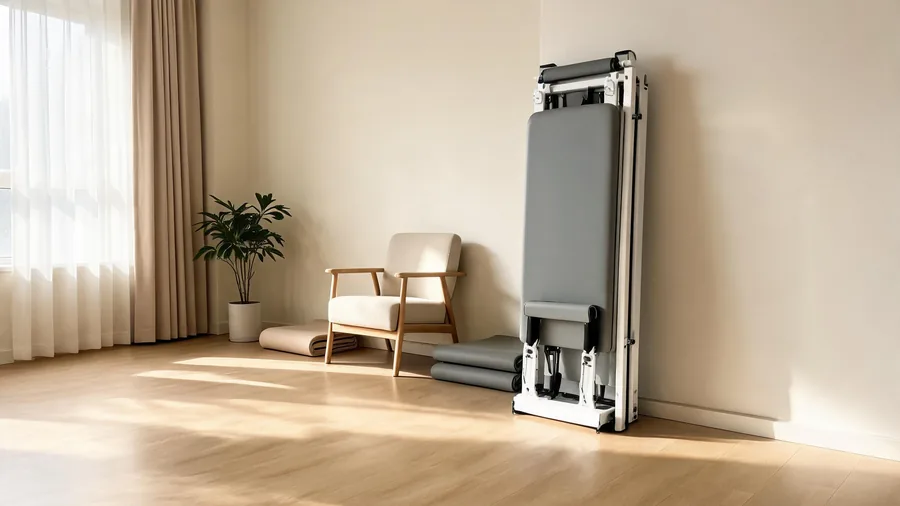
The machine itself is the biggest variable in a small-room setup. A fixed full-size reformer requires roughly 8 x 9 feet and cannot be stored away between sessions. A folding reformer collapses to a fraction of that footprint, and some models tip upright against a wall using less than 2 sq ft of floor when stored. For homes and small boutiques, the folding category is almost always the right starting point when you are choosing a pilates reformer for small spaces.
Frame material also affects space planning. Aluminum reformers are lighter and easier to move in and out of storage, while steel frames add stability for heavier use. Commercial-grade steel with a 250 kg weight capacity gives studios the durability they need, but if you plan to fold and store the machine daily, confirm the hinges and locking mechanism are built for repeated cycling.
A practical test: fold and unfold the machine yourself before buying, or watch the demo video. For a pilates reformer for small spaces, folding effort matters as much as the folded size.tch a video of the process. Reformers vary widely in how easy the folding action is, how securely the frame locks, and how much clearance the folded unit needs against a wall. A folding reformer that takes two people and five minutes to set up will quietly stop being folded after the first week, which defeats the purpose of buying compact in the first place.
For a pilates reformer for small spaces, prioritize three features: a reliable folding mechanism, adjustable footbar and shoulder rests, and a weight capacity that matches your client base. Commercial-grade build quality matters even in a home studio, because the machine will be folded, moved, and stored repeatedly.
3. Flooring and Surface Prep
Reformers need a level, stable surface. An uneven floor makes the carriage glide unevenly and accelerates spring wear. Check the floor with a 4-foot level; if there is more than a quarter-inch gap anywhere, use shims or self-leveling compound before placing the machine. Flooring is where many pilates reformer for small spaces setups fail, not because the material is wrong, but because the surface was never checked for levelness in the first place.
Hardwood and sealed concrete are both excellent bases for a reformer. For home rooms with carpet, lay a plywood board under the machine to distribute weight and keep the frame stable. Rubber flooring in 3/8-inch thickness is the best choice for commercial studios: it protects the floor, absorbs sound, and gives clients a comfortable surface for standing work. Avoid thick plush carpet and tile, which either destabilize the machine or are too hard underfoot.
Weight is rarely a structural concern: a steel reformer plus an adult user concentrates roughly 500-650 lbs in a small footprint, which standard residential floors handle comfortably. If you plan more than 15-20 machines on an upper floor, consult a structural engineer during the planning phase.
Before laying any flooring, confirm the subfloor condition. A level concrete subfloor is the ideal base. Wooden subfloors work when they are structurally sound and without squeaks; if boards flex underfoot, reinforce them before the reformer arrives. Rubber tiles over the existing surface are a simple upgrade that improves grip, reduces noise, and protects both the machine and the floor beneath it.
4. Lighting, Ventilation, and Ceiling Clearance
Pilates generates heat and sweat, so ventilation is not optional. Even the best pilates reformer for small spaces layout feels unusable when the room turns stuffy halfway through a session. A mini-split or through-wall AC unit keeps small rooms comfortable year-round, and an operable window or ceiling fan adds air movement. Position the reformer so windows are to the side rather than directly behind or in front, which avoids glare during supine work. A simple ventilation plan for your pilates reformer for small spaces room prevents the stuffy, overheated feeling that makes clients cut sessions short.
Lighting should be bright but not harsh. Positioning a pilates reformer for small spaces near a window cuts daytime energy use and keeps the room feeling open. Full-spectrum LED fixtures at 4000K-5000K mimic daylight and help clients see alignment cues in mirrors. Aim for 30-50 foot-candles at floor level. For overhead clearance, measure from the carriage at its highest position to the ceiling; you want at least 12 inches above the machine for spring changes and arm reaches.
Electrical outlets are easy to overlook. Reformers themselves need no power, but the room needs outlets for lighting, fans, music, and charging devices. Plan for at least four outlets in a home studio and more in a commercial room, positioned so extension cords never cross a walkway. A small power strip mounted near the instructor station handles the daily essentials without creating trip hazards.
5. Smart Layouts for a Pilates Reformer for Small Spaces
Layout decides whether a small room feels spacious or cramped. In any pilates reformer for small spaces arrangement, the position of the machine determines how usable the rest of the room feels. Place the reformer against a wall or at a 45-degree angle in the corner, with the footbar facing into the room. Leave 3-4 feet in front of the machine for transitions and mat work, and at least 2 feet on each side. If the room doubles as an office or guest bedroom, a folding reformer stored upright transforms the space in under a minute.
For studios running multiple reformers in a compact room, keep machines parallel with 4-5 feet center-to-center spacing. Reserve 6-8 feet at the front of the room for the instructor station and client entry, and 3-4 feet behind the reformers so instructors can spot from the back. Mirrors along one full wall make the room feel larger and give clients visual feedback; 6-7 foot tall mirrors mounted 6-12 inches off the floor work best.
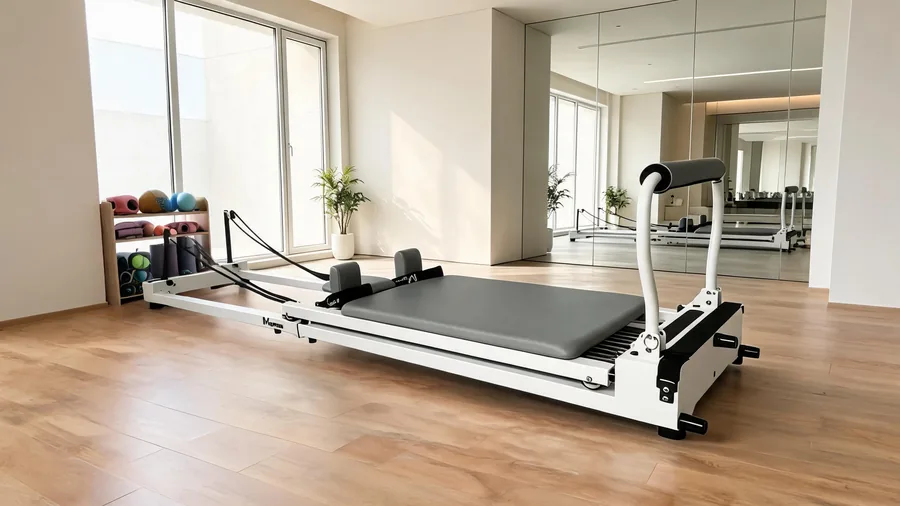
A 500 sq ft room fits 6-8 reformers when spacing follows these guidelines. At 750 sq ft, plan for 10-12 machines. Whatever the room size, calculate at least 50 sq ft per reformer including clearance, and keep walkways clear of props, bags, and furniture.
For a single pilates reformer for small spaces at home, an L-shaped or corner arrangement works surprisingly well. Angle the machine 45 degrees in the corner, footbar facing the room, and place a small mirror on the adjacent wall. This opens the center of the room for mat work and makes the space feel larger than a straight wall placement ever will.
6. Storage Options When Every Foot Counts
Small rooms demand disciplined storage. A pilates reformer for small spaces needs a clear home for mats, straps, and props so the room stays ready for the next session. Wall-mounted shelves for mats, blocks, and bands keep props off the floor, while a compact cart near the door holds cleaning supplies for a fast between-class wipe-down.
If the room is truly tight, a folding reformer stored upright doubles as the space-saving solution, and a few wall hooks for straps and accessories complete the setup. A well-planned storage strategy finishes a pilates reformer for small spaces installation and keeps every square foot usable.
For studios, a prop shelf per row of reformers reduces clutter and speeds up class transitions. Keep the area behind each machine clear for instructor access, and never block the fire exit or the electrical panel when arranging storage furniture.
7. Common Setup Mistakes to Avoid
The most frequent mistakes in small-room setups are easy to prevent, and most trace back to buying before planning. A pilates reformer for small spaces only works when the layout is decided first. First, skipping the doorway measurement, which leads to a machine that cannot reach the room. Second, placing the reformer on an uneven floor without checking, which causes premature spring wear and an unstable feel. Third, forgetting ventilation, which turns the room into an uncomfortable sauna by mid-session.
Fourth, overstuffing the room. More reformers do not equal more revenue if clients feel crowded and instructors cannot spot safely. Fifth, ignoring acoustics: springs and carriages generate 60-70 dB in a busy studio, so add acoustic panels on one wall and rubber flooring to keep the noise level professional. Planning for these five details up front saves costly rework later.
One more mistake deserves attention: buying a reformer before measuring. It is the root cause of most returns and regretful purchases. Measure the room, the doorways, and the ceiling, decide on the folding or fixed format, and only then compare models. When the machine fits the space, the whole pilates reformer for small spaces setup feels effortless; when it does not, every session starts with frustration.
Domande frequenti
Can I put a reformer in a small bedroom?
Yes. A compact folding reformer needs about 6 x 8 feet of clear space during use and only about 2 x 2 feet when stored upright. Measure the room first, protect the floor with a mat or plywood board, and keep 3-4 feet clear in front of the machine for exercises. This is the most common question we hear from buyers planning a pilates reformer for small spaces, and the answer is almost always yes with the right folding model.
What is the minimum room size for a pilates reformer?
An 8 x 8 foot room (64 sq ft) is the practical minimum for a single reformer with basic clearance. Smaller spaces work with folding models, but you will need to move furniture or store the machine between sessions.
Do I need special flooring for a reformer?
A level, stable surface is essential. Hardwood, sealed concrete, or 3/8-inch rubber flooring all work well. Avoid thick plush carpet and tile; on carpet, place a plywood board under the machine first.
How much space do I need between reformers?
Keep reformers parallel with 4-5 feet center-to-center spacing, leave 6-8 feet at the front of the room for the instructor, and 3-4 feet behind the machines for spotting. This gives clients personal space and keeps classes safe.
Can I fold and store a reformer every day?
Yes, if you choose a folding model built for repeated cycling. Look for reinforced hinges, secure locking mechanisms, and commercial-grade construction. Megacore folding reformers are designed for daily fold-and-store use in multi-purpose rooms.
What ceiling height do I need?
At least 8 feet is recommended, and 9 feet is ideal. Measure from the carriage at its highest position to the ceiling, leaving at least 12 inches of clearance for arm reaches and spring changes.
Plan Your Space Before the Reformer Arrives
Preparing the room correctly is the difference between a studio that feels professional and one that feels cramped. That is exactly why a pilates reformer for small spaces needs its own checklist, not a scaled-down copy of a large studio plan. professional and one that feels cramped. Measure first, choose a compact folding model for tight rooms, protect the floor, plan airflow and lighting, and lay out the machines with generous clearance. Following these steps, a pilates reformer for small spaces becomes a practical, profitable addition to any home or boutique studio.
If you are still comparing machines, focus on the foldable category and the features that matter most in a compact room: a smooth folding mechanism, adjustable footbar, solid weight capacity, and a frame you can move alone. Megacore’s T07 folding reformer was designed around these exact needs, and our team can recommend a layout for your specific room dimensions. A few minutes of planning now saves months of awkward rearranging later.
Guide correlate
- Pilates Reformer Dimensions & Space Requirements
- Guida alla pavimentazione per studi di Pilates
- Pilates Reformer Storage Solutions
- Foldable vs Fixed Reformers for Small Boutique Studios
- Group Reformer Classes: Layout & Setup
Industry standards for equipment spacing and studio safety are available from the Pilates Method Alliance. For facility hygiene and ventilation guidance, refer to CDC environmental health guidelines.