
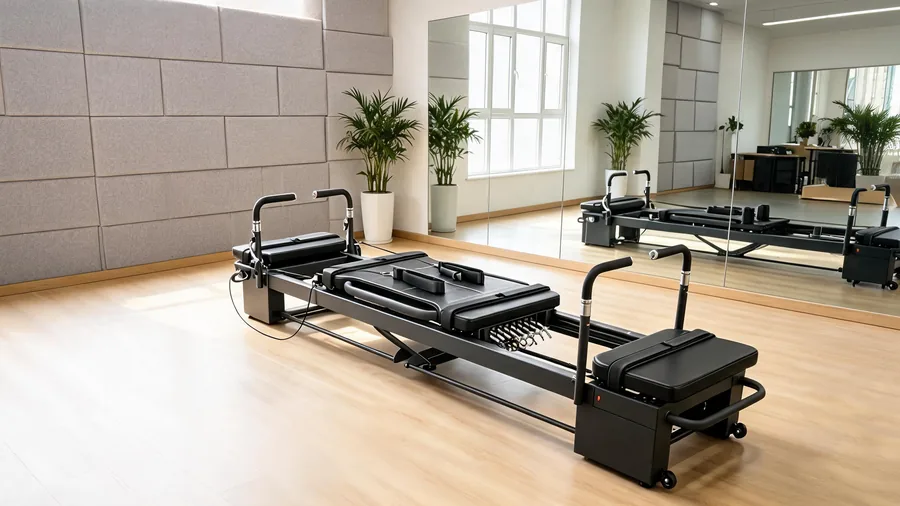
I livelli di rumore del reformer Pilates influenzano l'atmosfera dello studio. Quando entri in uno studio Pilates, l'atmosfera conta. Luci soffuse, musica rilassante e … il tintinnio ritmico delle molle in metallo. Alcuni reformer sussurrano silenziosi a ogni movimento. Altri annunciano ogni transizione con uno sferragliare metallico. Se sei il proprietario di uno studio, la differenza tra un reformer da 50 dB e uno da 65 dB può definire l'intera esperienza dei tuoi clienti — e la reputazione del tuo studio.
Il rumore è più di un fastidio. In uno studio Pilates commerciale, dove più reformer funzionano contemporaneamente, i livelli sonori si sommano rapidamente. Un'attrezzatura rumorosa disturba le indicazioni a voce, distrae i clienti durante gli esercizi dedicati al rilassamento e crea un'atmosfera poco professionale. Questa guida spiega cosa significano davvero i livelli di rumore del reformer nella pratica, come misurarli e cosa puoi fare per mantenere il tuo studio tranquillo e accogliente per i clienti.
1. Capire i livelli di rumore del Reformer Pilates: la scala dei decibel
I decibel (dB) misurano l'intensità del suono su una scala logaritmica. Ciò significa che un reformer da 60 dB non è leggermente più silenzioso di un modello da 70 dB: è dieci volte più silenzioso. Un aumento di 10 dB rappresenta un salto di dieci volte nell'energia sonora, che l'orecchio umano percepisce come circa il doppio del volume.
Per contestualizzare con esempi reali:
- 30 dB — Una biblioteca silenziosa o una conversazione sussurrata
- 40–50 dB — Pioggia leggera, ronzio moderato del frigorifero
- 55–60 dB — Conversazione normale a 3 piedi, rumore di fondo di un ufficio
- 65–70 dB — Aspirapolvere, ristorante rumoroso, interno medio di un'auto a velocità autostradale
- 75–80 dB — Traffico intenso, tritarifiuti
Un Reformer Pilates commerciale di qualità dovrebbe funzionare nell'intervallo di 45–55 dB durante l'uso normale. I modelli di fascia alta, progettati con cuscinetti di precisione e sistemi di molle smorzati, possono restare fino a 40–48 dB. I reformer di fascia entry-level superano frequentemente i 60–68 dB, il che diventa fonte di disturbo in una lezione di gruppo, soprattutto quando sei o otto macchine si muovono contemporaneamente.
2. Livelli di rumore normali del Reformer Pilates per gli studi
Non esiste un unico standard di settore per il rumore dei reformer, ma i proprietari di studi esperti e i fornitori di attrezzature hanno sviluppato parametri di riferimento pratici. Un reformer che misura meno di 50 dB a una distanza di un metro durante l'intera escursione di movimento è considerato eccellente. I reformer che misurano 50–55 dB sono accettabili per la maggior parte dei contesti commerciali. Qualsiasi valore superiore a 60 dB richiede attenzione.
La tabella seguente confronta i livelli di rumore tra le diverse categorie di reformer, così puoi valutare la tua attrezzatura attuale o quella che intendi acquistare:
I reformer più silenziosi sul mercato raggiungono il loro basso livello di rumore grazie a scelte progettuali che costano di più da produrre: cuscinetti a cartuccia sigillati invece di sistemi a rulli aperti, guide in acciaio inossidabile rettificate di precisione invece di alluminio estruso, smorzatori alle estremità delle molle e imbottitura del carrello antivibrazione. Questi dettagli si traducono in un'esperienza misurabilmente più silenziosa.
3. Fonti comuni di rumore del Reformer Pilates
Non tutto il rumore del reformer deriva da una progettazione scadente. Anche macchine ben mantenute possono sviluppare cigolii e vibrazioni nel tempo. Capire da dove proviene il rumore ti aiuta a diagnosticare e risolvere i problemi prima che allontanino i clienti.
1. Ganci delle molle e punti di attacco
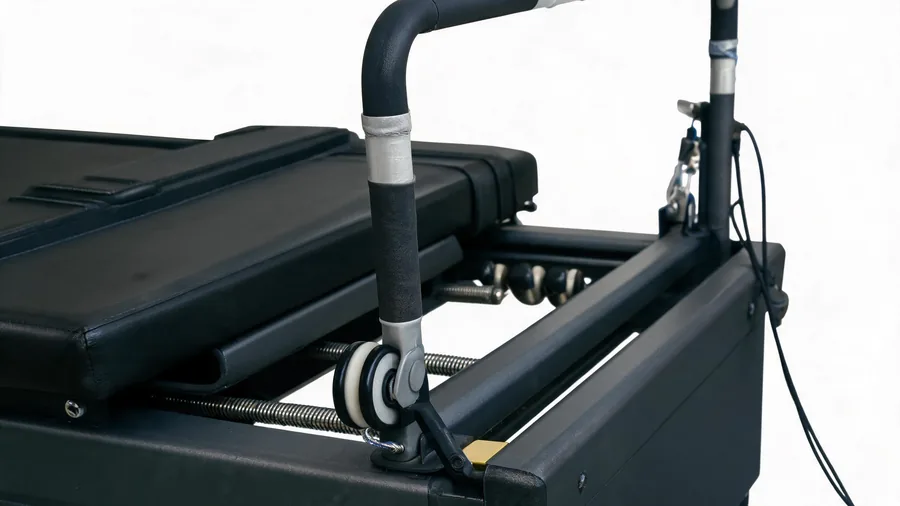
La fonte di rumore più comune è l'interfaccia tra molla e gancio. Quando le molle sfregano contro i ganci metallici senza una lubrificazione adeguata o una boccola in nylon, producono un tintinnio acuto o un suono di sfregamento. I reformer premium utilizzano punti di attacco delle molle con guarnizioni in gomma o ganci rivestiti in plastica per eliminare il contatto metallo su metallo.
2. Cuscinetti e rulli del carrello
I cuscinetti del carrello sono il secondo colpevole più frequente. I sistemi a rulli aperti accumulano polvere e fibre provenienti dai tappetini e dagli asciugamani dello studio, creando attrito e rumore nel tempo. I cuscinetti a cartuccia sigillati (come quelli usati nei reformer Megacore) impediscono l'ingresso di detriti, rispettando gli Pilates Method Alliance standard per le attrezzature, e mantengono un funzionamento silenzioso per anni. Se senti un rumore di sfregamento o un suono ruvido durante il movimento del carrello, i cuscinetti probabilmente necessitano di pulizia o sostituzione. Scopri di più sui tipi di cuscinetti del carrello e sulla manutenzione.
3. Flessione del telaio e fissaggi allentati
Un telaio che flette produce scricchiolii che vengono amplificati dalla struttura in legno duro o metallo. I reformer commerciali costruiti con tubi in acciaio a parete spessa e controventature rinforzate eliminano quasi del tutto la flessione del telaio. Se un reformer scricchiola quando un cliente si sdraia o passa da un esercizio all'altro, serrare tutti i bulloni e verificare l'allineamento del telaio di solito risolve il problema.
4. Attrito di funi e pulegge
Pulegge asciutte o disallineate creano un cigolio che viaggia attraverso il sistema di funi direttamente fino alle mani del cliente. Una lubrificazione regolare dei cuscinetti delle pulegge e un corretto allineamento delle funi mantengono sotto controllo questa fonte di rumore. Le pulegge di alta qualità in nylon o Delrin sono intrinsecamente più silenziose delle alternative in metallo.
5. Meccanismo di regolazione della barra poggiapiedi
Le barre poggiapiedi regolabili che utilizzano perni a molla possono vibrare durante i movimenti vigorosi. I meccanismi di blocco magnetico o i sistemi a camma (comuni sui reformer premium) eliminano completamente questa vibrazione. Un'ispezione regolare del gruppo di blocco della barra poggiapiedi aiuta a individuare l'usura prima che il rumore diventi fonte di distrazione.
4. Ridurre i livelli di rumore del Reformer Pilates nel tuo studio
La qualità dell'attrezzatura è solo una parte dell'equazione. Anche i reformer più silenziosi possono produrre un rumore ambientale percepibile in una stanza con pavimenti duri, pareti spoglie e soffitti alti. Il trattamento acustico del tuo spazio studio amplifica o attenua il rumore prodotto dalla tua attrezzatura.
Pavimentazione e tappetini
I pavimenti in legno duro o piastrella riflettono il suono e trasmettono le vibrazioni. Installare un tappetino in schiuma ad alta densità sotto ogni reformer assorbe sia il rumore aereo sia le vibrazioni strutturali. Un tappetino in gomma spesso 10 mm sotto ogni macchina può ridurre il rumore percepito di 3–5 dB, un miglioramento evidente che costa molto poco. Dai un'occhiata alla nostra checklist completa dell'attrezzatura per lo studio per i consigli sulla pavimentazione.
Trattamento di pareti e soffitto
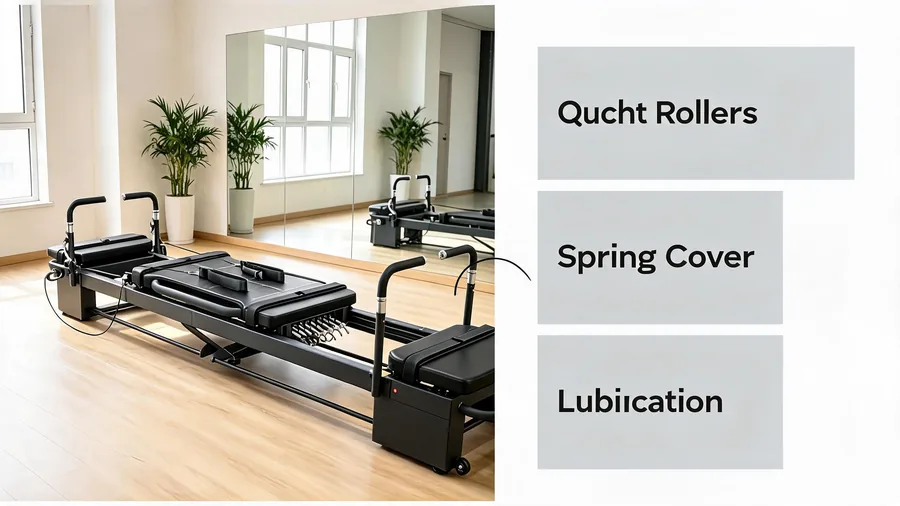
I pannelli acustici posizionati sulle pareti all'altezza delle orecchie assorbono i suoni a media e alta frequenza, proprio le frequenze del rumore delle molle. I pannelli in fibra di vetro rivestiti in tessuto, le piastrelle in schiuma acustica o persino le tende pesanti possono ridurre notevolmente il tempo di riverbero. Per gli studi con più reformer, i deflettori montati a soffitto impediscono al suono di rimbalzare tra le macchine.
Distanziamento dei reformer
Distanziare i reformer di almeno 1,5 metri riduce la propagazione del suono tra le postazioni. Quando i clienti sono vicini, il rumore delle macchine adiacenti si fonde in una miscela fastidiosa. Uno spazio più ampio migliora anche la visibilità dell'istruttore e crea un'atmosfera da studio più premium.
Manutenzione programmata
Una routine di manutenzione trimestrale — lubrificare le molle, pulire le guide dei cuscinetti, serrare i fissaggi, verificare l'allineamento delle pulegge — mantiene costanti i livelli di rumore. Molti proprietari di studi aspettano che una macchina diventi rumorosa prima di agire. La manutenzione proattiva previene quel graduale aumento dei decibel che i clienti notano prima di te. La nostra guida alla sostituzione delle molle tratta in dettaglio il programma di manutenzione.
5. Come i livelli di rumore del Reformer Pilates influenzano i clienti
Il rumore non è solo una metrica tecnica; influenza direttamente il modo in cui i clienti percepiscono il tuo studio. In un sondaggio del 2025 tra i membri di studi fitness boutique, il 67% degli intervistati ha dichiarato che il rumore dell'attrezzatura ha influito negativamente sul proprio relax durante la lezione. Per i clienti in riabilitazione e gli anziani — che spesso hanno una sensibilità uditiva — questa percentuale era ancora più alta.
Le indicazioni a voce sono la spina dorsale dell'insegnamento del Pilates. La voce dell'istruttore deve farsi sentire al di sopra del suono ambientale dell'attrezzatura in movimento. Quando i reformer funzionano a 60 dB o più, gli istruttori devono alzare la voce, sforzare le corde vocali e ripetere le istruzioni. Nell'arco di un'intera giornata di lezioni, questo causa affaticamento dell'istruttore e riduce la qualità dell'insegnamento.
Esiste anche un'associazione subconscia tra rumore e qualità. I clienti collegano implicitamente macchinari fluidi e silenziosi a professionalità e servizio premium. Un reformer che sferraglia segnala usura, scarsa manutenzione o costruzione di bassa qualità, indipendentemente da quanto bene l'attrezzatura funzioni davvero. Investire in reformer silenziosi dimostra che tieni a ogni dettaglio dell'esperienza del cliente.
I reformer commerciali Megacore sono progettati specificamente per ridurre al minimo il rumore in ogni punto di contatto: cuscinetti a rulli sigillati, ganci delle molle smorzati in nylon, guide in acciaio inossidabile lavorate con precisione e telai in acciaio tubolare rinforzato. Queste scelte si traducono in un funzionamento misurato di 42–48 dB durante l'uso normale, più silenzioso di un tipico ambiente d'ufficio. Confronta i modelli Megacore nella nostra guida completa all'acquisto.
Livelli di rumore del reformer Pilates: domande frequenti
Qual è il tipo di reformer Pilates più silenzioso sul mercato?
I reformer commerciali premium con cuscinetti a cartuccia sigillati, punti di attacco delle molle smorzati e telai rinforzati in acciaio sono i più silenziosi. I reformer commerciali Megacore misurano costantemente 42–48 dB, collocandosi tra i più silenziosi disponibili. Anche i reformer in legno di alcune marche possono essere silenziosi, ma i loro telai sono più soggetti a flettersi e scricchiolare nel tempo rispetto ai telai in acciaio saldato.
Posso modificare un reformer rumoroso per renderlo più silenzioso?
In parte. Sostituire i cuscinetti aperti con cartucce sigillate, aggiungere rondelle in gomma ai ganci delle molle, lubrificare le pulegge e installare cuscinetti antivibrazione sotto il telaio può ridurre il rumore di 5–8 dB. Tuttavia, fonti di rumore fondamentali come la risonanza del telaio e le tolleranze delle guide sono insite nel progetto e non possono essere modificate a posteriori. Acquistare un reformer silenzioso fin dall'inizio è quasi sempre più conveniente che cercare di rendere silenzioso uno rumoroso.
Come misuro con precisione il livello di rumore del mio reformer?
Scarica un'app per decibel metro per smartphone (come NIOSH SLM o Decibel X) e misura a un metro di distanza durante l'uso attivo. Prendi le letture durante movimenti lenti e controllati e durante transizioni vigorose per catturare l'intera gamma. Evita di misurare in una stanza con rumore di impianti di climatizzazione o traffico esterno. Per la massima precisione, usa un fonometro di Tipo 2, che costa circa 50–100 $ su Amazon.
La tensione delle molle influisce sui livelli di rumore?
Sì. Molle più pesanti e un maggior numero di molle in uso producono più energia acustica. Durante gli esercizi che richiedono più molle pesanti, l'emissione di rumore aumenta di circa 3–5 dB rispetto ai movimenti con una sola molla leggera. Questo è normale e coerente in tutti i reformer. Il punto chiave è che i reformer premium mantengono il rumore entro un intervallo confortevole anche al massimo carico.
Esiste un limite legale di rumore per gli studi Pilates negli edifici commerciali?
La maggior parte dei contratti di locazione commerciale include una clausola sul rumore, che di solito limita il rumore ambientale a 55–65 dB al confine della proprietà. Anche i regolamenti comunali locali possono imporre limiti. Se la tua flotta di reformer funziona costantemente a 60+ dB, rischi lamentele dei vicini, violazioni del contratto e multe per violazione delle norme sul rumore. Verifica le normative locali e misura l'emissione di rumore del tuo studio con tutti i reformer in funzione durante una lezione tipica.
Livelli di rumore del reformer Pilates: conclusione
Il rumore del reformer non è una questione estetica: è un fattore critico per il business che influisce sulla soddisfazione dei clienti, sul benessere degli istruttori e sull'immagine professionale del tuo studio. Scegliendo attrezzature progettate per un funzionamento silenzioso, adottando trattamenti acustici ragionevoli e mantenendo le tue macchine secondo un programma regolare, puoi mantenere il tuo studio un ambiente calmo e concentrato dove i clienti tornano settimana dopo settimana.
La linea di reformer commerciali di Megacore è progettata pensando a ogni decibel. Dai cuscinetti sigillati ai sistemi di molle smorzati, ogni componente è scelto per ridurre al minimo il suono senza compromettere la durata o le prestazioni. I prezzi diretti dalla fabbrica significano ingegneria premium a prezzi che hanno senso per gli studi in crescita.
Noise usually traces back to bearings and alignment; the quality control process page shows how we check both.