
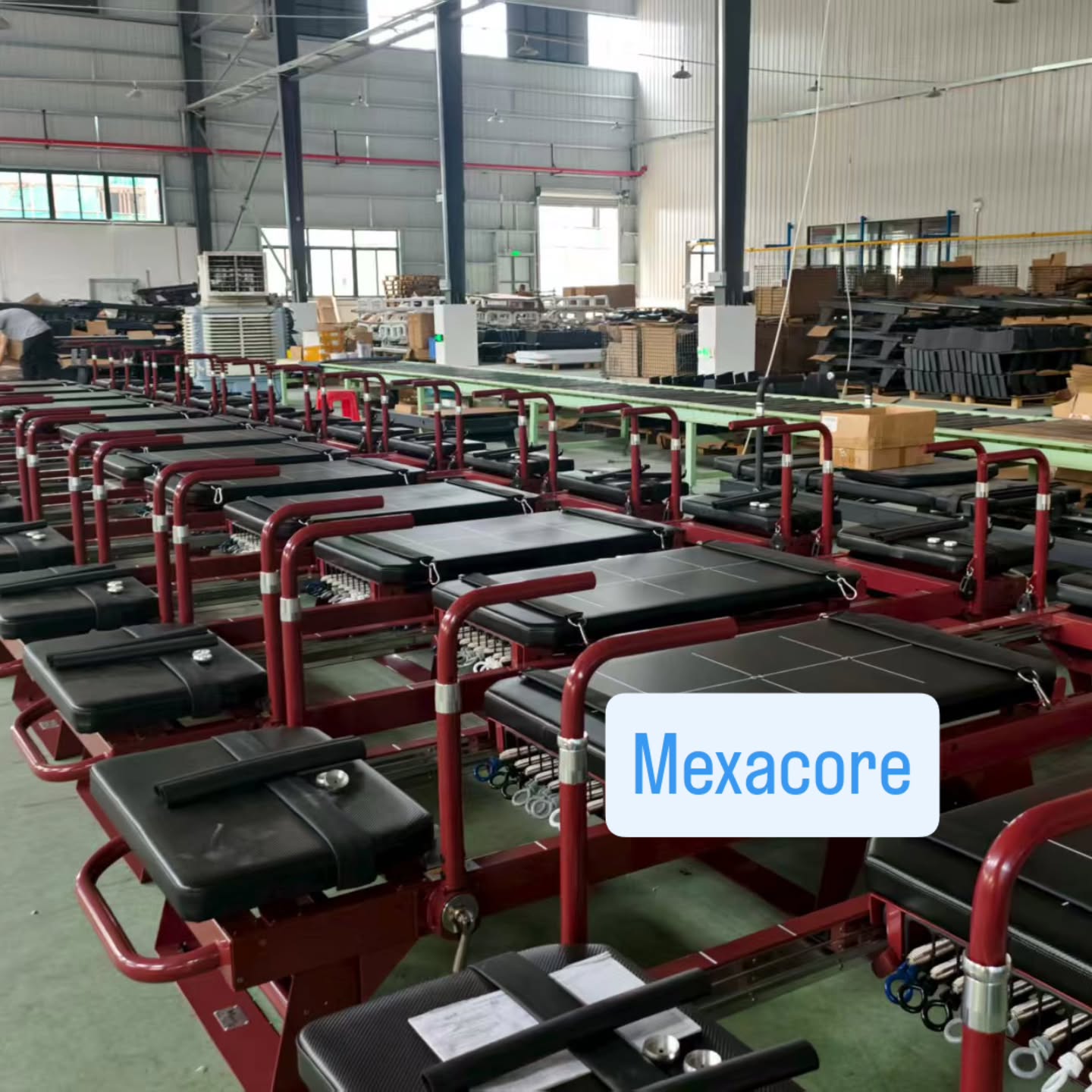
Pilates Reformer Carriage Friction Settings: Adjusting Smoothness for Different Exercises
The quality of carriage glide is the defining characteristic of a commercial-grade Pilates reformer. A smooth, consistent carriage movement allows clients to focus entirely on their exercise form and get the most from each session. A carriage that drags, wobbles, or produces uneven resistance undermines the entire workout experience and can drive clients to seek other studios. Understanding carriage friction and how to manage it is essential knowledge for every studio owner.
This guide explains the mechanics of carriage movement, the bearing systems used in commercial reformers, how friction settings affect different exercise types, and the maintenance procedures that sustain optimal glide for the life of your equipment.
How Carriage Movement Works
Carriage Bearings and Rail Lubrication
The carriage’s glide quality is determined by the interaction between the carriage bearings and the steel rails. Most commercial reformers use sealed ball bearings that ride on precision-ground steel rails. When properly maintained, this system provides near-frictionless movement. Over time, dust, skin cells, and dried sweat accumulate on the rails, creating micro-abrasions that increase friction. Rail lubrication reduces friction but excessive lubrication attracts dust, creating a sticky residue. The key is finding the right balance.
Signs Carriage Friction Needs Adjustment
Common signs of excessive friction include: the carriage does not slide freely when springs are released; the client feels resistance during the return phase beyond spring tension; grinding or scraping sounds during movement; the carriage sticks at certain points; or clients require heavier springs to achieve the same exercise feel. Start with rail cleaning and light lubrication. If that does not restore smooth glide, the carriage bearings may need replacement.
Commercial reformers use two main bearing systems. Sealed roller bearings are the dominant choice — 4–8 precision bearings per carriage, typically 18–22 mm diameter, containing lubricant for life and resisting dust ingress. A well-maintained sealed bearing system provides consistent glide for 5–8 years before replacement is needed, with a cost premium of ¥300–500 over open bearings. Polymer slide bearings use self-lubricating polymer pads that are quieter than roller bearings but produce higher friction. They are suitable for home and low-volume commercial use with replacement needed every 2–3 years at ¥150–300 per set.
Adjusting and Maintaining Carriage Friction
Optimizing Friction for Different Exercise Types
Strength-focused exercises like footwork and leg presses benefit from slightly higher friction providing more eccentric resistance. Flexibility-focused exercises benefit from lower friction allowing deeper stretches. Some advanced reformers offer adjustable carriage tension systems. For standard reformers, adjusting spring selection and exercise tempo can partially compensate for fixed friction settings.
Three controllable variables affect carriage friction. Bearing preload can be adjusted on some reformers with eccentric bearing mounts — tightening reduces lateral play but increases rolling resistance, and most commercial reformers ship with an optimal preload setting. Rail lubrication uses dry PTFE lubricant applied sparingly (never oil-based, which attracts dust). Bearing condition is the most common cause of increased friction — worn bearings develop flat spots that create a rough, bumpy glide. What cannot be adjusted: rail alignment (a manufacturing tolerance) and carriage platform flatness.
Different exercises demand different friction levels. Footwork and leg presses require the smoothest possible movement — any hesitation in the initial breakaway disrupts the flow. The hundred and upper-body exercises are less sensitive but require even bearing resistance across both rails. Jump board exercises benefit from slightly higher friction to dampen carriage return. Rehabilitation exercises demand the most consistent movement because rehab clients use minimal spring resistance, making bearing friction a significant portion of total resistance felt.
Maintenance Schedule and Testing
Daily: wipe rails with dry microfiber cloth and note any roughness or noise. Weekly: remove carriage, clean rail surfaces, and inspect bearings. Monthly: apply dry PTFE lubricant if recommended by the manufacturer. Quarterly: measure rail-to-rail parallelism — deviation greater than 1 mm indicates frame flex. Annually: replace all carriage bearings on reformers used for 15+ classes per week. To test glide quality, remove all springs, position the carriage at the headrest end, and apply gentle even pressure. The carriage should move toward the footbar with steady continuous motion. Any stuttering or hesitation indicates bearing issues. Quality inspection certificate GZHL2601000020601SP includes bearing smoothness testing data and rail parallelism measurements for each reformer produced.
Summary
Carriage friction is a critical performance variable that directly affects client experience. Commercial reformers with sealed roller bearings and precise rail alignment provide the smoothest glide. Regular maintenance — daily rail wiping, weekly bearing inspection, and annual bearing replacement — preserves optimal performance. When evaluating reformers from different suppliers, request a glide smoothness test during the factory visit or sample evaluation.The relationship between bearing quality and client experience is direct and measurable. Reformers with worn bearings produce an audible grating sound during carriage movement and a noticeable vibration through the carriage pad that clients feel through their hands and feet during exercises. These sensory cues signal lower quality to clients, even when they cannot articulate the technical cause. Studios with 10 reformers should budget ¥2,000–3,000 annually for bearing replacement, rotating through reformers so only 1–2 machines are out of service at any time. Bearing replacement takes 20–40 minutes per reformer for a trained technician.
Rail alignment is a manufacturing specification that cannot be adjusted after production. When evaluating reformers from different suppliers, check rail parallelism by measuring the distance between rails at three points: footbar end, centre, and headrest end. Deviation under 0.5 mm indicates precision manufacturing. Deviation over 1.5 mm indicates a frame that will produce uneven carriage tracking and premature bearing wear. Quality inspection certificate GZHL2601000020601SP includes rail parallelism measurements as part of the factory quality control process, providing documented verification of this critical specification.
Factory-direct reformers typically use precision-ground steel rails with a surface hardness of HRC 58–62, while budget reformers use cold-drawn steel with no surface treatment. The hardened surface resists the micro-abrasion from daily bearing movement that gradually wears unhardened rails. Over 5 years of commercial use, a hardened rail maintains its original surface quality while an unhardened rail develops visible wear troughs that produce a rough carriage glide. Rail hardness is one of the specifications that distinguishes commercial-grade from residential-grade reformers and directly affects per-session cost over the equipment’s operational life. The Best Pilates Reformers for Commercia