
Production Process
Pilates Reformer Manufacturing Process: 12 Steps from Steel to Studio
A reformer is a machine of simple parts and demanding tolerances. This page follows the 12-step journey every Megacore reformer takes, from the first CAD drawing to the container at the loading dock. Each stage has its own quality checkpoint, so problems are caught where they happen rather than at the end of a run. Buyers who understand this flow can ask sharper questions, read our test reports with confidence and plan realistic launch dates. Between the steps you will also find where materials are inspected, how frames are welded and coated, how springs are matched for consistent feel, and how every finished unit is tested before it ships.
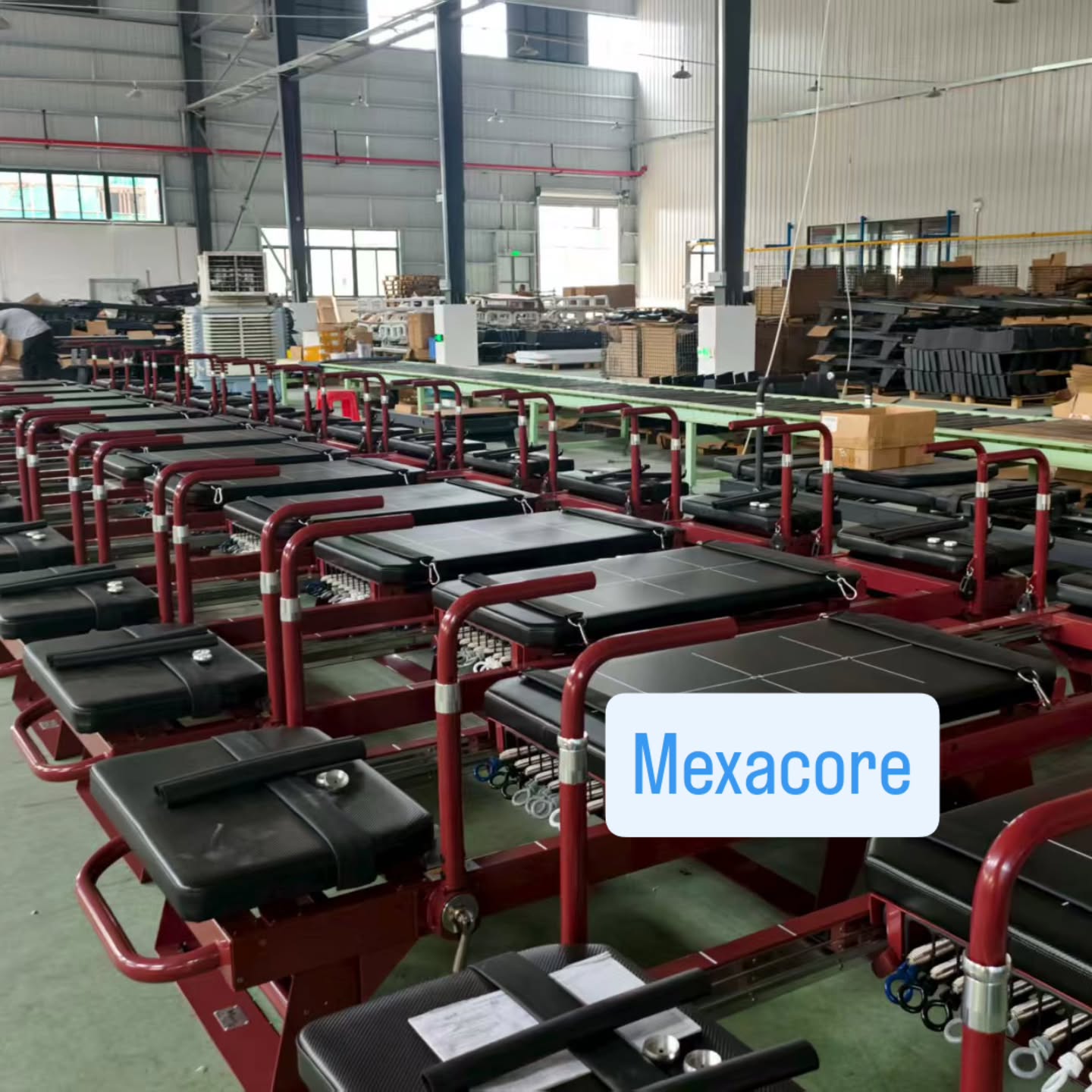
Step 01 - Design and Engineering
Every model starts as a CAD drawing built around load specifications, ergonomics and commercial-use expectations. For OEM projects our engineers review your design for manufacturability and structural safety before any metal is cut.
Getting the drawing right at this stage costs far less than reworking tooling later, and it fixes the frame geometry that everything downstream depends on.
- Checkpoint: drawing review and load-specification sign-off
Step 02 - Material Sourcing and Incoming Inspection
Steel tubes, aluminum profiles, springs, foam and vinyl are sourced from vetted suppliers. Every batch is checked on arrival for grade, dimensions and surface quality before it enters the warehouse.
Substandard material never reaches the production floor, which is what allows consistent output across large batches.
- Checkpoint: incoming material inspection record
Step 03 - Cutting and Forming
CNC cutting and tube bending shape raw material into frame components against drawing tolerances. Consistent geometry at this stage is what makes every reformer in a batch feel identical on the studio floor.
- Checkpoint: dimensional verification against CAD
Step 04 - Frame Welding
Frames are welded in precision jigs so alignment stays consistent from unit to unit. Weld strength is the backbone of structural safety, because a commercial reformer carries heavy load and thousands of repetitions a year.
- Checkpoint: weld integrity and alignment inspection
Step 05 - Grinding and Polishing
All surfaces are ground and polished to remove sharp edges, burrs and weld spatter. This protects users and staff from skin contact with rough metal and prepares the surface for a clean finish.
- Checkpoint: edge and surface smoothness check
Step 06 - Anti-Rust and Surface Treatment
Components receive anti-rust treatment so the frame stays protected even before final coating. This matters for machines that travel by sea in humid containers.
- Checkpoint: treatment coverage inspection
Step 07 - Electrostatic Powder Coating
Powder coating is applied electrostatically and cured in an oven, producing a scratch- and moisture-resistant finish that holds up to daily cleaning and years of studio use.
- Checkpoint: coating thickness and adhesion test
Step 08 - Upholstery and Padding
Foam is cut to density specifications and covered with commercial-grade vinyl by experienced upholsterers. Seam placement and stitch tension are controlled because padding takes the heaviest daily abuse.
- Checkpoint: stitching and seam strength check
Step 09 - Spring, Rope and Pulley Fitting
Springs are matched to resistance specifications and fitted with ropes and pulleys. Spring tension consistency is what gives a studio the same feel across all of its reformers.
- Checkpoint: spring calibration and tension matching
Step 10 - Final Assembly
Trained fitters assemble the carriage, stoppers, straps and hardware. Bolts are torqued to spec, and every moving part is set to travel smoothly along the full rail length.
- Checkpoint: hardware torque and travel check
Step 11 - Testing and Adjustment
Each finished unit is load-tested, balanced and checked for smooth glide, quiet operation and firm stopper engagement. This is the same 12-point final inspection described on our quality control page.
- Checkpoint: full 12-point final inspection
Step 12 - Cleaning, Packing and Staging
Machines are cleaned, wrapped and packed with protective materials, then staged for container loading. Export packaging standards are covered in detail on our packaging and shipping page.
- Checkpoint: packing completeness and loading plan
Quality Checkpoints at a Glance
Quality is checked at every stage rather than only at the end. The table below summarizes what is verified and why it matters to the studio that eventually owns the machine.
Stage
What is checked
Why it matters to your studio
Materials
Grade, dimensions, surface quality
Prevents weak frames and premature wear
Cutting and welding
Tolerances, weld integrity, alignment
Structural safety under heavy commercial load
Coating
Thickness, adhesion, coverage
Finish that survives years of cleaning
Upholstery
Stitch strength, foam density
Padding that does not flatten after months of classes
Springs
Calibration, tension consistency
Identical feel across every reformer
Final unit
Load, glide, balance, safety
Every machine verified before it ships
Production Timeline
Lead times depend on the model, quantity and level of customization. We confirm exact dates in your production schedule after ordering and share milestone photos and videos so you can track progress.
Phase
Typical duration
What you receive
Sample production
Typically 15-25 days
One fully tested unit for approval
Bulk production
Typically 25-40 days
Milestone photos and videos, batch testing report
Sea freight
Varies by route
Tracking, shipping documents, arrival support
How to Track Your Order Through Production
You should not have to wait until delivery to learn how your order is going. Once a batch is released to the floor, we share updates at fixed milestones and answer questions while there is still time to adjust details.
If you want a closer look, we can open a live call at the station of your choice, whether that is welding, coating, assembly or final testing.
- Kickoff confirmation - model, quantity, configuration and schedule locked before material release
- Material release update - your batch enters the line with a reference number
- Mid-production update - photos and video from welding and coating stages
- Assembly and testing update - units built, springs matched and inspections logged
- Packing and loading update - crated units, loading photos and shipping documents
- Arrival support - tracking shared through transit and help at your destination port or door
What Can Go Wrong, and How We Prevent It
Two things decide whether a batch holds up: the drawing is checked against real load conditions, and no component changes between sample and bulk. Both are controlled as part of our process.
Our answer is fixed checkpoints, matched components and the same inspection standard for the sample and the volume run. Where a specification is unusual, we test and document it before committing to a full batch.
- Drawings reviewed for load and manufacturability before tooling
- Springs and hardware matched from the same specification across the batch
- In-process checks at set intervals, not only at the end of the run
- Batch records kept so any unit can be traced back to its inspection
Frequently Asked Questions
Samples typically take 15-25 days including finishing, and bulk production usually runs 25-40 days depending on quantity and customization, plus sea freight to your port. Exact dates are confirmed in your production schedule after ordering, and we flag any change as soon as it is known.
Yes. We send production photos and videos at milestone stages, including frame welding, coating, assembly and packing. You can also join a live video call to watch your line in real time if you want a closer look at any station.
Studio clients notice when reformer number one feels different from reformer number twelve. Spring calibration, welding jigs and standardized assembly are what keep every unit in a batch performing identically, so a class experiences the same resistance on every machine.
A unit that fails any checkpoint is pulled from the line and corrected before it can move forward. In-process checks catch most issues at the station where they happen, so a defect is not repeated across a whole run. Final inspection must be signed off before packing and loading.
Talk to Our Engineer
Tell us your model, quantity and target market. We’ll reply with pricing, lead time and sample options.