
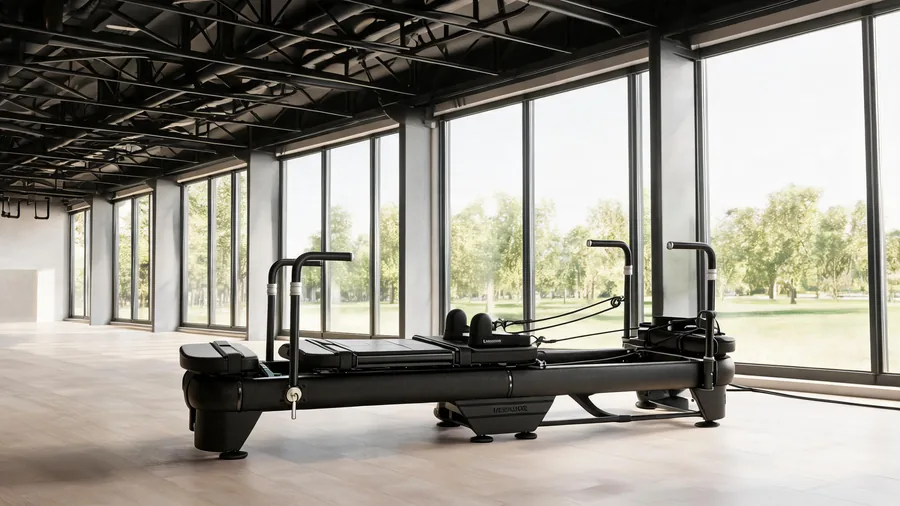
Pilates reformers for sports teams have moved beyond the Pilates studio into professional training facilities, collegiate athletic departments, and commercial gyms. Unlike traditional weight room equipment that isolates muscles through fixed planes, Pilates reformers for sports teams provide spring-based resistance that trains coordinated movement patterns under variable load. That makes them valuable for sport-specific strength development and injury prevention. This guide explains how to select and deploy reformers in athletic environments, what specifications matter, and how to choose the right Pilates reformers for sports teams for your facility.
1. Pilates Reformers for Sports Teams: Why Athletic Facilities Are Adding Reformer Training
Sports performance coaches value Pilates reformers for sports teams because they deliver capabilities that traditional gym equipment cannot easily replicate. Variable spring resistance accommodates each athlete’s strength curve through full range of motion. Unilateral loading exposes strength asymmetries that bilateral barbell exercises miss. The ability to train coordinated movement patterns under load transfers directly to on-field performance. Many athletic programs are investing in Pilates reformers for sports teams specifically for these training advantages.
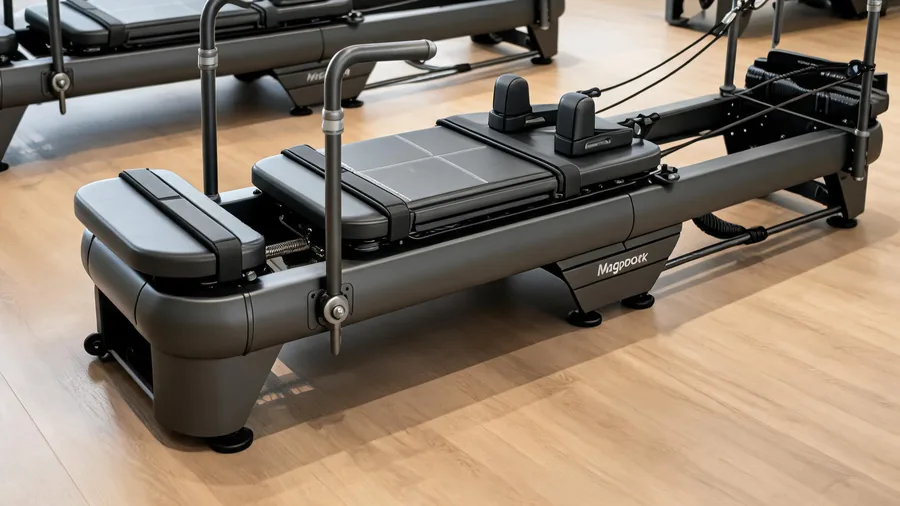
A basketball player performing single-leg footwork on the reformer strengthens hip stability, ankle control, and core engagement simultaneously. Spring-loaded resistance is particularly valuable for eccentric strengthening — the controlled lengthening of muscles under tension. In traditional weight room equipment, eccentric load is limited by the weight stack’s maximum resistance. Reformer springs provide smooth eccentric resistance through the entire return phase, allowing athletes to safely overload the eccentric component of movements. This is critical for sports requiring rapid deceleration like soccer, basketball, tennis, and skiing.
2. Key Equipment Specifications for Pilates Reformers for Sports Teams
When selecting Pilates reformers for sports teams, the spring set should include higher-resistance options — at least two springs rated at 2.0–2.5 kg and one at 3.0 kg — to accommodate higher strength levels. Standard studio reformers with only light-to-medium springs will max out for collegiate or professional athletes. The right Pilates reformers for sports teams come with reinforced springs and heavy-duty frames designed for daily high-intensity use.
Frame durability is critical because athletic equipment experiences heavier average loads than studio equipment. Welded steel frames with a minimum 14-gauge tube and a user weight rating of at least 180 kg are recommended. The carriage bearing system should be sealed cartridge type rated for repeated high-load cycling — open roller bearings develop play within months under athletic program use volumes. Footbar design matters too: a wider footbar (minimum 45 cm across) accommodates athletes with larger feet and allows comfortable two-foot placement during jump training.
For more on build quality standards, the guide on commercial reformer noise levels explains how bearing quality and frame stiffness affect performance under heavy use. These are the specifications that differentiate professional-grade Pilates reformers for sports teams from entry-level equipment.
3. Programming Reformers for Athletic Performance
Cross-training programs using Pilates reformers for sports teams follow different principles than traditional Pilates classes. The focus shifts from flow and coordination to strength development, power production, and movement screening. A typical team session using Pilates reformers for sports teams includes unilateral leg work for asymmetry exposure, upper body pressing with controlled tempo, rotational core training using spring resistance for anti-rotation strength, and integrated upper and lower body movement patterns.
Load progression follows the principle of progressive overload. Athletes start with 3 sets of 8–10 repetitions at moderate tension and progress to 4–5 sets of 6–8 repetitions at higher tension as they adapt. Tempo variations — slow eccentric loading, pause at end range, explosive concentric contraction — add another dimension of training stimulus that keeps athletes progressing. The reformer’s accommodating resistance makes it ideal for this type of periodized training.
4. Injury Prevention and Rehab Applications for Sports Teams
Sports medicine professionals use reformers for both prehabilitation and return-to-play progression. Precise spring resistance control makes the reformer ideal for graded loading after injury. A soccer player recovering from a hamstring strain can begin with minimal resistance and progress to eccentric loading at higher tensions as healing permits — all within the same movement pattern. The Pilates Method Alliance provides industry guidelines for equipment-based rehabilitation programming.
The reformer is also effective for shoulder and hip rehabilitation. Controlled, low-load shoulder flexion and extension in the supine position can progress to standing push and pull patterns as the athlete recovers. For hip rehabilitation, resistance through the full range of motion makes reformers more versatile than cable machines for early-stage protocols. Many team medical staff now include reformers as standard equipment in their training rooms, alongside traditional rehab tools.
5. Pilates Reformers in Collegiate Athletic Programs
Several university athletic departments have integrated Pilates reformers for sports teams with measurable results. One Division I program equipped its training center with 12 reformers serving 300 athletes across eight sports teams. After six months, the strength staff reported a 30% reduction in non-contact hamstring injuries compared to the previous season, improved single-leg stability scores on movement screening tests, and high athlete compliance — athletes rated reformer training more engaging than traditional resistance work for accessory exercises.
The head strength coach noted that reformers exposed strength asymmetries — particularly in hip extension and lateral stabilization — that bilateral barbell exercises missed entirely. This information was used to modify individual athletes’ supplemental training programs, addressing specific weaknesses before they contributed to injury. For teams considering equipment expansion, the Pilates reformer ROI calculator helps athletic departments project the cost-benefit of adding reformers to their training facilities.
6. How to Choose Pilates Reformers for Sports Teams and Facilities
When evaluating Pilates reformers for sports teams, prioritize commercial-grade construction, heavy spring options, and reinforced footbar design. The machine should withstand 6–8 hours of daily use with athletes in the 80–120 kg range performing explosive movements. Request a load-test certificate for the maximum dynamic load rating. Megacore’s quality inspection report GZHL2601000020601SP documents load testing and material specifications suitable for athletic training environments — the standards that quality Pilates reformers for sports teams should meet.
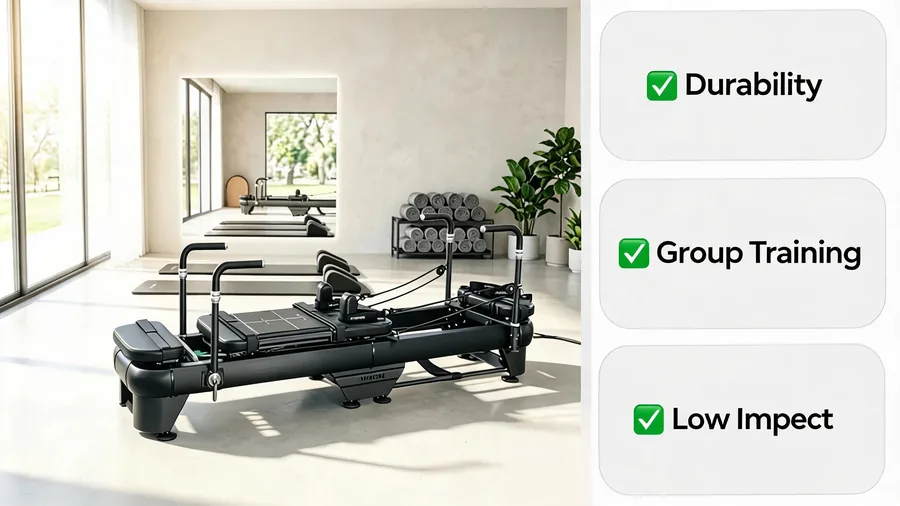
For facilities managing multiple sports, consider whether a single model serves all athletes or whether different configurations are needed. A football lineman needs heavier spring resistance than a distance runner, but both benefit from the same platform when equipped with a varied spring set. Megacore offers heavy-duty spring kits up to 3.0 kg per spring, reinforced welded steel frames rated to 200 kg dynamic load, and sealed cartridge bearings rated for 500,000 cycles — specifications designed to meet the demands of Pilates reformers for sports teams.
7. Cost, Warranty, and Quality for Athletic-Grade Reformers
Investing in reformers for a sports facility requires evaluating total cost of ownership. Pilates reformers for sports teams cost more upfront due to heavier springs, reinforced frames, and commercial-grade bearing systems. However, equipment that fails under heavy use creates replacement costs and training downtime that far exceed the initial savings from cheaper machines. Quality Pilates reformers for sports teams from a factory-direct manufacturer offer the best long-term value.
Megacore equips reformers with a 3-year warranty covering both frame and entire machine — the same warranty offered to commercial Pilates studios. Factory-direct pricing eliminates distributor margins, making heavy-duty reformers more accessible for athletic department budgets. Every reformer is tested to standards in quality certification GZHL2601000020601SP, covering frame load testing, spring consistency verification, and bearing durability testing under simulated high-use conditions.
8. Pilates Reformers for Sports Teams: Frequently Asked Questions
What spring resistance do athletes need from Pilates reformers for sports teams?
Athletic programs should specify reformers with at least two heavy springs (2.0–2.5 kg each) and one extra-heavy spring (3.0 kg). Standard studio springs will not provide sufficient resistance for trained athletes.
Can one reformer model serve all sports?
Yes — a single commercial-grade platform with a varied spring set accommodates athletes from different sports. Adjust resistance from light rehabilitation to heavy strength training on the same machine.
How many reformers does a sports team need?
For a team of 40 athletes, 8–12 reformers allow efficient circuit-style training. For a full athletic department serving 300+ athletes, 10–15 reformers are typically sufficient.
How does reformer training complement weight room work?
Reformers fill a specific niche that barbells and machines cannot: unilateral loading with accommodating resistance through full range of motion. Most effective as a supplement to barbell training.
What warranty should I expect for Pilates reformers for sports teams?
Megacore offers a 3-year warranty for commercial and athletic use, backed by documented quality control in certification GZHL2601000020601SP.
9. Build a Stronger Training Program With Pilates Reformers for Sports Teams
Pilates reformers for sports teams bring unique capabilities to athletic facilities: variable, accommodating resistance that trains movement patterns, exposes asymmetries, and supports both strength development and injury prevention on a single platform. For sports teams and training centers, Pilates reformers for sports teams offer proven return on investment through reduced injury rates, improved movement quality, and high athlete engagement.
Megacore Pilates supplies commercial-grade Pilates reformers for sports teams to collegiate programs, professional teams, and training facilities worldwide. With factory-direct pricing, heavy-duty construction options, and a 3-year warranty backed by documented quality control, adding reformers to your athletic training environment is straightforward. Your athletes deserve training equipment that matches their performance goals — and Pilates reformers for sports teams deliver measurable results.
More resources: Pilates Reformer for Athletes | ROI Calculator | Heavy Duty Reformers Guide | Buying Guide 2026 | Weight Capacity Guide
Team facilities pick from the studio reformer range, where multi-unit pricing is listed.