
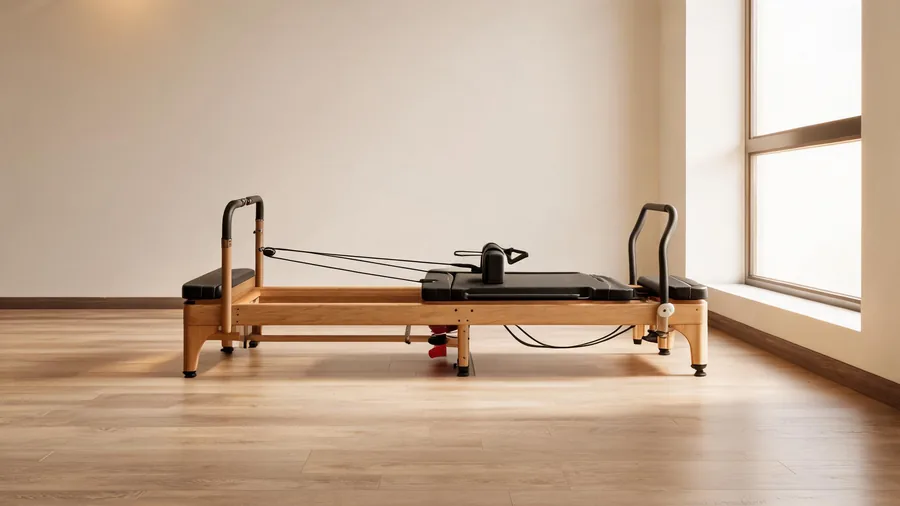
Сайтът classical pilates vs modern pilates question shows up in every studio consultation we sit through, and it usually arrives as the same story: I tried two studios in the same city and they felt like two different sports. That reaction is not a misunderstanding. The two branches share a name, a founder, and a short list of principles, then split on nearly everything a client feels in the room.
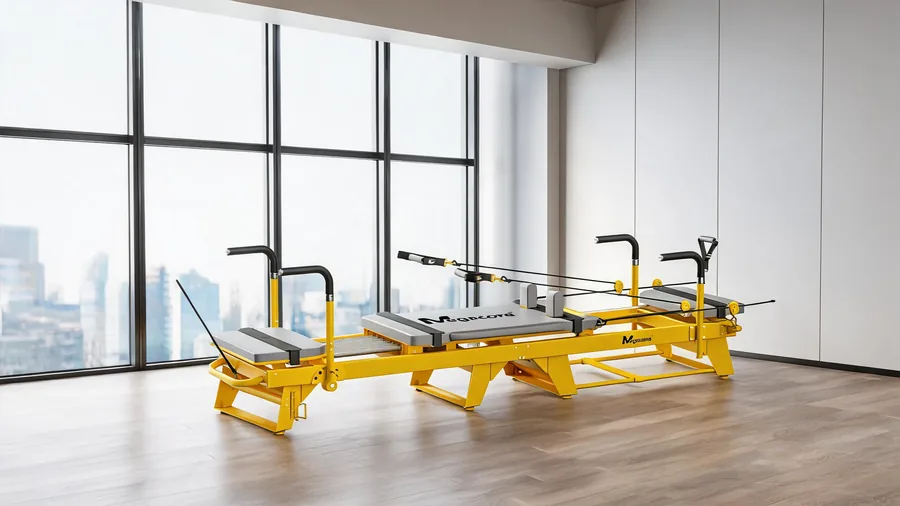
This guide is about teaching methodology, not hardware. For a machine comparison, we have separate pieces on reformer versus mat work and on reformer, Megaformer and Cadillac. Here the subject is what happens in the session itself: the order, the modifications, the cueing, and why a teacher picks one path.
Two readers should get something from this. Practitioners choosing a studio, and studio owners who have to buy equipment and decide whether to run one style, the other, or both.
1. Why Two Studios in the Same City Feel Completely Different
Pilates was never protected the way a franchise is. Joseph Pilates trained teachers directly, named no official heir, and left no certifying body behind. When he died in 1967, his students carried the work outward in their own directions. Some stayed close to what they were taught; others experimented, added props and rebuilt the method around exercise science.
So “Pilates” is an umbrella, and a loose one. Two studios with the same word on the door can differ on the order of exercises, the amount of hands-on correction, the equipment brand, the length of teacher training, and the client they want. A classical studio may run the same fifty-minute sequence for a decade. A contemporary studio may rewrite it weekly around whoever is booked.
Neither is a knock-off. Both trace back to the same source, and both produce good teachers and bad ones. The useful move is not to rank them, it is to work out which one fits your body, your goals, or your business.
2. What Joseph Pilates Actually Left Behind
To compare the two schools, you need the raw material they both work from. Pilates built a system he called Contrology, and it had three parts later traditions treat very differently.
The first is a body of exercises. On the mat alone, the classical repertoire runs to roughly 34 exercises in a set order, published in his 1945 book Return to Life Through Contrology. Across all the apparatus, the full vocabulary runs into the hundreds.
The second is a set of machines he designed himself. The reformer, the mat, the Cadillac, the wunda chair, the ladder barrel, the spine corrector, the ped-o-pull. Each trains a specific quality and has an original build pattern with fixed dimensions and spring tensions.
The third part, and the source of the most confusion, is the teaching method. Pilates taught teachers one at a time through apprenticeship. No syllabus, no exam, no certificate. Everything a teacher knew came from watching him, assisting him, and being corrected by him. That is the origin of the split. When the source is oral, every student carries away a slightly different version, and each version is sincerely held. The Алианс за метода „Пилатес“ came along decades later to set a shared certification standard, but by then the divergence was done.
3. Classical Pilates Defined: Fixed Order, Original-Spec Equipment, Traditional Cueing
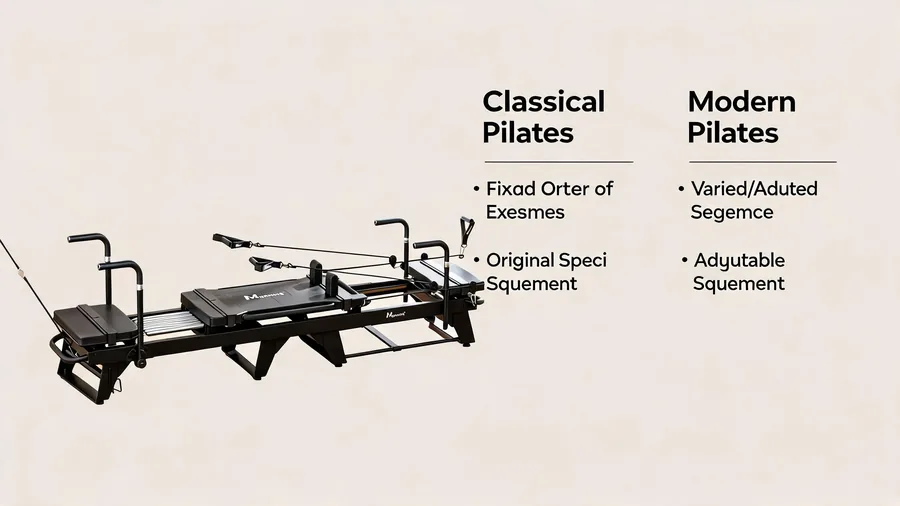
Classical Pilates treats the system as a fixed artifact. Repertoire, order and equipment specifications are the point, and the teacher brings the client to the work rather than the work to the client.
The order is fixed
A classical reformer class begins with Footwork and ends where the sequence ends, and the order holds from class to class and studio to studio. Each exercise prepares the body for the next, so reshuffling it is not a creative choice, it is a break with the method.
The equipment is built to original specifications
Classical studios tend to use apparatus built close to the original Gratz pattern: wooden frames, a defined set of spring tensions, a fixed footbar, and carriage dimensions that match the historical build. The logic is consistent. If the repertoire is fixed, the tool that delivers it should be fixed too, so resistance and geometry stay the same in every studio claiming the name.
The cueing is inherited
Classical teachers cue in the original vocabulary. Scoop, lift, lengthen, ribs down, powerhouse, squeeze the inner thighs. The language is rhythmic and directive, and the teacher corrects toward the classical shape rather than a personal modification. Tight hip flexors during Footwork means you work on the hip flexors, not swap the exercise out.
Certification in the classical lineage typically runs 600 hours or more, completed through apprenticeship under a teacher with a traceable line back to Pilates or a senior student.
4. Modern (Contemporary) Pilates Defined: Adjustable Equipment, Built Around the Body
Modern Pilates, often called contemporary, keeps the principles and loosens almost everything else. The order becomes a starting point, and the individual in front of you becomes the reference point for every decision.
Contemporary teaching leans on two bodies of knowledge Pilates never had in usable form: biomechanics and rehabilitation science. Teachers study joint mechanics, load progression and pain science, then decide what a given body needs on a given day.
The order adapts
Contemporary classes are often built around a theme, a body region, or a goal. A client recovering from a shoulder injury might spend most of the session on stability work and skip the classical upper-body sequence entirely.
Modification is the default, not the exception
Where classical changes the client to fit the exercise, contemporary changes the exercise to fit the client. Props are used freely: bands, balls, blocks, the magic circle, hand weights, plus the reformer’s own adjustability. A teacher will regress an exercise for one person and progress it for the next machine over, in the same class.
The equipment is adjustable by design
Contemporary studios favor reformers with multiple gear-bar positions, quick-change springs, sliding footbars, adjustable headrests, and frames sized for a wider range of bodies. The machine is a dial the teacher can turn, not a fixed instrument. That difference matters more than any philosophical argument, because it directly affects what a studio can offer.
Contemporary certifications, from STOTT, BASI, Polestar, Balanced Body and others, generally run 400 to 500 hours with substantial anatomy, assessment and special-population coursework.
5. The Core Differences at a Glance
The table below is the short version; the rest of the guide is the detail behind each row. Read it as a map, not a verdict, because plenty of skilled teachers sit in the middle.
| Размери | Classical Pilates | Modern / Contemporary Pilates |
|---|---|---|
| Sequence | Fixed order, consistent between classes and teachers | Variable, built around a theme or the clients in the room |
| Modification | Minimal; the exercise is the target and the client adapts to it | Constant; the exercise adapts to the client |
| Equipment | Original-spec apparatus, fixed footbar, defined spring tensions | Adjustable reformers, multiple gear positions, quick-change springs |
| Tempo and cueing | Brisk, flowing, traditional vocabulary (scoop, lift, powerhouse) | Often slower and breath-led, anatomical and biomechanical cues |
| Typical client | Dancers, athletes, experienced practitioners who want a system | General population, rehab, prenatal and postnatal, seniors, beginners |
| Certification path | Lineage-based apprenticeship, 600+ hours | Program-based training, roughly 400 to 500 hours |
| Class feel | Ritual-like, same shape every visit | Different every visit, often closer to a strength or rehab session |
If you only remember one row, make it the second. Everything else follows from whether the method bends to the body or the body bends to the method.
6. Original-Spec vs Adjustable Equipment: What Actually Changes
This is where methodology turns into steel, spring and upholstery. The equipment decision is the clearest physical expression of the philosophy, and for a studio owner the most expensive one.
| Технически характеристики | Original-spec apparatus | Adjustable / contemporary reformer |
|---|---|---|
| Spring tensions | Fixed set with no gear bar, resistance set by position only | Multiple gear-bar positions that re-scale every spring |
| Footbar | Often fixed or with limited positions | Typically 4 to 8 or more positions, sometimes fully sliding |
| Frame width and length | Narrower historical footprint | Wider and longer options for larger and taller clients |
| Облегалка за глава | Fixed or simple | Adjustable, sometimes removable |
| Spring change | Manual, slower | Quick-change systems with snap hooks |
| Weight capacity | Generally lower on vintage-pattern builds | Rated higher on modern commercial frames |
| Price band | Premium, especially true-to-original brands | Wide, from mid-range commercial to premium |
The practical consequence is simple. An adjustable reformer lets a teacher scale resistance for a 45 kg beginner and a 110 kg rugby player in the same hour on the same machine. A fixed machine asks the teacher to solve that with body position alone, which is possible for an expert and awkward for everyone else.
Spring tension is not just how heavy an exercise feels, it is the entire resistance curve, and on a fixed machine that curve is set; our spring tension guide covers the gradations. Buyers should also check whether a machine has been tested against recognised standards such as those ASTM publishes for fitness equipment. Documented testing beats a sticker.
7. Tempo and Cueing: The Difference You Feel in Ten Minutes
If you want to know which tradition you are in without asking a question, watch the pace and listen to the words.
Classical sessions tend to move. Transitions are quick, rests are short, and the rhythm sits closer to a routine than a workout. The teacher counts, keeps the pace, and cues with the traditional vocabulary. You are expected to keep up.
Contemporary sessions breathe more. The teacher may slow an exercise down, add a hold, or stop the room to explain what a joint is doing. Cueing borrows from biomechanics: neutral spine, joint centering, scapular stability. Props appear mid-class when someone needs them.
Neither tempo is better in the abstract. Classical flow is superb conditioning and demands body awareness beginners rarely have on day one. A slower contemporary session is easier for a new or injured client to learn in. Classical rewards the prepared body, modern accommodates the unprepared one, and most first-timers are unprepared.
8. Who Gets More Out of Which
Most people need an answer here, so here it is by population. These are tendencies, not rules, and a good teacher beats a mediocre one in either tradition.
Post-injury and rehabilitation clients
Modern, almost every time. Adjustability, assessment culture and rehab coursework are built for this population. A classical studio can work with an injured client, but it fights its own philosophy to do it. See reformer Pilates for physical therapy.
Prenatal and postnatal clients
Modern. Contemporary training includes dedicated coursework on pregnancy and postpartum progression, and the equipment adjusts as the body changes month to month. Our prenatal and postnatal guide walks through the modifications.
Higher body weight clients
Either tradition can work, but the machine decides more than the method. Adjustable gear, a wider frame, higher capacity and a footbar that moves are what make a session comfortable and safe. Our weight capacity guide covers the numbers.
Athletes and dancers
Classical usually wins here, and it is not close. The fixed sequence, precision and demand for control suit bodies that are already trained, and many contemporary studios run a classical-flavoured advanced class for this group.
Seniors
Modern, for most people over sixty-five who are new to the method. Pace and the amount of modification matter more than philosophy, and the machine needs to be easy to get on and off safely. See the seniors guide. Weekly movement targets from the CDC are a useful reference.
Total beginners
Both are viable, but modern is gentler to enter. A classical class will not slow down for one uncertain body, and that is by design. Start contemporary, then try classical a few months in.
9. How to Tell Which One You’re In: A One-Class Test
You do not need to interrogate the certification wall. Three questions and one class will tell you almost everything.
Ask before you book. Does the class sequence change week to week? What certification do the teachers hold, and is it from a single lineage or a program? How much modification happens for different bodies in a class?
Then watch inside the room. If the order matches your last class, and the teacher cues toward a fixed shape rather than toward your body, it is classical. If the sequence is new, props appear, and the teacher adjusts the footbar or gear for different people, it is contemporary.
Equipment alone is not a reliable signal. Plenty of contemporary studios own fixed machines, and some classical teachers work on adjustable ones. There is also a middle path: a number of studios hold a contemporary certification while running classical sequences for clients who want them. That is not fence-sitting, it is a service decision.
10. Studio Owner’s View: Your Client Mix Decides Your Equipment List
If you are equipping a studio, the methodology question is really an asset question, driven by who walks through your door.
Clients fall into two groups. Those served by an adaptive, individually scaled session, and those who want a fixed system to progress through. If your book is mostly the first group, which is the reality for almost every new studio, adjustability is not a nice-to-have. It is what lets you teach a mixed-level class at all.
| Your client mix | Equipment priority | Защо |
|---|---|---|
| Mostly beginners, mixed ages and fitness | Adjustable reformers, wide frame options | One machine has to serve everyone in the hour |
| Rehab, clinical or referral clientele | Adjustable gear bar, quick-change springs, stable footbar | Precise, low-load positioning is the whole job |
| Dedicated classical clientele | Original-spec apparatus | They came for the system and will notice the difference |
| Large-frame or higher-weight clients | High-capacity, wider frames | Safety and comfort, plus fewer refusals at booking |
| Running both method styles | Adjustable units as the fleet majority, a few fixed-spec units | Coverage without buying two full fleets |
The mistake we see most often is a new owner buying fixed-spec equipment because the lineage appeals to them, then finding that most of their bookings need something the machine cannot do. You can make an adjustable reformer behave like a fixed one. You cannot make a fixed one behave like an adjustable one. For the buying process, start with the studio startup guide and the equipment checklist.
11. Running Both: How Hybrid Studios Schedule It
Some studios make a business of offering both traditions, and it works when the scheduling is honest and the equipment split is deliberate.
The common pattern is separate classes rather than blended ones. A classical open class for clients who want the fixed sequence, contemporary classes for everyone else. Blending the two in one class sounds efficient and usually fails, because each group is asked to tolerate the other’s format.
Staffing is the real constraint. You need at least one teacher certified in each lineage, and the classical teacher should genuinely own that style rather than treating it as a weekend add-on. Label the classes so people know what they are booking.
On equipment, most hybrids run a majority of adjustable reformers and a small number of fixed-spec units reserved for classical clients and the advanced group. That gives coverage without buying two complete fleets, a serious capital difference. The operational layer, from floor planning to how one reformer serves different purposes, is covered in our mixed-use studio guide.
Често задавани въпроси
Is classical Pilates better than modern Pilates?
Neither is better in general; they are built for different jobs. Classical is a fixed system that rewards prepared bodies and delivers precision. Modern adapts the work to the individual, which makes it more accessible to beginners, rehab clients and mixed-level groups.
Can I switch between classical and modern Pilates?
Yes, and many experienced practitioners do. The underlying principles, breathing, control, precision, flow and centering, are shared. Expect a short adjustment period around pace, since a classical class moves faster and modifies less. Give it three or four sessions before deciding.
Do I need different equipment to teach classical and modern Pilates?
Not necessarily, but it helps. An adjustable reformer can be set up for classical repertoire, so a studio can teach both styles on one fleet. The reverse is not true: original-spec apparatus with a fixed footbar and fixed gear limits how far you can scale an exercise down for a client who needs it lighter.
Which style is better for back pain or injury recovery?
Modern, in most cases. Contemporary training includes assessment and rehabilitation coursework, and adjustable equipment lets a teacher control load and range precisely. Some classical teachers work with injuries successfully, but that depends on the individual teacher, not the tradition.
Is modern Pilates easier than classical?
Easier to enter, not easier overall. A modern class scales to the client, so a beginner can complete it comfortably. A classical class holds its pace no matter who is in the room, which is harder on day one. Once a client is strong, classical work is often the more demanding of the two.
Are classical certifications worth more than modern ones?
They are different, not ranked. Classical certifications are longer, typically 600 hours or more, completed through apprenticeship in a specific lineage. Contemporary programs run roughly 400 to 500 hours with more anatomy and special-population work. For rehab or general fitness teaching, a contemporary certification usually serves you better.
How do I know which style a studio teaches before I book?
Ask two things: whether the class sequence stays the same week to week, and what certification the teachers hold. A fixed sequence with lineage-certified teachers is classical. A variable sequence with contemporary-program teachers is modern. If the answer is “both depending on the class”, you have found a hybrid studio.