
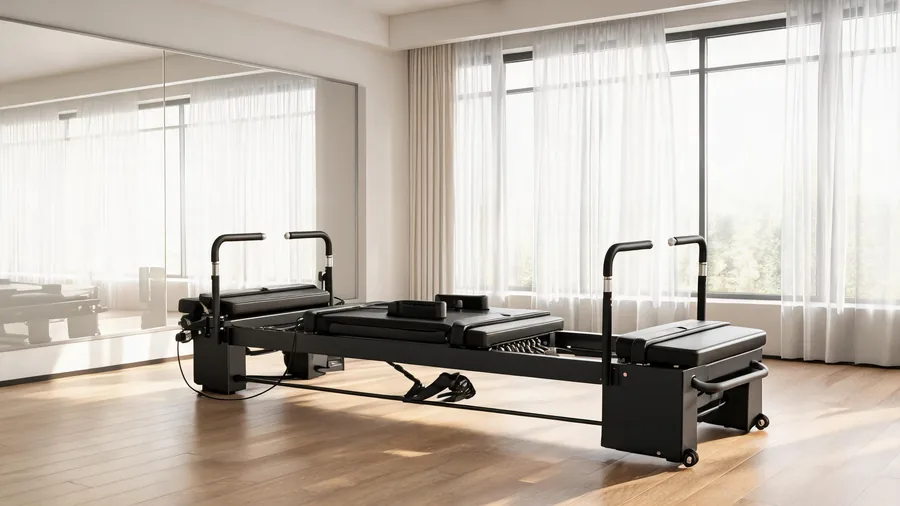
Il comfort del cliente su un Reformer Pilates incide direttamente sulla fidelizzazione alle lezioni, sulla durata della sessione e sull'esperienza complessiva in studio. L'imbottitura tra il cliente e la macchina è il fattore di comfort più visibile, e aggiornarla è uno degli interventi più rapidi che uno studio possa fare. Comprendere l'imbottitura in schiuma del Reformer Pilates — densità, spessore, usura e sostituzione — aiuta i titolari e i gestori degli studi a specificare attrezzature che mantengono i clienti a proprio agio durante sessioni prolungate.
1. Perché l'imbottitura in schiuma conta nell'uso commerciale
I Reformer commerciali ospitano più lezioni al giorno, spesso una dopo l'altra. Con questo carico, la qualità dell'imbottitura determina due cose: il comfort del cliente e la longevità dell'attrezzatura. La schiuma ad alta densità mantiene il proprio supporto per migliaia di sessioni, mentre quella a bassa densità si comprime, creando punti di pressione che i clienti notano immediatamente.
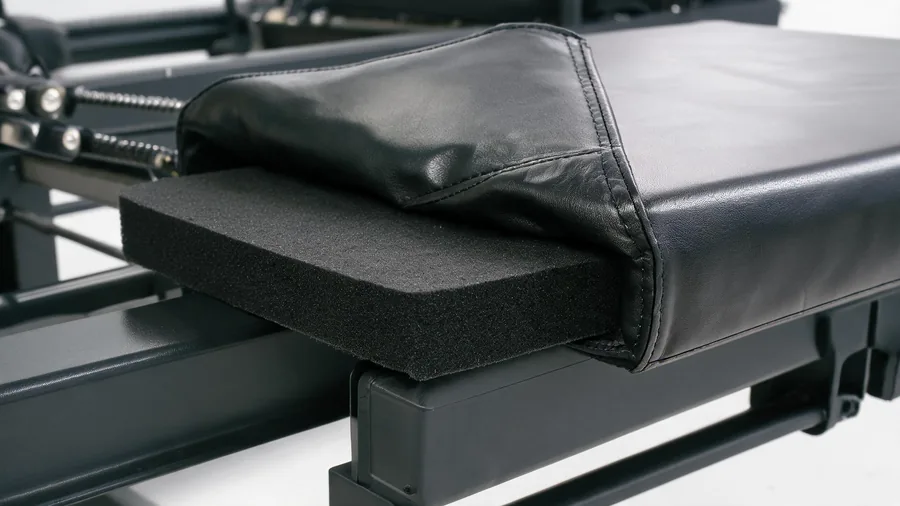
Il comfort nel Pilates non è un lusso: è un fattore di fidelizzazione. I clienti che provano disagio sul carrello o sui poggiaspalle hanno meno probabilità di prenotare di nuovo. Gli studi che investono in un'imbottitura in schiuma per Reformer Pilates di qualità registrano punteggi di soddisfazione più alti e meno lamentele sui punti di pressione durante le sessioni più lunghe.
2. Imbottitura in schiuma per Reformer Pilates: densità e spessore
La qualità della schiuma è definita principalmente dalla densità, misurata in chilogrammi per metro cubo. L'imbottitura di grado commerciale utilizza in genere schiuma ad alta densità che resiste alla compressione e mantiene la forma. Anche lo spessore conta: troppo sottile e i clienti sentono il telaio sotto; troppo spesso e la sensazione del carrello diventa morbida e imprecisa.
Quando confronti le opzioni di imbottitura in schiuma per Reformer Pilates, chiedi le specifiche di densità e non solo lo spessore, perché è la densità a determinare la longevità. Un cuscinetto più sottile ad alta densità offre prestazioni migliori di uno più spesso a bassa densità, sia per comfort sia per durabilità.
3. Miglioramenti del comfort per sessioni prolungate
Gli studi che propongono sessioni da 50-60 minuti ottengono i maggiori benefici dai miglioramenti del comfort. Gli interventi più efficaci includono:
- Tappetino del carrello potenziato: un tappetino più spesso e ad alta densità riduce la pressione su fianchi e colonna durante il lavoro in posizione supina.
- Poggiaspalle sagomati: i supporti sagomati distribuiscono la pressione in modo più uniforme rispetto ai cuscinetti piatti.
- Imbottitura del poggiatesta più morbida: migliora il comfort nelle posizioni con supporto del collo.
- Imbottitura della barra poggiapiedi: riduce il disagio nel footwork ad alte ripetizioni.
- Coperture per l'imbottitura: le coperture lavabili semplificano l'igiene aggiungendo un sottile strato di comfort.
Gli aggiornamenti sono più efficaci quando sono abbinati ai tipi di lezione più frequenti nello studio. Uno studio incentrato sul lavoro del core in posizione supina trae i maggiori benefici dagli aggiornamenti del carrello e dei poggiaspalle; uno studio incentrato sul footwork trae vantaggio dall'imbottitura della barra poggiapiedi.
4. Quando sostituire l'imbottitura in schiuma del Reformer Pilates
La schiuma si degrada gradualmente, e i clienti la percepiscono prima che il personale la noti visivamente. Sostituisci l'imbottitura quando noti questi segnali:
- Compressione visibile: avvallamenti permanenti nei punti in cui i clienti si distendono abitualmente.
- Perdita di elasticità: la schiuma non torna più alla forma originale dopo la pressione.
- Crepe o distacco: usura superficiale nel rivestimento o nella schiuma.
- Lamentele dei clienti: segnalazioni ripetute di punti duri o disagio.
- Problemi di igiene: macchie o odori che non si eliminano più.
Commercial-grade foam typically lasts 3-5 years under daily use. Deferring replacement saves little: worn pilates reformer foam padding directly reduces client comfort and reflects on the studio’s quality.
5. Opzioni di sostituzione e aggiornamento
L'imbottitura di ricambio è disponibile come ricambio originale del produttore o come parti aftermarket. Le parti abbinate in fabbrica sono la scelta più sicura: corrispondono alla densità, alle dimensioni e al sistema di fissaggio originali, un aspetto importante per una sensazione uniforme su tutta la flotta di Reformer.
Alcuni studi aggiornano tutta l'imbottitura durante un rinnovo programmato, altri sostituiscono i componenti man mano che si usurano. Un approccio per fasi — partendo dalle macchine più utilizzate — diluisce l'investimento migliorando il comfort dove i clienti lo percepiscono di più. In fase di sostituzione, uniforma le specifiche su tutta la flotta in modo che ogni Reformer risulti identico.
6. Specificare l'imbottitura in schiuma per Reformer Pilates per le nuove attrezzature
Quando acquisti nuovi Reformer, specifica la qualità dell'imbottitura nella decisione d'acquisto invece di accettare ciò che viene spedito. Chiedi al produttore le specifiche di densità della schiuma e i dettagli del rivestimento. Una scheda tecnica dell'imbottitura in schiuma per Reformer Pilates dovrebbe elencare densità, spessore e requisiti di pulizia per ogni componente, e dovresti richiederla prima di ordinare.
I produttori diretti in fabbrica possono abbinare l'imbottitura al tuo programma di lezioni. Megacore offre Reformer commerciali con imbottitura in schiuma ad alta densità, opzioni di rivestimento senza PVC e parti di ricambio conformi alle specifiche originali, con garanzia di 3 anni su telaio e macchina e un certificato di ispezione qualità e rapporto di prova (numero di rapporto GZHL2601000020601SP).
7. Igiene e manutenzione dell'imbottitura
L'igiene dell'imbottitura è una responsabilità quotidiana negli studi. Tra una lezione e l'altra, pulisci tappetini del carrello e poggiaspalle con detergenti sicuri per l'attrezzatura e usa coperture lavabili ove possibile. Esegui una pulizia profonda del rivestimento ogni settimana e controlla l'usura durante i controlli di manutenzione ordinaria.
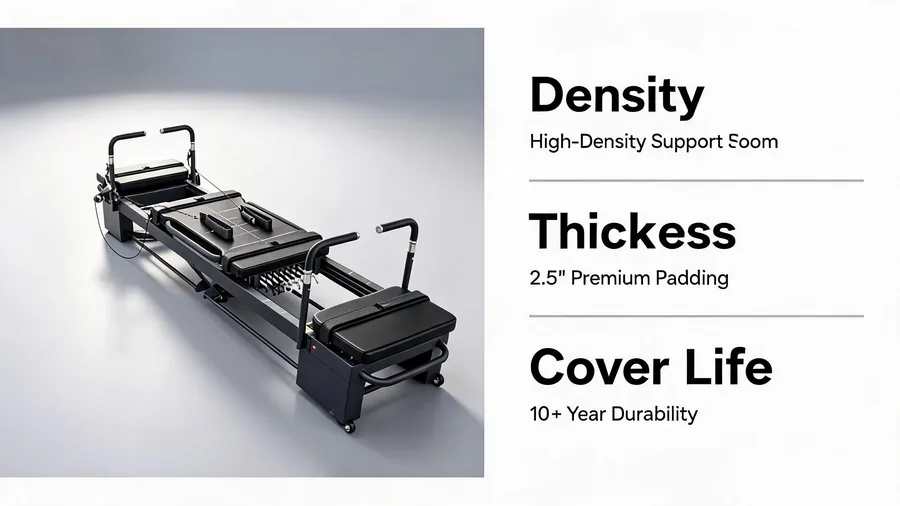
PVC-free upholstery resists sweat and cleaning agents better than some alternatives, extending both hygiene and service life. Follow the manufacturer’s cleaning guidance to avoid damaging foam or upholstery with harsh chemicals.
8. Fare l'investimento nel comfort
Investing in quality pilates reformer foam padding is one of the lowest-cost, highest-impact upgrades a studio can make. The math is simple: improved comfort supports retention, and retention drives revenue. For a 6-reformer studio, upgrading padding on all machines costs a fraction of one month’s lost revenue from client churn.
Dai priorità alla densità rispetto allo spessore, abbina gli aggiornamenti al mix di lezioni, sostituisci i componenti usurati secondo un programma e specifica la qualità dell'imbottitura quando acquisti nuove attrezzature.
Domande frequenti
Q1: Con quale frequenza va sostituita l'imbottitura del Reformer?
La schiuma di grado commerciale dura in genere 3-5 anni con un uso quotidiano. Sostituiscila prima se noti compressione visibile, perdita di elasticità o ripetute lamentele di disagio da parte dei clienti.
Q2: Quale densità di schiuma è migliore per i Reformer commerciali?
La schiuma ad alta densità resiste alla compressione e mantiene la forma nell'uso commerciale quotidiano. Chiedi ai produttori le specifiche di densità in chilogrammi per metro cubo invece di affidarti solo allo spessore.
Q3: Posso aggiornare l'imbottitura sui Reformer esistenti?
Sì. Tappetini del carrello, poggiaspalle, poggiatesta e coperture della barra poggiapiedi sono sostituibili. Le parti abbinate in fabbrica garantiscono densità, dimensioni e fissaggio uniformi.
Q4: I miglioramenti del comfort influiscono sulla qualità delle lezioni?
Sì, in senso positivo. I clienti segnalano una maggiore soddisfazione nelle sessioni più lunghe, meno lamentele sui punti di pressione e una migliore fidelizzazione quando la qualità dell'imbottitura è alta.
Q5: Come pulisco l'imbottitura del Reformer?
Tra una lezione e l'altra, pulisci con detergenti sicuri per l'attrezzatura, esegui una pulizia profonda del rivestimento ogni settimana e usa coperture lavabili ove disponibili. Segui le indicazioni di pulizia del produttore per proteggere schiuma e rivestimento.
Q6: Quale garanzia copre l'imbottitura?
I Reformer Megacore hanno una garanzia di 3 anni su telaio e macchina; i componenti dell'imbottitura sono coperti dalla garanzia della macchina e disponibili come parti di ricambio abbinate in fabbrica dopo il periodo di garanzia.
Conclusione
L'imbottitura in schiuma per Reformer Pilates è la prima linea del comfort dei clienti e merita più attenzione di quanta ne riceva di solito. Densità, spessore, manutenzione e sostituzione tempestiva influiscono tutti sull'esperienza che i clienti vivono sulla tua attrezzatura, e sulla probabilità che tornino.
Specifica un'imbottitura di qualità al momento dell'acquisto, aggiorna i componenti usurati secondo un programma e mantieni standard igienici elevati. Piccoli investimenti nel comfort offrono ritorni sproporzionati in termini di fidelizzazione.
Chiedi informazioni sulle opzioni di imbottitura per Reformer di Megacore
Guide correlate
- Coperture per Foam Roller e tappetini ecologici
- Guida al cuscinetto del carrello del Reformer Pilates
- Guida alla pulizia del Reformer Pilates
- Guida al Reformer Pilates sostenibile
Riferimenti di settore: Standard di settore della Pilates Method Alliance, CDC Environmental Infection Control, e linee guida OSHA sulla sicurezza sul lavoro.
Pad material and thickness per model are listed on the reformer model pages.