
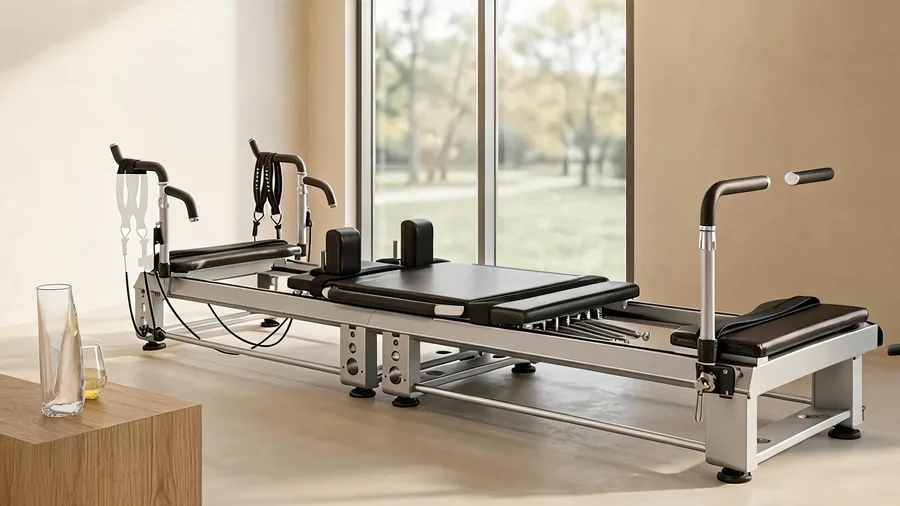
Reformer Pilates pré e pós-natal: guia de segurança do equipamento
O Reformer Pilates pré e pós-natal é um dos programas especializados de crescimento mais rápido no fitness boutique. As grávidas e as novas mães procuram ativamente movimento seguro e eficaz, e o reformador é especialmente adequado: a resistência das molas é ajustável, o carro apoia o corpo e os exercícios podem ser modificados para cada trimestre. Para os donos de estúdios, este programa abre um segmento de clientes leal e com alta retenção — mas apenas se o equipamento e a instrução estiverem corretamente preparados. Este guia de 2026 cobre as características de equipamento que importam no Reformer Pilates pré e pós-natal, orientações seguras de molas e posicionamento, e como lançar o programa no seu estúdio.
1. Porque é que o Reformer Pilates pré e pós-natal funciona
The reformer’s design is a natural fit for pregnancy and postpartum recovery, which is why prenatal postnatal reformer pilates programs grow so quickly. The carriage provides stable, supported movement; springs deliver accommodating resistance that can be lightened as needed; and the supine, seated, and side-lying positions protect the pelvic floor and abdominal wall better than standing exercises in early recovery.
As orientações clínicas de organizações como o American College of Obstetricians and Gynecologists apoiam a prática continuada de exercício moderado em gravidezes sem complicações, e o Reformer Pilates pré e pós-natal está alinhado com essas orientações quando devidamente modificado. Para clientes em pós-parto, o reformador apoia a recondicionamento progressivo do core e do pavimento pélvico que outros formatos dificilmente igualam.
2. Características de equipamento que importam no trabalho pré e pós-natal
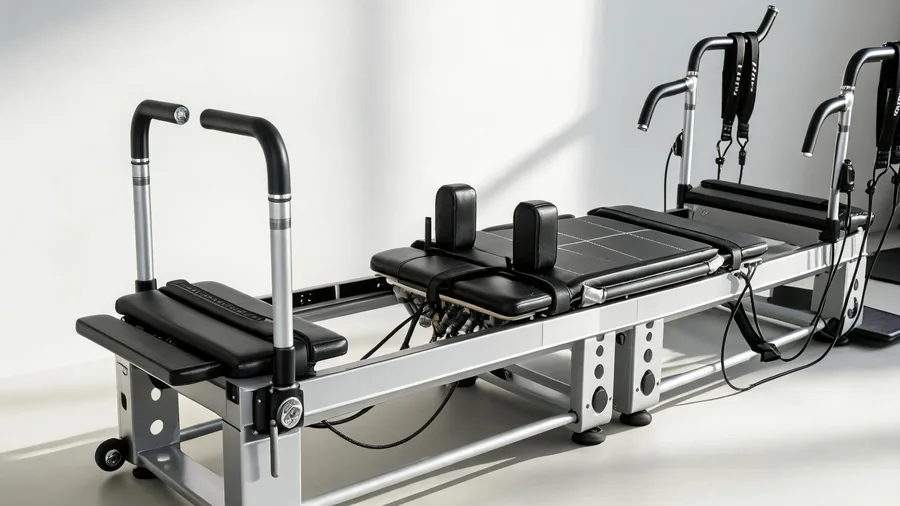
Nem todos os reformadores são igualmente adequados ao Reformer Pilates pré e pós-natal. Estas características tornam uma máquina comercial adequada:
- Incrementos de mola precisos e leves — a capacidade de usar as molas mais leves (0,5-1,0 kg) é essencial no pós-parto inicial e no trabalho do terceiro trimestre
- Deslizamento suave do carro — rolamentos selados em cartucho evitam solavancos e movimentos bruscos
- Barra de pés ajustável — acomoda as proporções corporais em mudança ao longo da gravidez
- Almofada do carro larga e confortável — apoia o abdómen em crescimento no trabalho em decúbito dorsal
- Altura de entrada baixa — entrada e saída mais fáceis no final da gravidez
- Estrutura estável e antiderrapante — sem balanço no trabalho de lado e de joelhos
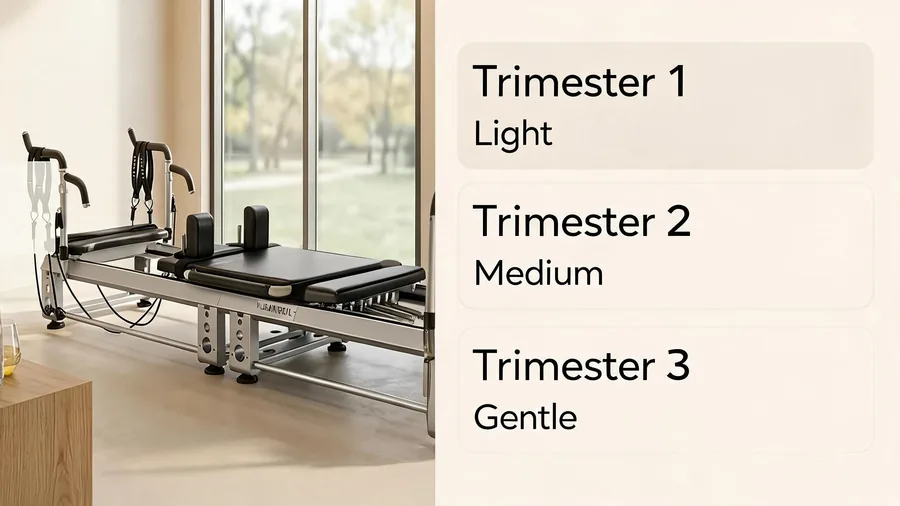
3. Configurações seguras de molas por trimestre
A escolha das molas é a variável de segurança central no Reformer Pilates pré e pós-natal. O princípio geral: usar a mola mais leve que permita movimento controlado e reduzir a resistência à medida que a gravidez avança.
4. Adaptações das aulas para clientes pré e pós-natal
Programar Reformer Pilates pré e pós-natal exige mais do que molas mais leves. As adaptações principais incluem: eliminar o trabalho em decúbito dorsal após o primeiro trimestre (usar posições de lado, sentada e em quatro apoios), evitar torções profundas, manter o trabalho respiratório coordenado com o movimento e oferecer opções em cada exercício para que as clientes escolham a intensidade.
As aulas pós-parto devem começar com ativação do pavimento pélvico e mecânica respiratória antes de qualquer trabalho de core com carga. Os instrutores devem rastrear diástase abdominal e encaminhar as clientes para profissionais de saúde quando indicado. Recomenda-se vivamente uma certificação de especialista em pré/pós-natal para os instrutores que conduzem estas aulas.
5. Quantos reformadores precisa para lançar o programa
A maioria dos estúdios lança o programa com um a três horários dedicados, usando reformadores existentes. Como o programa é de baixo volume no início — turmas pequenas são mais seguras e mais adequadas — dois a quatro reformadores por sessão é o habitual. À medida que a procura cresce, os horários dedicados ao pré-natal podem preencher 10 a 15 horas adicionais de clientes por semana por instrutor.
Em termos de equipamento, não precisa de máquinas novas se os seus reformadores cumprirem a lista de características da secção 2. Os estúdios com máquinas mais antigas e de alta resistência podem querer acrescentar conjuntos de molas leves — um upgrade de baixo custo que deixa os reformadores existentes prontos para o pré-natal.
6. Preços e receita dos programas pré-natais
O Reformer Pilates pré e pós-natal permite um preço premium. As sessões pré-natais privadas e semiprivadas variam tipicamente entre $60 e $110 por sessão, e os pacotes de séries (6-10 sessões) são a unidade de venda padrão. Para os estúdios, este programa cria também um fluxo natural de clientes: as clientes pré-natais tornam-se muitas vezes clientes pós-natais e depois membros de longo prazo — um dos segmentos com maior valor de vida no fitness boutique.
7. Segurança, responsabilidade e padrões dos instrutores
A autorização médica é um requisito de admissão inegociável. Todas as clientes pré e pós-natais devem apresentar autorização escrita do seu profissional de saúde antes da primeira sessão. Os estúdios devem também manter certificação documentada dos instrutores, dispor de cobertura de responsabilidade adequada e manter turmas suficientemente pequenas para atenção individual.
Seguir orientações profissionais reconhecidas — como as publicadas pela Pilates Method Alliance e por organizações de fitness pré-natal — protege clientes e estúdio. O equipamento deve ser inspecionado antes de cada aula, com especial atenção à integridade das molas e ao bloqueio da barra de pés.
8. Perguntas Frequentes
O Reformer Pilates é seguro durante a gravidez?
Sim, em gravidezes sem complicações, quando ensinado por um instrutor certificado com adaptações pré-natais e autorização médica. Evite trabalho em decúbito dorsal após o primeiro trimestre e mantenha a resistência leve.
Quando posso começar o Reformer Pilates depois do parto?
Com autorização médica, o trabalho leve no reformador pode começar às 6 semanas pós-parto (parto vaginal) ou mais tarde após cesariana. Comece com pavimento pélvico e trabalho respiratório antes de qualquer exercício de core com carga.
Preciso de equipamento especial para aulas de reformador pré-natais?
Não — os reformadores comerciais padrão servem, desde que tenham opções de molas leves, deslizamento suave e barras de pés ajustáveis. Acrescentar conjuntos de molas leves é um upgrade de baixo custo.
O que devo procurar num instrutor de Pilates pré-natal?
Uma certificação reconhecida de Pilates pré/pós-natal, primeiros socorros em vigor e experiência documentada. Peça referências a profissionais de saúde que encaminhem clientes.
O Reformer Pilates pré-natal pode ajudar na preparação para o parto?
Apoia a consciência do pavimento pélvico, a mecânica respiratória e a força funcional, que muitas clientes e profissionais referem como úteis para o parto e a recuperação. É um complemento — e não um substituto — dos cuidados médicos pré-natais.
O Reformer Pilates pré-natal é rentável para um estúdio pequeno?
Sim. Preços premium, turmas pequenas e elevado valor de vida do cliente tornam o Reformer Pilates pré e pós-natal um dos programas especializados mais rentáveis por metro quadrado no fitness boutique.
Conclusão
O Reformer Pilates pré e pós-natal é um programa de alto valor que a maioria dos estúdios pode lançar com o equipamento existente, um instrutor certificado e protocolos de segurança claros. Os requisitos de equipamento são modestos — molas leves, deslizamento suave, barra de pés ajustável — e os benefícios em receita e retenção são substanciais. Em 2026, os estúdios que servem bem este segmento constroem lealdade que dura anos.
Fale connosco sobre equipamento de estúdio
Guias relacionados
Recursos Externos
Os seguintes recursos do setor fornecem orientação autorizada sobre este tema:
Studios running pre and postnatal classes pick from the commercial reformer models.